Harmonia
Metamorphoses (Ovid Edition)Harmonia is presented at the end of the story of Cadmus and Harmonia as the wife who shares her husband’s ruin, wandering, and final metamorphosis. Her decisive significance lies in the fact that transformation does not isolate her from Cadmus: it is renewed in her after it has already overtaken him, binding the pair together in both bodily change and fate.
Identity and Marriage
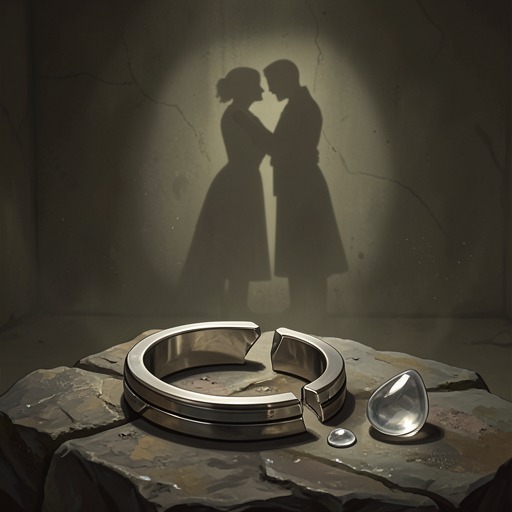
Harmonia’s identity is inseparable from her marriage to Cadmus. The surviving scene emphasizes the tenderness of that bond through Cadmus’s appeal to her: he asks her to come near, recline her face against his, and let their remaining human hands touch while they still possess them. The language makes their physical humanity temporary and precious, placing affection at the threshold between human life and animal form.
Her place in the narrative also belongs to a wider mythic world in which beauty, desire, kinship, and divine power repeatedly produce irreversible changes. The surrounding stories include Daphne’s transformation into a laurel, Io’s transformation into a heifer, Salmacis’s fusion with Hermaphroditus, and the destructive forbidden love of Myrrha for Cinyras. Against these more sharply divided transformations, Harmonia’s story is marked by shared fate: she changes because Cadmus has changed, and the marriage persists through the alteration.
Exile and the Approach of Transformation
Cadmus and Harmonia reach the Illyrian shore after resolving to seek a distant land by sea. Their arrival is not presented as a triumphant return but as the continuation of a life burdened by grief and age. Cadmus is described as cheerless, yet he continues to cheer his consort; both are hoary and weighed down by years and sorrows. This contrast defines Harmonia’s circumstances: she is not merely a witness to Cadmus’s decline but the companion for whom he still attempts consolation.
The couple’s exile therefore carries both geographical and emotional force. The sea separates them from their former world, while their accumulated losses make the Illyrian shore a place of aftermath rather than renewal. Their movement toward a distant land prepares the narrative’s larger reversal: exile does not restore them to ordinary human life, but brings them to the final boundary of human identity.
The Shared Metamorphosis
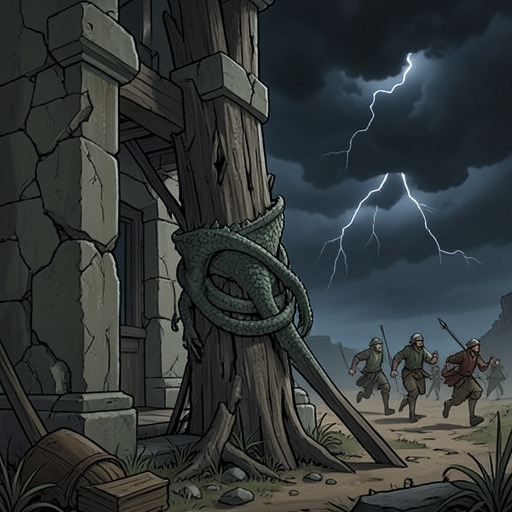
The spectators recoil when the transformation is renewed. Cadmus has already become a serpent, and then the same change overtakes Harmonia. The onlookers are so shocked by the sight that they nearly die of fear; afterward, both husband and wife are serpents, their coils entwined. Harmonia’s metamorphosis is thus explicitly modeled on Cadmus’s, converting individual catastrophe into a joint condition.
The sequence gives the transformation a clear progression. First comes the alteration of the husband; then the wife is changed in turn; finally, the two are seen together in their new form. The repetition is not redundant. It establishes that Harmonia’s fate is relational and that the couple’s marriage survives precisely as entwined animal bodies. Human tenderness, embodied in the plea to touch while hands remain, yields to serpentine contact, while the emotional connection remains legible through the changed form.
Consequences and Narrative Significance
Harmonia’s ending is a metamorphosis rather than a death. The transformation removes the couple from human society, but it also prevents their separation: they remain together as serpents. Their exile consequently ends in a strange form of continuity, in which loss of human shape becomes the condition for preserving marital unity.
Within the poem’s recurring pattern of change, Harmonia represents metamorphosis as shared destiny. Daphne becomes a laurel, Io a heifer, and other figures are altered through desire, punishment, or divine intervention; Harmonia instead undergoes the same bodily reversal as her husband. Her story gives transformation a familial and marital dimension, showing that the altered body can preserve a relation even when it erases the form in which that relation began.
The final image of the two serpents folded within one another gathers the story’s central tensions into a single emblem. Age, grief, exile, and the collapse of human identity do not dissolve the couple’s bond. They change its outward form, but the last visible fact about Harmonia is still her union with Cadmus.