Suicide of Ajax
Metamorphoses (Ovid Edition)Suicide of Ajax marks the inward collapse of a warrior who had repeatedly endured enemies, fire, and even Jupiter’s partial intervention, yet cannot withstand the shame and grief of defeat. His death turns martial greatness against itself: the man whom no external opponent could master is overthrown by his own despair, and his blood becomes the origin of a purple flower.
Defeat and the Collapse of Honor
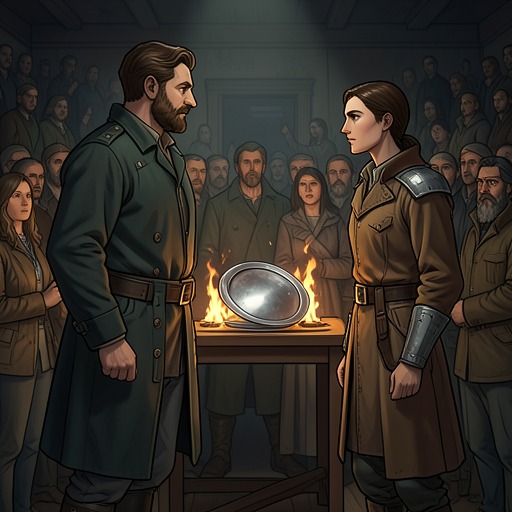
The episode follows the judgment in which Ulysses’ eloquence and conduct prevailed over Ajax’s courage and brute force. Ajax is presented as a hero who had often stood alone against overwhelming danger, including the foe, fire, and Jupiter’s favor toward his opponents. That history of resistance makes the defeat especially destructive. His strength has always been organized around public honor and heroic self-command; once the prize is awarded to another, the same honor becomes the pressure that his mind cannot absorb.
The narration gives the crisis a distinctly psychological progression. Ajax does not merely feel disappointment: he yields successively to grief, rage, madness, and disdain. The sequence describes a mind losing its capacity to govern itself, while also preserving the warrior’s characteristic intensity. His ruin is therefore both emotional and martial. The battlefield has ended, but combat continues within him, with his wounded identity as the final adversary.
The Self-Directed Sword
In the height of this madness, Ajax draws his sword and addresses it as an object that belongs to him, denying Ulysses any claim to it. The gesture converts the weapon from an instrument of heroic resistance into the means of a private verdict. His declaration asserts ownership even as his action surrenders life; the sword remains the last possession over which he can exercise unquestioned authority.
Ajax then applies the fatal point to his own breast. The weapon enters his heart by a path previously unknown, a grim reversal of his former invulnerability: no other weapon had penetrated there, but his own does. The image makes the cause of death inseparable from the hero’s identity. Ajax is not defeated by an enemy’s superior strike; he becomes both aggressor and victim, and his body records that reversal.
The sword is so firmly fixed that no hands can draw it out. It is expelled only by the force of the blood streaming from the wound. This physical detail intensifies the finality of the act while linking Ajax’s death to the transformation that follows. The weapon cannot simply be removed by human intervention; the body itself must discharge it as life escapes.
Flower and Metamorphosis
From Ajax’s fertile blood grows a flower on a green stem, purple in color. Its likeness to the flower associated with Hyacinthus connects the death to an established pattern in which violent loss leaves behind a living botanical memorial. The transformation does not erase the violence of the suicide. Instead, it gives the wound a recurring natural form, allowing the hero’s rage and blood to persist as visible beauty.
The flower is the episode’s final metamorphic answer to Ajax’s self-destruction. The warrior’s body, once defined by force and resistance, becomes a plant marked by color and growth. The change shifts the scene from heroic action to natural recurrence: death ends Ajax’s personal struggle, but his blood produces something that continues beyond him. His defeat thus becomes not only an ending but also the material source of remembrance.
Tragic Significance
The episode’s central reversal lies in the contrast between Ajax’s public reputation and his private inability to survive dishonor. Courage prevails in ordinary combat, yet courage alone cannot protect him from the consequences of the judgment. Eloquence overcomes brute force in the contest, while despair overcomes the champion who had resisted every external threat. The story makes the hero’s greatest strength part of the mechanism of his destruction.
Ajax’s suicide also gives the wider cycle of transformation a specifically tragic shape. His death is not a reward, a divine elevation, or a voluntary passage into a higher state. It is an act of rage and madness whose aftermath nevertheless becomes a flower. Nature preserves what heroic society has broken, converting bloodshed into a form that can return seasonally and be recognized. The final image therefore holds violence and beauty together: the purple blossom is both memorial and consequence, the living trace of a warrior defeated by himself.