Tereus
Metamorphoses (Ovid Edition)Tereus is the central aggressor in the tragic story of Tereus, Procne, and Philomela. His decisive significance lies in the way political authority and physical force are turned against kinship: the ruler who should protect a family instead treats it as property, and the violence he initiates returns upon him through grief, pursuit, and transformation.
Identity and Position
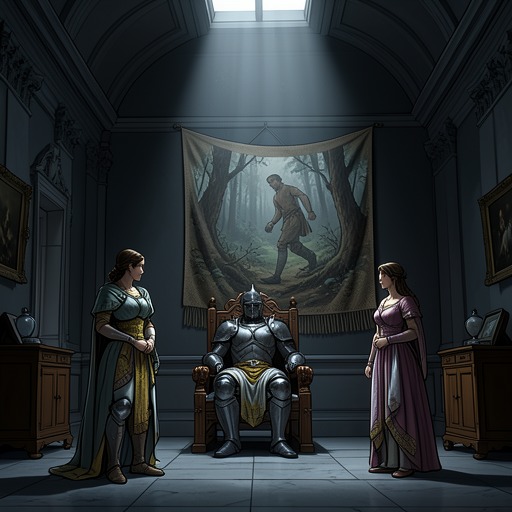
Tereus appears as a prince and ruler connected with Thrace, a figure whose status gives his actions public as well as private consequences. When neighboring princes come to Thebes to share in a misfortune, the narrative places his household within a wider network of dynastic relations rather than presenting the catastrophe as an isolated domestic quarrel. His rank therefore intensifies the betrayal: the abuse of power occurs inside a princely family and damages the political order represented by marriage and alliance.
The story presents Tereus through action rather than through a sustained account of his ancestry or inner life. His defining traits are possession, deception, haste, and retaliatory violence. He is secure enough in his power to seize a princess when the vessels have reached their intended land, and his later response to the crimes and losses he has helped produce is not repentance but grief joined to a desire for revenge.
Violence Against Philomela
The crucial reversal begins when Tereus seizes the princely maiden after the vessels land. The scene makes abduction the foundation of his relationship with Philomela: arrival, joy, and descent upon the shore are immediately overturned by the false tyrant's act. The contrast between the travelers' happiness and Tereus's seizure exposes the coercive nature of his authority, which disguises predation beneath princely status.
The surrounding story identifies Tereus with the violence done to Philomela and with the destruction of the bond linking him to Procne. His crime is not merely an episode of private desire. It converts a family connection into an instrument of domination and sets in motion the chain of concealment, recognition, revenge, and flight that governs the tale. Because his power enables the initial violation, the later collapse of his household reads as a consequence of authority severed from restraint.
Grief, Revenge, and Pursuit
Tereus's response to the catastrophe is defined by grief and haste to be revenged. These motives drive him forward, but they do not restore the order he has broken. Revenge becomes another form of the same possessive violence: instead of recognizing the suffering of the women he has harmed, he treats the aftermath as a challenge to his power and pursues retaliation.
This pursuit also gives the narrative its characteristic reversal. Tereus begins as the one who controls movement, territory, and access; after the disclosure and revenge within the household, he becomes the pursuer whose own body is exposed to metamorphic punishment. The narrative does not grant him a stabilizing discovery that could convert grief into justice. His emotional energy remains locked in the cycle of injury and reprisal.
Transformation and Ending
Tereus shares the fate of the other principal figures when grief and vengeful haste lead into metamorphosis. He is changed into a bird, and crested plumes are fixed upon his head. The transformation makes his violent identity visible in altered bodily form: the ruler who acted through force is removed from human political society and placed among creatures marked by feathers and flight.
The ending is punitive but also structurally continuous with the story's earlier violence. Tereus does not escape the consequences of the household he has ruined; his pursuit ends not in restored authority but in the loss of human form. Metamorphosis here functions as both punishment and narrative closure, translating moral disorder into a permanent change of body while preserving the memory of the crime through the transformed figure.
Narrative Significance
Tereus belongs to the book's recurring pattern in which human identities are unstable and actions produce bodily consequences. Elsewhere, prayers to Themis seek relief from human misery, divine promises are sworn by the Styx, and figures such as Daphne and Io cross from human form into vegetal or animal existence. Against that larger pattern, Tereus's transformation is especially severe because it follows deliberate human violence rather than an innocent encounter with divine power.
His story also clarifies the book's treatment of speech and authority. A ruler's position may command movement and obedience, but it cannot control the meanings and consequences generated by violence. The household's hidden suffering eventually becomes the force that overturns Tereus's supremacy. His final bird-form is therefore not an elevation into divine or heroic remembrance; it is a descent from princely power into a visible emblem of the disorder he caused.