
Mickey’s Changing Sense of Self
Mickey7Mickey’s uncertainty about whether memory can preserve personal identity moves from abstract philosophy to grief for Mickey8 and finally to a chosen defense of his present life.
increasing Bearing strength in each event
 decreasing
Bearing strength in each eventdecreasingThe Sleep Analogy
A Life That May End Tonight
Another Person Wakes
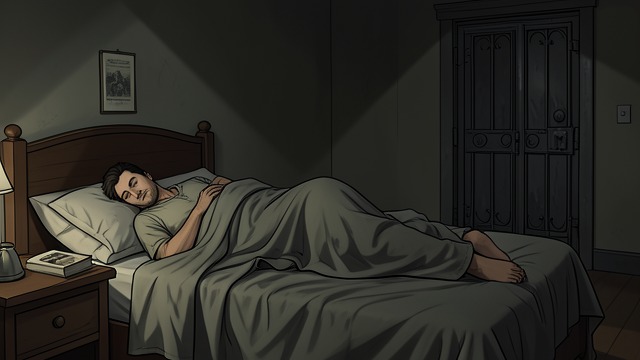
Mickey imagines a person dying in sleep and being replaced each morning by someone with the same memories. The replacement would behave like the original, but Mickey wonders whether anyone could prove that the original consciousness continued.
Instinct Against Theory
He knows that the colony treats regeneration as immortality, yet senses that the person waking after his death may not be him. The idea frightens him even when he cannot turn it into a measurable distinction.
The question is not an academic distraction. Mickey’s willingness to accept dangerous work depends partly on the belief that he will survive it, and that belief is becoming harder to sustain.
Memory as a Ship
A Theory of Continuity
Jemma’s Argument
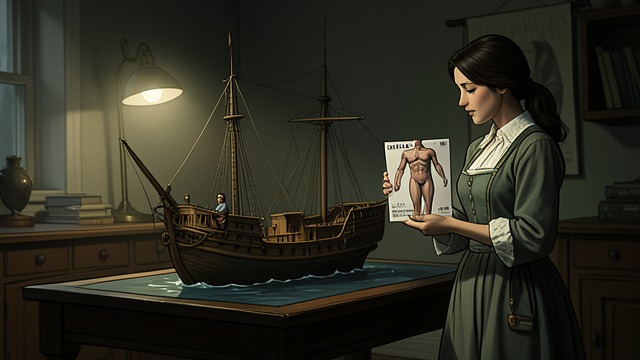
Jemma explains the Ship of Theseus and suggests that a printed body can be understood as a rapid replacement of parts. Because the new Mickey carries the same memories, she argues, death may not be meaningfully different from gradual bodily change.
A Useful, Incomplete Comfort
Mickey adopts the analogy because it lets him imagine that a backup remains continuous with his past. The idea helps him enter service, though it leaves the question of subjective experience unresolved.
The analogy works socially and practically: other people can recognize the returned Mickey. It does not establish what happens to the consciousness of the version that died.
Mickey8 as a Separate Person
A Reflection That Argues Back
Shared Memories
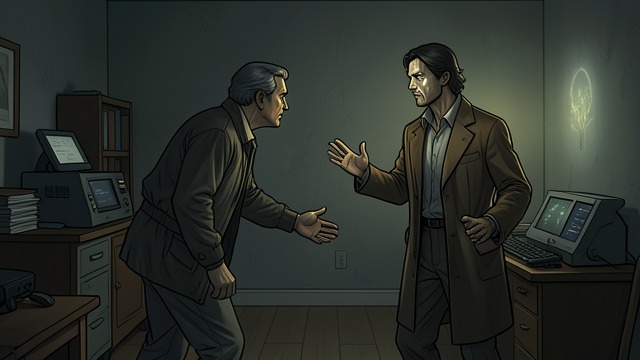
Mickey8 wakes with Mickey7’s remembered life and recognizes their shared identity. Their agreement ends quickly when each insists that the other should be the one to die or return to the recycler.
Difference in the Present
Mickey7 understands that Mickey8 is not merely a stored image: he has his own appetite, fears, choices, and immediate claim on survival. Their common past does not make their current selves interchangeable.
The duplicate forces a previously avoidable distinction into view. Memory can create continuity between versions, but two simultaneously conscious people cannot both occupy the same singular identity without conflict.
Grieving His Other Self
Mourning a Shared Past
A Death Not Remembered
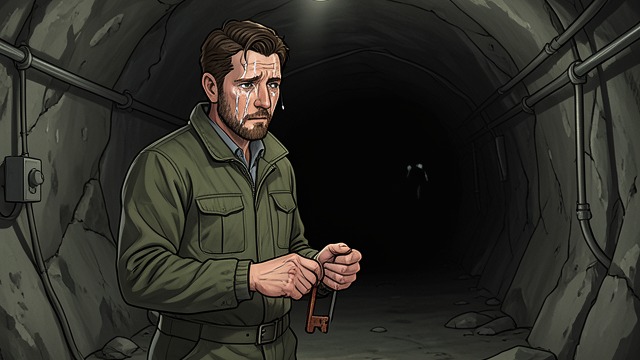
Mickey7 learns that Mickey8 died after the creepers reached him in the tunnels. He knows that Mickey8 carried the same memories and might have been another continuation of himself, yet the loss makes him cry.
A Broken Mirror
Mickey tries to reason that mourning a version of himself is like mourning a reflection. The comparison fails emotionally: Mickey8 was close enough to be family and different enough to be gone.
His grief confirms what the identity debate could not settle. A person does not have to be wholly separate from him for their loss to matter as a distinct death.
Claiming the Present Life
The Self That Says No
The Continuity Dispute
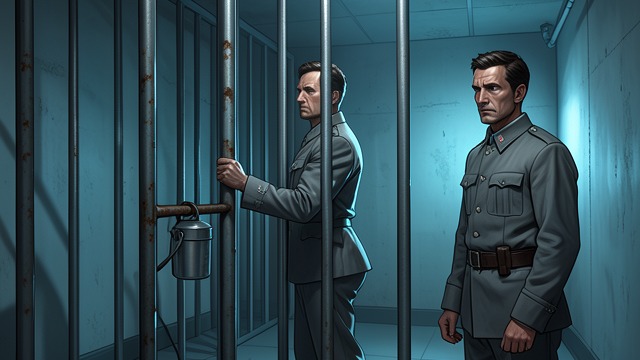
In the holding cell, Mickey7 tells Mickey8 that he does not believe a later version would be him. Mickey8 counters that remembered identity and social recognition are enough to establish continuity.
A Decision Beyond Proof
Mickey7 refuses Hieronymus Marshall’s lethal reactor assignment and resigns as Expendable. He acts without resolving the metaphysics, choosing to protect the life he currently experiences rather than rely on a future reconstruction.
The conclusion is practical rather than theoretical. Mickey cannot prove that a backup is not him, but he no longer treats that uncertainty as permission for others to spend his present life.
During Mickey’s early reflections on being an Expendable
During Mickey’s first training week at Himmel Station
The first day of the duplication crisis
After Mickey7 returns alive and Mickey8 dies underground
The morning Mickey refuses the reactor assignment
