
The Ethics of Being Expendable
Mickey7The book’s institutional treatment of Mickey’s body moves from recruitment and experimentation to explicit refusal, asking when service stops being consent and becomes coercion.
increasing Bearing strength in each event
 decreasing
Bearing strength in each eventdecreasingA Contract Without Competition
The Only Volunteer
A Berth Nobody Wants
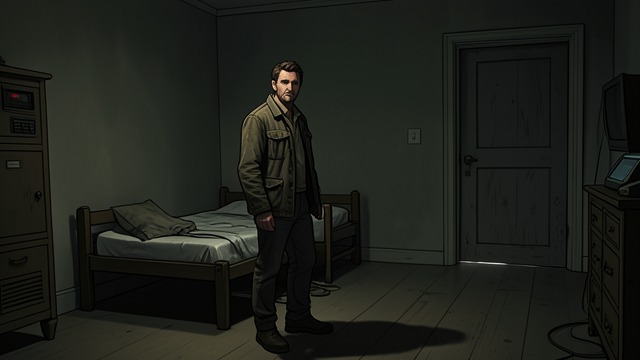
Mickey applies for the Expendable position because it is the only open berth and his life on Midgard has become untenable. Gwen Johansen explains that no one else has volunteered for the role.
Consent Under Pressure
Mickey knows the job may entail repeated painful deaths, but debt and the threat from Darius Blank make remaining on Midgard feel impossible. His decision is voluntary on paper and desperate in context.
The recruitment complicates any easy judgment of him as either foolish or heroic. He chooses, but the choices available to him have been narrowed by economic stagnation and direct violence.
The Body as Equipment
Utility Measured in Survival Time
A Human Repair Tool
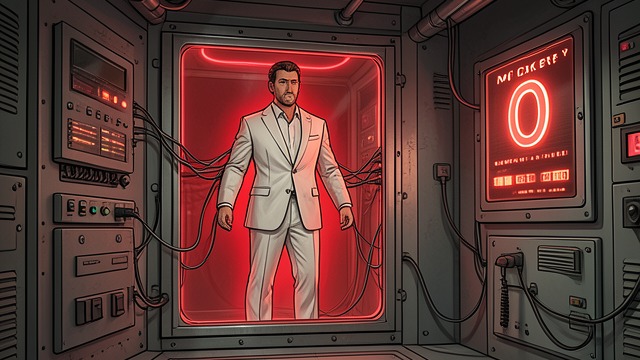
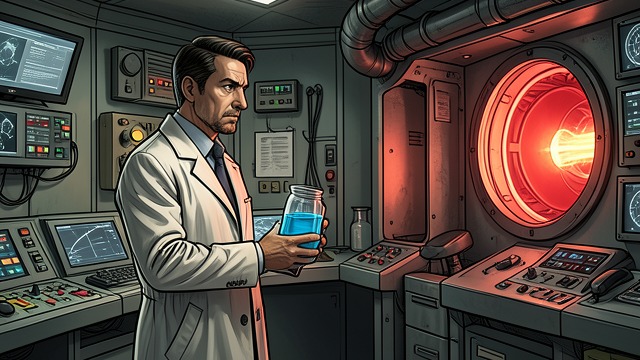
After the Drakkar’s impact, engineers send Mickey into a radiation-filled compartment to restore the field system. They calculate the lethal exposure and rely on the fact that a human body may keep working after receiving a fatal dose.
A Successful Repair
Mickey completes the task and dies afterward. The ship is saved, and the operation is recorded as a successful use of the Expendable’s unique capacity.
The episode shows the moral logic of the role at its clearest: the mission treats his body as equipment with a known failure window. Mickey’s usefulness is inseparable from the fact that he alone is expected to pay the cost.
Data Before Dignity
Death as Research Material
Recording the Experiment
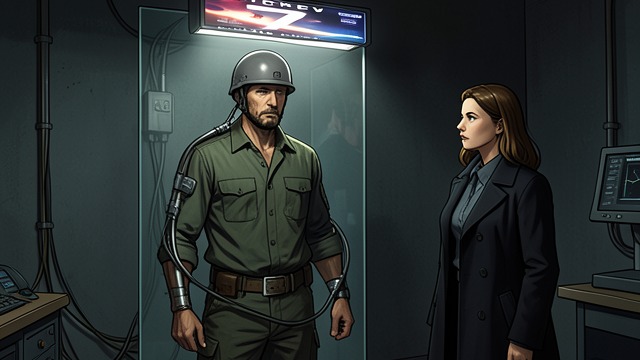
Medical requires Mickey to wear a scanning helmet during pathogen exposure so the colony can study his response. When he resists, the research team emphasizes the value of data and later uses the threat of repeated unrecorded trials to force compliance.
Nasha as Witness
Nasha stays near Mickey as he deteriorates and enters the chamber to comfort him. Her presence offers a human response to a procedure that otherwise treats his suffering as an observation to be stored.
The contrast is stark: the institution wants a reliable record of what kills him, while Nasha attends to the person experiencing it. Their differing priorities expose the ethical cost of a system that can preserve information more carefully than dignity.
The Cost of the Duplicate
One Identity, Two Needs
The Colony’s Calculation
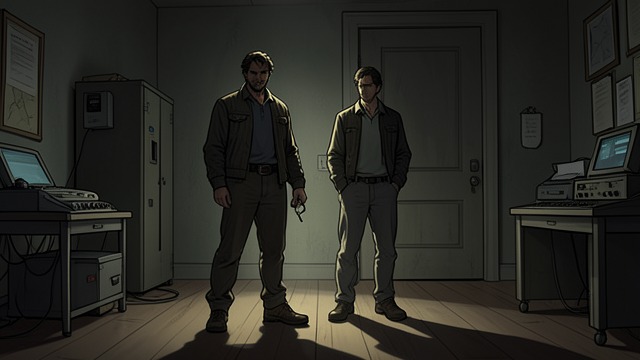
Mickey7 and Mickey8 share one registered identity and one ration card, while the colony considers simultaneous copies an intolerable violation. Their hunger gives the legal problem an immediate physical cost.
A Person Cannot Be Slurry
The brothers nearly decide that one must die, but neither can make the choice feel fair. Mickey8 refuses to push Mickey7 into the recycler after winning their game, and the two attempt to conceal their existence.
The duplication crisis reveals that the Expendable’s supposed interchangeability breaks down when two versions are present at once. The colony’s accounting system can count calories, but it cannot decide which consciousness deserves the remaining life.
Resignation as Self-Protection
Refusing to Be Spent
The Last Assignment
Hieronymus Marshall praises Mickey7 and asks him to enter the reactor to return antimatter manually. The assignment is presented as a final act of courage, with no need for Mickey to upload afterward.
A Life Claimed Back
Mickey refuses, resigns from the Expendable role, and makes clear that a later version’s existence does not obligate his current self to die. He uses his position as the colony’s only liaison to the creepers to prevent Command from forcing the issue.
The decision gives emotional force to the book’s critique of institutional sacrifice. Mickey does not reject every form of service; he rejects the assumption that service cancels his right to say no.
Before the Drakkar leaves Midgard
During the Drakkar’s radiation emergency
During Mickey’s early Niflheim isolation trials
During the first days after Mickey8 wakes
The morning after Mickey7’s return from the tunnels
