
The Price of Colony Survival
Mickey7Repeated colonial examples show that settlement is never a clean victory: survival is purchased through sacrifice, ecological destruction, or choices that remain morally unsettled.
increasing Bearing strength in each event
 decreasing
Bearing strength in each eventdecreasingThe Ching Shih’s Slow End
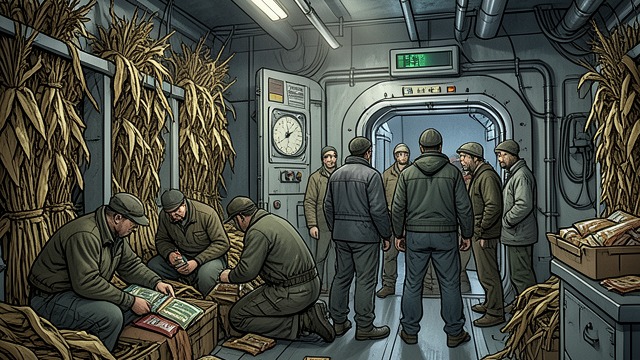
Survival Has a Limit
Agricultural Collapse
The Ching Shih’s crops fail during its long voyage, and the ship has no biological recycler to compensate. The crew cuts rations and eventually asks volunteers to give up their lives so others may continue.
Sacrifice Cannot Save the Mission
Even after the survivors reduce the crew to the minimum, food and carbon cycling fail. The last twelve people open the air lock before reaching Eden, leaving their ship to continue through interstellar space.
The account makes sacrifice neither noble completion nor guaranteed salvation. A person may consent to die for a mission and still leave the larger project unable to succeed.
Asher’s World Abandons Its Goal
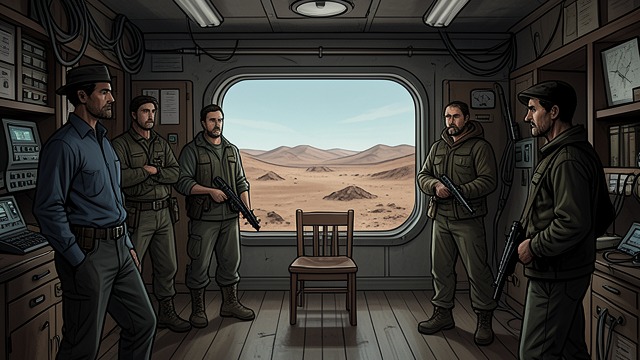
Choosing an Ending
The Planet Is Not Habitable
An expedition reaches a world too hot for liquid water and finds that its failing ship cannot sustain a long attempt at terraforming. Its original observations had mistaken residual atmospheric oxygen for evidence of a more promising environment.
The Crew Stops Trying
The colonists report their discovery and choose to die quickly rather than pursue a future they cannot support. Their decision offers Mickey an example of a mission that cannot be saved by individual endurance alone.
The story complicates the heroic language of colonization. Continuing to struggle is not always the same as preserving meaningful life, and an expedition’s original purpose may need to be abandoned when its conditions change.
Bergen’s World Burns a Continent
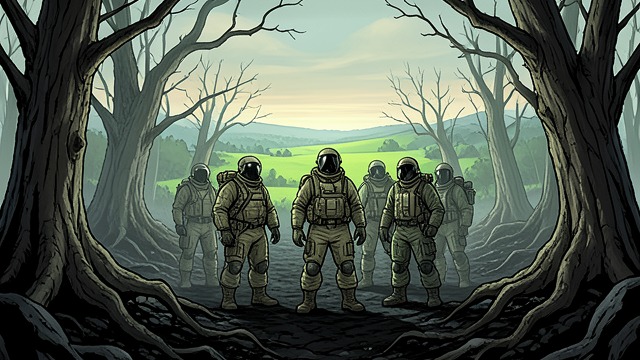
A Paradise Made Through Destruction
A Biosphere That Defeats Humans
Bergen’s World contains aggressive animals, carnivorous semi-mobile trees, and pervasive microbes. Even a heavily equipped exploratory team fails to survive a day.
Sterilization Opens a Future
Command burns the smaller continent nearly to bedrock, and the world later becomes a celebrated place to live. The colony succeeds by destroying a native ecosystem it cannot safely inhabit.
The history asks whether a successful settlement can conceal a moral catastrophe. Human survival may be possible only through ecological violence, yet calling the result a paradise does not restore what was erased.
Gault’s Costly Answer
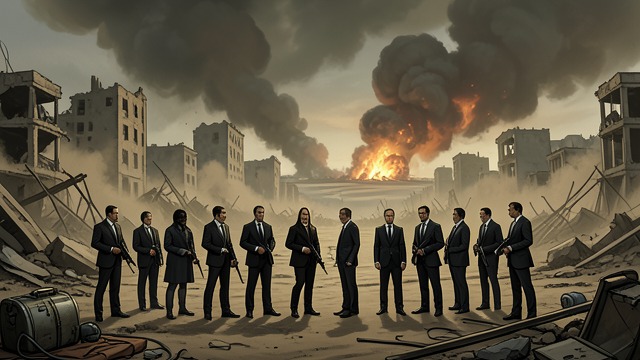
A Colony Destroyed by Its Own History
A Private Settlement Fragments
Gault’s founders embrace self-reliance and fail to build shared institutions capable of stopping Alan Manikova. His copies seize control, and an outside military expedition is destroyed before it can respond.
Retaliation Ends the World
Farhome’s relativistic attack kills the conflict by destroying Gault’s ecosystem. The Union remembers the result as a crime, even though Manikova’s aggression had created the emergency.
The example shows how a colony’s lack of cooperation can make later violence seem like the only remaining remedy. The remedy then becomes so destructive that it makes survival meaningless for everyone on the target world.
Niflheim’s Unfinished Bargain
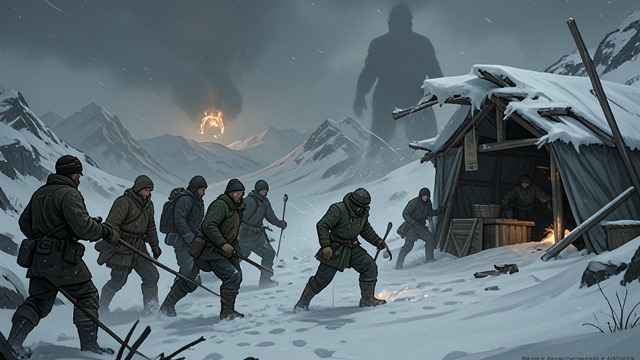
Survival Without a Clean Victory
Threats Remain
Niflheim’s humans face hunger, a harsh environment, casualties, and a local intelligent community they initially tried to exterminate. The colony has not secured an easy path to self-sufficiency.
A Chance to Choose Differently
Mickey7’s truce and the first spring give the settlers a possibility of coexistence. The hidden antimatter device and unresolved authority of Hieronymus Marshall remain dangerous, so the possibility is not yet a stable peace.
Niflheim’s future is presented as an ongoing ethical bargain rather than a conquest completed. The colony may survive without repeating the worst histories only if it can preserve restraint long enough to learn how to share the planet.
Decades before the successful Eden expedition
During Mickey’s reading of failed expedition records
After the first exploratory team fails on Bergen’s World
After Manikova’s conquest and the Bullet strike
By the close of the first Niflheim year
