
Dorothea’s Search for a Consequential Life
MiddlemarchThis thread traces Dorothea’s yearning to serve a larger purpose, her disillusionment with the life she chose, and her eventual recovery of agency through practical work and love.
increasing Bearing strength in each event
 decreasing
Bearing strength in each eventdecreasingAn Unsettled Idealist

An Unsettled Idealist
A hunger for purpose
Dorothea Brooke longs to make her life useful, but the narrow expectations surrounding a young gentlewoman leave her unsure how. Her fervor is real, even when her judgments about what will help are inexperienced.
The limits of opportunity
Her plans for cottages and village improvement are not mere hobbies: they express a desire to connect moral conviction with practical action. Yet the community around her often mistakes intensity for foolishness.
A Marriage Chosen as a Vocation

A Marriage Chosen as a Vocation
The imagined guide
Dorothea accepts Edward Casaubon because she believes his scholarship and spiritual seriousness will give her access to a life of purposeful service. She imagines assisting his great work and learning how to act wisely.
A decision shaped by hope
The marriage is not based on ordinary courtship expectations. Dorothea invests Casaubon with the qualities she needs in a guide, while missing how little he can offer in reciprocal intellectual or emotional fellowship.
Rome and Disillusionment

Rome and Disillusionment
The reality of companionship
In Rome, Dorothea finds that Casaubon’s knowledge does not open the living intellectual world she had imagined. His comments on art and history feel dry, while the city overwhelms her with unfamiliar forms and meanings.
A widening distance
Her sadness is not a single quarrel but the gradual recognition that marriage has made daily reality replace courtship’s promise. She tries to blame herself, yet her longing for mutual understanding remains unmet.
Compassion Replaces Illusion
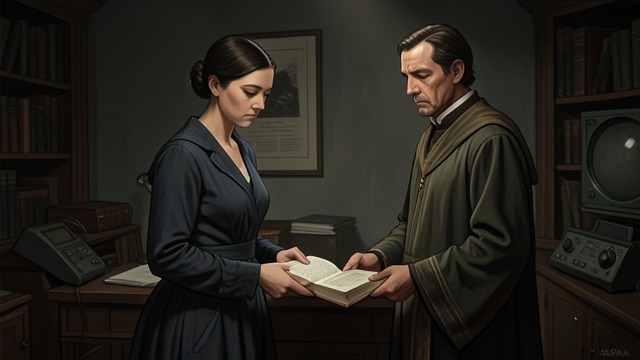
Compassion Replaces Illusion
Seeing Casaubon’s vulnerability
After Casaubon’s collapse, Dorothea learns from Tertius Lydgate that his heart condition may be fatal. She begins to recognize his fear and loneliness beneath his rigid manner, and pity temporarily softens her resentment.
The limits of submission
Casaubon asks her to promise to carry out his wishes after his death, but she cannot pledge herself without knowing what the promise entails. His death before she answers leaves her with unresolved grief and no command over his legacy.
A Life Reclaimed Through Service

A Life Reclaimed Through Service
From mourning to action
Dorothea confronts the restrictive terms of Casaubon’s will and the possibility that her friends will judge her attachment to Will Ladislaw. Rather than retreat into a safe but empty life, she chooses love and relinquishes the inherited fortune attached to her remarriage.
Private happiness, public consequence
Her later life with Will gives her a shared purpose and a place in public work. Her influence is not measured by a famous achievement: it is diffused through relationships and unrecorded acts of care.
Early in the story, at Tipton Grange
Autumn, before the wedding
The first weeks of the honeymoon in Rome
After Casaubon’s illness and return to Lowick
After Casaubon’s death, through the later years
