
Dorothea and Casaubon’s Unequal Marriage
MiddlemarchThis thread follows the gap between Dorothea’s devotional hopes for marriage and Casaubon’s anxious need for admiration, assistance, and control.
increasing Bearing strength in each event
 decreasing
Bearing strength in each eventdecreasingAdmiration Mistaken for Understanding

Admiration Mistaken for Understanding
A meeting of imagined needs
Dorothea interprets Casaubon’s formal learning as evidence of a rich inner life that can guide her. Casaubon sees a devoted young wife who may help with his work and ease his solitude.
An unequal expectation
Each approaches marriage through a different need. Dorothea longs for shared purpose, while Casaubon expects deference and practical support without fully recognizing her independent mind.
The Honeymoon’s Quiet Fracture

The Honeymoon’s Quiet Fracture
A changing light
Dorothea discovers that Casaubon’s knowledge does not produce the warmth or expansive conversation she expected. His measured responses make the history and art of Rome feel more oppressive than illuminating.
An early wound
Their disagreement about his work confirms their failure to understand one another. Dorothea’s distress comes not from a single cruelty but from a persistent lack of reciprocal feeling.
Care Against Resentment

Care Against Resentment
Pity becomes possible
Lydgate tells Dorothea that Casaubon’s heart condition may threaten his life. Her anger gives way to compassion as she imagines the long, lonely labor and fear behind his behavior.
A fragile reconciliation
Casaubon is still guarded, and Dorothea still longs for warmth, but she repeatedly chooses tenderness over retaliation. Their renewed closeness depends on her care more than on mutual disclosure.
The Promise Left Unanswered
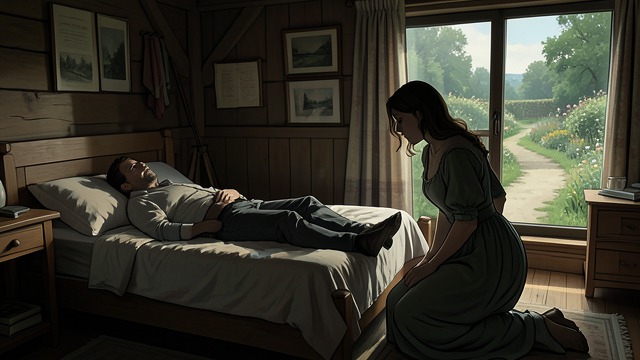
The Promise Left Unanswered
A request for obedience
Casaubon asks Dorothea to promise that she will carry out his wishes after his death. She cannot pledge herself without knowing what he intends, even though she wishes to comfort him.
Death before reply
The next day Dorothea finds him dead in the summer-house before she has answered. Her pity is real, but the unspoken request becomes a burden of uncertainty rather than a completed act of devotion.
A Legacy of Suspicion

A Legacy of Suspicion
A restriction revealed
Casaubon’s codicil would deprive Dorothea of his property if she married Will. The condition makes her wonder whether her husband’s final thoughts were shaped by suspicion and jealousy.
Judgment after death
Dorothea’s memories of his illness, tenderness, and injustice remain entangled. She rejects the obligation to finish his scholarship, but continues to ask how she ought to honor the suffering person she once loved.
At the beginning of their courtship
In Rome, five weeks after the wedding
After Casaubon’s first serious illness
The night before Casaubon’s death
After the codicil is discovered
