
The Social Making of Reputation
MiddlemarchThis thread follows how Middlemarch’s conversation converts incomplete knowledge into judgment, affecting Dorothea, Lydgate, Will, and Bulstrode in different ways.
increasing Bearing strength in each event
 decreasing
Bearing strength in each eventdecreasingThe Town Reads a Young Woman
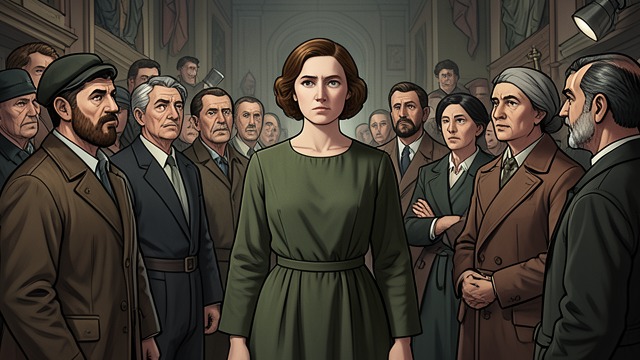
The Town Reads a Young Woman
Appearances as evidence
Middlemarch judges Dorothea through dress, beauty, religion, and marriageability. Her earnestness is praised as cleverness by some and treated as eccentricity by others.
A limited view
These judgments capture visible traits but miss the scale of Dorothea’s inner purpose. The town’s reading of her establishes a pattern in which social interpretation outruns real understanding.
Lydgate Becomes a Medical Story
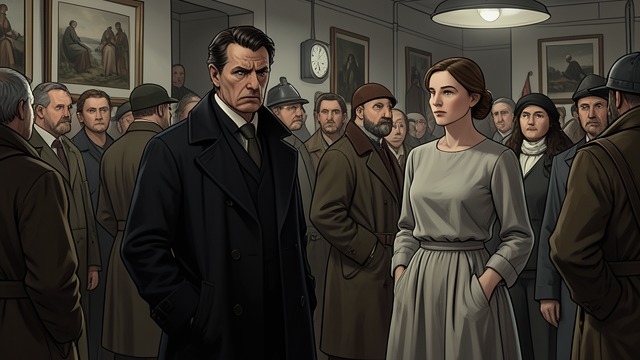
Lydgate Becomes a Medical Story
Contradictory reports
Middlemarch residents call Lydgate brilliant when a patient recovers, but suspect him of neglecting medicine or conducting dangerous experiments. Each group selects the report that confirms its prior loyalties.
Expertise distorted
His refusal to dispense drugs and his postmortem inquiries become signs of arrogance to opponents. The gap between knowledge and reputation limits his capacity to reform local practice.
Will’s Blood Becomes a Label
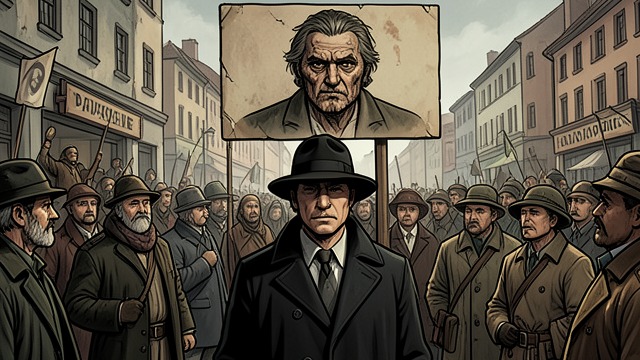
Will’s Blood Becomes a Label
A family history weaponized
The town links Will’s parentage to Bulstrode’s dishonorable business and treats his foreign ancestry as a sign of social inferiority. His actions and political work are judged through a story he did not create.
Honor asserted against gossip
Will rejects Bulstrode’s money and refuses to let inherited stigma define his value. Yet he cannot prevent public rumor from shaping how others imagine his relation to Dorothea.
Bulstrode’s Reputation Turns
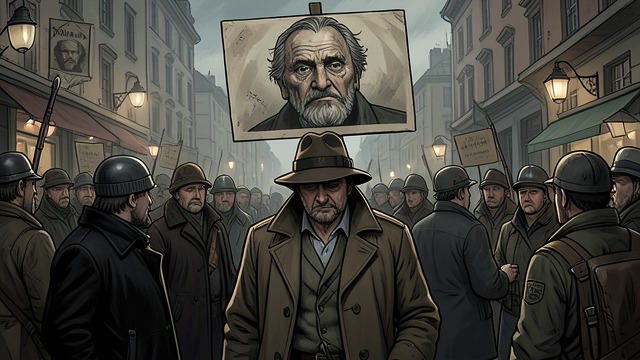
Bulstrode’s Reputation Turns
Piety recast as hypocrisy
Once Bulstrode’s past becomes public, his charitable authority is reinterpreted as a means of control. People who had resented him now treat rumor as confirmation of their earlier suspicions.
The difficulty of correction
Bulstrode cannot separate what is demonstrably true from what is suspected, and cannot easily defend himself without exposing more. Reputation becomes a collective verdict rather than a fair investigation.
The Afterlife of Local Talk
The Afterlife of Local Talk
Stories outlive evidence
The deaths, debts, and unexplained decisions of the principal characters become material for competing versions in parlors and public houses. Each retelling acquires certainty even where the facts remain incomplete.
A social force of its own
Middlemarch’s talk can damage a career or isolate a family without a legal judgment. The novel presents public opinion not as a single authority, but as a web of partial observations and interested interpretations.
Early in the story, when Dorothea arrives at Tipton
During his first years as a practitioner
After the sale and the Raffles disclosure
After Hawley’s accusation at the Town Hall
In the aftermath of the scandal
