
Sympathy as a Discipline
MiddlemarchThis thread traces the novel’s movement from self-centered interpretation toward the demanding practice of imagining other people’s inner lives.
increasing Bearing strength in each event
 decreasing
Bearing strength in each eventdecreasingThe Incomplete View of Others
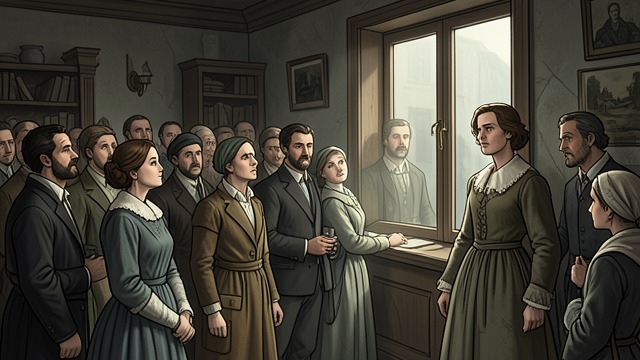
The Incomplete View of Others
First impressions as limits
Characters judge one another through faces, clothing, class, and rumor. Celia sees Casaubon’s appearance; Dorothea sees an imagined scholar and guide.
Interpretation needs humility
The novel shows that observers often mistake a partial sign for a whole person. Sympathy begins when judgment is slowed by the recognition that other lives contain unknown pressures.
Caleb’s Fellow-Feeling

Caleb’s Fellow-Feeling
Trust before condemnation
Caleb has signed for Fred because he believes in his affection and potential. When the debt threatens his family, he accepts the consequences without pretending that Fred’s conduct is harmless.
Responsibility without cruelty
He is angry at himself as well as at Fred, then looks for a way to help the young man become useful. His sympathy is practical: it takes another person’s future seriously.
Mary’s Moral Imagination

Mary’s Moral Imagination
Seeing the cost to others
Mary’s anger grows when she realizes that her parents may lose savings intended for Alfred. Fred’s self-pity initially obscures the harm his choices have caused.
Accountability with hope
Mary does not excuse Fred, but she recognizes the good in him and imagines a better life he might choose. Her honesty gives love a demanding, not indulgent, form.
Dorothea’s Recognition of Casaubon

Dorothea’s Recognition of Casaubon
A new view of her husband
Dorothea begins to imagine Casaubon not only as the disappointing object of her hopes, but as a frightened and thwarted person. His illness makes his need for tenderness more legible.
Compassion with limits
She offers care without believing his scholarship is sound or promising to obey every future wish. Sympathy does not require her to surrender judgment or become his instrument.
A Visit That Changes Rosamond

A Visit That Changes Rosamond
Compassion crosses rivalry
Dorothea visits Rosamond intending to speak for Lydgate, though she believes Will may have chosen Rosamond. Instead of accusation, she offers trust and acknowledges the pain of a troubled marriage.
A response beyond vanity
Rosamond recognizes an unselfish kindness she did not expect and tells Dorothea the truth about Will’s love. Their exchange helps restore tenderness between Rosamond and Lydgate.
At the opening, as Dorothea and Celia are introduced
When Fred confesses the unpaid debt
After Fred admits he cannot repay the Garths
After Casaubon’s diagnosis
After Dorothea’s mistaken discovery at the Lydgate home
