
The Marriage Plot as a Test of Autonomy
MiddlemarchThis thread examines how women’s choices are shaped by class, marriage, inheritance, and the expectation that men should govern their lives.
increasing Bearing strength in each event
 decreasing
Bearing strength in each eventdecreasingA Gentlewoman’s Constrained Freedom
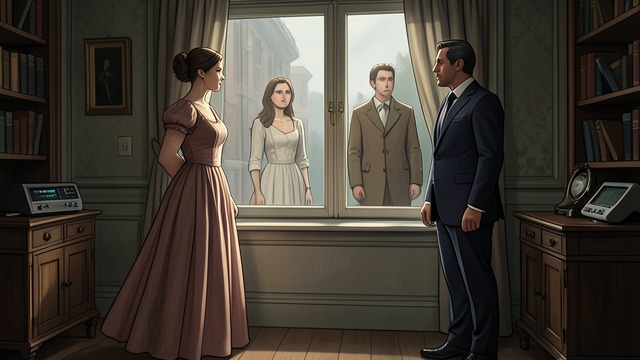
A Gentlewoman’s Constrained Freedom
Choice without a public vocation
Dorothea has education, money, and energy but few accepted channels for purposeful work. Her desire to improve cottages is treated as exceptional, even as women are expected to have opinions without acting on them.
Marriage offered as guidance
The social world assumes that marriage will resolve a woman’s future. Dorothea accepts Casaubon as a teacher and authority, turning limited options into a voluntary ideal of submission.
Rosamond’s Training in Accomplishment

Rosamond’s Training in Accomplishment
Refinement as social capital
Rosamond has mastered music, dress, manners, and the presentation of feminine sweetness. These skills give her a clear sense of how to attract admiration, but little preparation for economic uncertainty.
A narrow field of choice
She expects a marriage to lift her into a more distinguished social world. Her apparent passivity conceals a steady determination to secure the comforts and status she values.
Marriage Meets Material Reality
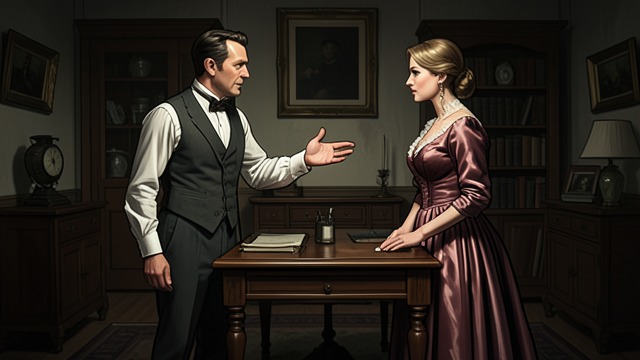
Marriage Meets Material Reality
Unequal authority
Lydgate assumes that his expertise gives him the right to decide the household’s financial course. Rosamond sees the proposed sale and reduction of comforts as a threat to her own position.
A conflict without shared language
Neither understands the other’s priorities well enough to negotiate honestly. The expected roles of husband and wife—his authority, her compliance—do not produce the harmony either imagined.
Inheritance Restricts Dorothea’s Choice

Inheritance Restricts Dorothea’s Choice
A financial penalty for love
Casaubon’s codicil makes Dorothea’s property conditional on her not marrying Will. The document converts a late husband’s suspicion into a continuing limit on a young widow’s freedom.
The cost of choosing
Dorothea marries Will knowing that she will lose the property. Her act challenges the claim that a woman’s security should outweigh the authority of her own judgment and affection.
Marriage Without the Last Word
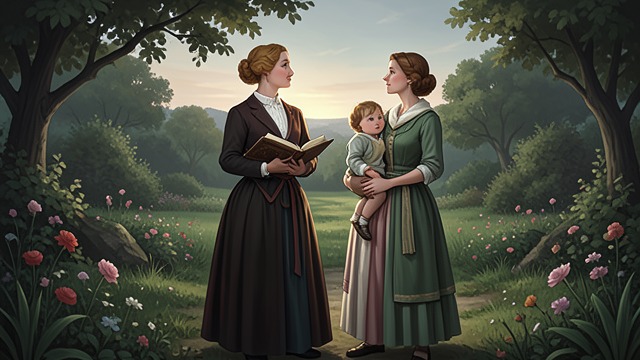
Marriage Without the Last Word
Different paths, unequal freedoms
Dorothea finds a shared life with Will and public work, while Rosamond remains in a marriage shaped by accommodation and domestic comfort. Neither woman’s future is reducible to a single social judgment.
A critique of fixed roles
The story questions both the ideal of female submission and the assumption that marriage guarantees happiness. Women’s agency appears through difficult choices, not through freedom from social constraint.
Early in the story, at Tipton Grange
Before her engagement to Lydgate
During Lydgate and Rosamond’s first financial crisis
After the discovery of Casaubon’s codicil
At the close of Dorothea’s and Rosamond’s stories
