Aging and mortality
Midwinter BreakAging and mortality are not distant abstractions in the novel: they surface as flashes in Gerry’s vision, a fall in a hotel bath, Stella’s fear of being too old to begin a different life, and both spouses’ anxieties about memory and dependence. These incidents make the future bodily and immediate. They also complicate any simple division between independence and care: the couple joke about death, assist one another through small crises, and confront the possibility that time may narrow their choices before either is ready to make them.
The Body as Evidence of Time
Gerry’s age first appears in the uncertain light of an early morning. Waking in a cold bedroom, he sees sudden sparks and branching flashes, like chandeliers and spiders of light, and wonders whether they announce a stroke or result from drinking. He knows he has been harming himself, but postpones his resolution to stop until after the holiday. His optician later dismisses the flashes as common at his age, especially when someone stands too quickly. The reassurance does not remove the fear so much as relocate it: the alarming symptom belongs not to a unique catastrophe but to ordinary bodily aging.
The bathroom scene turns that uncertainty into physical vulnerability. Gerry slips in the shower and lies stunned, his heart pounding. Once he has checked that no limb or his coccyx is injured, he jokes that he will sue the hotel for failing to provide a rubber mat for elderly guests, while denying that he is elderly. Stella helps him up by the hand through a towel, steadies him with the bathroom handles, wraps him, and leads him back to bed. Her laughter first alarms him, then she apologizes and says it was nerves. The incident becomes, in his words, “The first time you fall in the shower,” followed by the bleak joke, “The next header is into the grave.” Humor lets them speak about the fall without disguising its implication: a familiar domestic act has become a measure of how easily the body can fail.
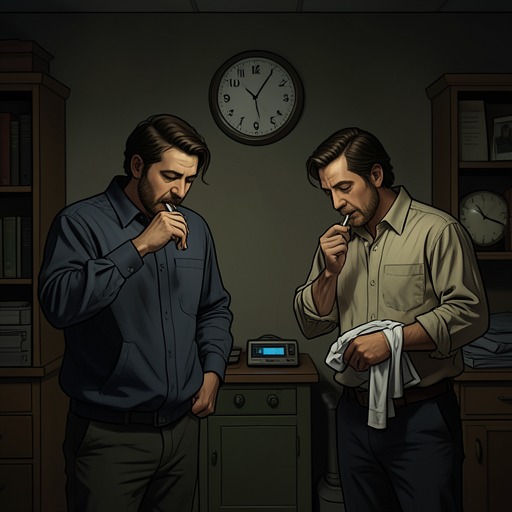
Gerry also reads aging in his face. Looking in the hotel mirror after taking his statin, he notices a developing dewlap and imagines what drink may be doing to his organs as well as his appearance. He thinks of the gradual effects of whiskey—the red or grey nose, leathery skin, and other changes that take years to form—as “the finished you.” His face appears to register a long habit before he can make that habit visible to Stella. He knows she dislikes his drinking and fears it could end their life together; concealment becomes his proposed answer, even though he admits he does not always know how much he is drinking. Aging here is not simply decline: it makes the accumulated consequences of conduct harder for him to ignore.
Death, Marriage, and the Near Future
At a meal, Stella abruptly asks Gerry where he wants to be buried. He responds by asking whether she wants to be buried at home or in Scotland. She says, “Scotland is home now,” then asks whether she may be buried with him, or whether her ashes may be. The intimacy of the question is conditional. Stella tells him, “If you’re still drinking I don’t want you next nor near me.” Gerry promises that he will have given up by the time he dies; she smiles and says she will move over. Their exchange brings together the prospect of death, the geography of belonging, and the immediate strain of his alcohol dependence. The imagined grave offers a shared future, but only one in which Gerry’s drinking has changed.
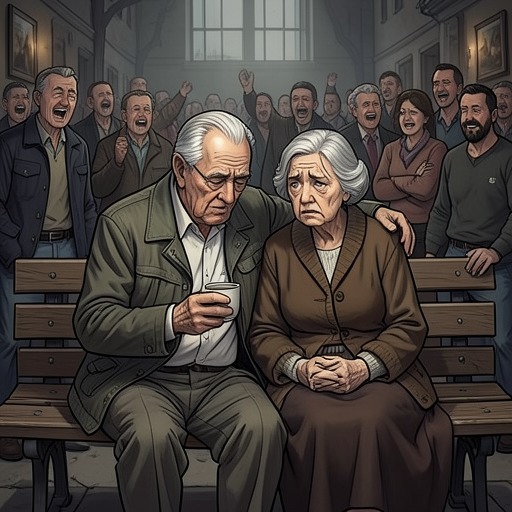
Mortality also gives force to Stella’s dissatisfaction with their present life. When Gerry asks what she wants to discuss with a woman she has visited, Stella says, “I’m tired. I’m tired of living the way we do.” She is looking for answers about how to live well, and describes a wish to recover a more devout life, connected to charity and prayer. Her search is not presented as a settled decision or a sudden rejection of Gerry. It is an attempt to consider what her remaining life should contain, at a moment when the couple’s familiar arrangements no longer seem sufficient.
Age, Eligibility, and the Possibility of Change
Stella’s search for a women’s religious community meets a practical age limit. She learns that women may still live at the community, but the waiting list may be five years or longer. Applicants must live alone, be between thirty and sixty-five, and be able to afford it. Stella sits with the news, her face sagging, and concludes, “I’m too old.” The bluntness of the limit contrasts with the scale of the decision she is trying to make: a long wait and a maximum age turn spiritual exploration into a question of access and timing.
Her disappointment does not end the possibility of living separately. She considers selling the tenement flat and buying two small flats, one for each of them; hers would need a garden. She also imagines Gerry having to part with his books and CDs and make his own dinners. Even while contemplating separation, she begins organizing his future and considering how he would manage. She recognizes this as a return to the very role she is trying to question: looking after him. Age therefore brings both constraint and a newly imaginable alternative. Stella may be excluded from one community, but she can still picture a life on her own.
Memory, Care, and the Meaning of Later Life
Stella’s sense of time moves sharply between decades. While crying over being too old, she notices round red marks on her thighs, then realizes they are elbow prints from leaning forward as she wept. The marks call to mind her childhood Raggedy Anne doll. Other recollections follow: her Junior Certificate, with the distinction section filled with subjects, and a card recording Baby Gilmore’s weight at birth, kept with his wrist tag. A single thought seems able to carry her through sixty years, yet whole stretches of her life remain inaccessible. She fears that, like pigeons startled into flight, her memories might all take off and leave her empty.
That fear is shaped by what she has seen happen to her mother and grandmother in old age. Stella keeps up her crosswords as a kind of mental exercise because she worries about losing her sense of self. She also notices Gerry’s lapses: he asks repeatedly what they are eating, forgets that they are due at a reception, and can become absorbed in reading until she appears dressed at the study door and startles him. These details do not establish a diagnosis; instead, they show how the possibility of cognitive decline enters everyday married life, through repetition, missed plans, and Stella’s watchfulness.
The novel places such anxieties beside the small forms of competence and care that persist. Gerry knows how to cross his home in darkness without waking Stella; at the hotel, he handles his medication quietly so as not to disturb her. Stella, in turn, catches and supports him when he falls. Neither gesture cancels the prospect of dependence, but together they make aging relational: bodily change is experienced by one person and managed, feared, or witnessed by another. The questions of where to live, how to remain useful, and whether to share a grave are therefore also questions about how long their existing forms of companionship can hold. Mortality presses on the present, but it does not resolve it; it makes the couple’s choices more urgent while leaving their future unsettled.