Gerry and Stella's marital crisis
Midwinter BreakGerry and Stella Gilmore’s marital crisis is the hidden subject of their midwinter holiday in Amsterdam: a marriage that appears safe and familiar is revealed to contain deep uncertainty about faith, alcohol, purpose, and the shape of the couple’s remaining years. The crisis is not precipitated by a new romantic attachment. It grows out of accumulated dissatisfaction and a widening difference in what Gerry and Stella believe a life together should be.
A settled marriage under strain
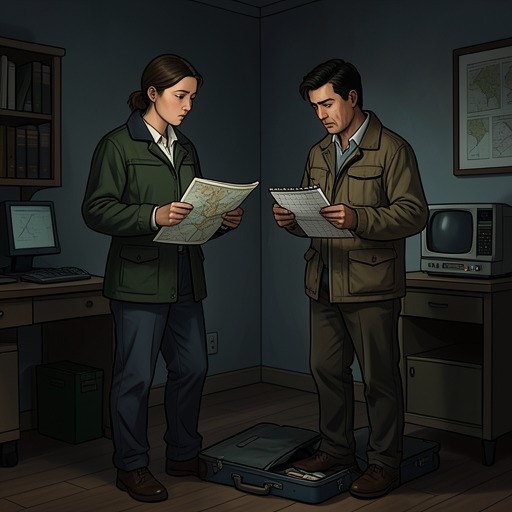
Gerry and Stella Gilmore are a retired couple who have travelled from their home in Scotland for a four-day break. Their trip is meant to refresh them, take in the city, and give them time to reckon with what remains of their lives. At first, their ease with one another suggests the security of long familiarity. Yet that appearance does not survive the questions the holiday brings to the surface: Stella is tired of their way of living, worried about the marriage, and angry at Gerry’s persistent undermining of her religious faith. His forgetfulness and fixed habits add to her sense that the established shape of their life is no longer enough.
The strain has a history beyond the immediate quarrels of the trip. Memories of a troubled period in their native Ireland have begun to return, bringing the past into a marriage already burdened by disagreement and habit. The available account does not reduce the crisis to one decisive argument or a single cause. Instead, the holiday makes visible the combined pressure of resurfacing memories, incompatible beliefs, and Gerry’s drinking. Their distance is especially painful because it exists inside an ordinary partnership that still carries the marks of shared years.
Stella’s reckoning with the years ahead
In private, Stella considers how difficult it would be to change her life at her age. Leaving seems almost impossible, not least because there is still so much to do; at the same time, she recognizes that she has spent much of her life organizing and taking responsibility. She has chaired the residents’ association for their tenement, served as a Eucharistic minister in her parish, arranged jumble sales and sales of work, and bought and sold flats for their son, Michael Gilmore. Gerry has called her his “transport captain,” a description that reflects her role in planning journeys as well as the wider habits of competence and care on which their household has relied. Her university degrees reinforce her awareness that she is capable of acting, even as she rehearses how she might speak to him and postpones the conversation until tomorrow.
The possibility of a sanctuary gives her thoughts about change a direction, but not a settled outcome. Stella reasons that a separation would not be caused by meeting someone else: that is not what is happening. With both sets of parents dead, and Michael Gilmore living in Canada with a family and a life of his own, she sees fewer immediate family obligations to negotiate. She believes he would understand the reasons for a possible break. Her private condition is plain: if Gerry continues to live in what she regards as a bibulous fashion, she would rather be elsewhere. The prospect is therefore neither a sudden romantic escape nor a completed decision; it is a serious possibility she is trying to make thinkable.
Different accounts of a shared future
When Gerry asks what she wants from her visit to the place down the passageway, Stella says she is tired of living as they do. Her questions reach beyond the marriage to how they might live well and what they should do with their lives. She acknowledges that finding an answer would lead to more difficult questions. Gerry’s concern turns quickly toward the relationship itself: he wants to know where her search leaves him, and where it leaves them. Stella answers that they are in different places. Her response names the emotional separation directly, without pretending that either person already knows what should follow.
The conflict becomes sharper when Stella describes the years after raising a family and completing their work together. She has been marking time, she says, and cannot accept that this is all that the rest of life offers. She imagines another ten or twenty years and feels that the lives they have fashioned do not fit. She qualifies the judgment—she knows it is true for her, but does not know whether Gerry feels the same—yet the qualification cannot soften its force. Her wish is to use the time left for something beyond watching him drink. Gerry asks whether he appears in her storyboard of the future. Stella tells him, “Not really.” The short reply turns an abstract search for purpose into a concrete threat to their shared future.
Unequal attention and an unresolved ending
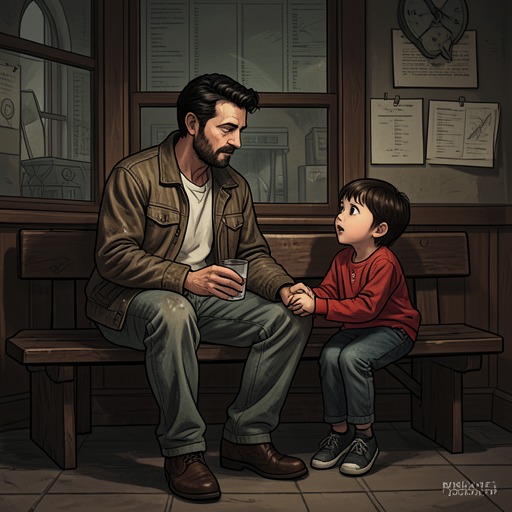
The episode after that exchange makes the distance more than a matter of competing interpretations. Stella falls asleep with her book too close to her face. Gerry moves it to the bedside table, a small gesture of care, then retrieves a half-bottle from his jacket, takes it into the bathroom, and pours himself a drink. He coughs to cover the sound of opening it. The sequence places tenderness and concealment together: he looks after Stella in one moment, then hides the drinking that is central to her complaint in the next. His question about her storyboard has not led him to stop or disclose the behavior she wants to escape.
The marriage remains unresolved as the midwinter break draws toward its end. Stella’s search for a life of greater purpose and her frustration with Gerry’s drinking have brought the couple to the point of acknowledging that they may be heading in different directions. Gerry, for his part, has heard that he may not belong in the future Stella is imagining, but the evidence shows no resolution of the conflict. The crisis rests precisely in that gap between recognition and change: the couple can name the distance, while the habits and choices sustaining it remain in place.