getting over
Midwinter Break“Getting over” is a colloquial expression for getting to sleep, and its recurrence gives a sleepless night between Gerry Gilmore and Stella a small, affectionate turn. First attached to Gerry’s plan to drink himself into a good night’s rest, the phrase returns in bed as a comic complaint and then as a remembered family saying. What begins as a practical concern about sleep becomes an occasion for shared laughter—and, briefly, closeness.
Meaning and First Use
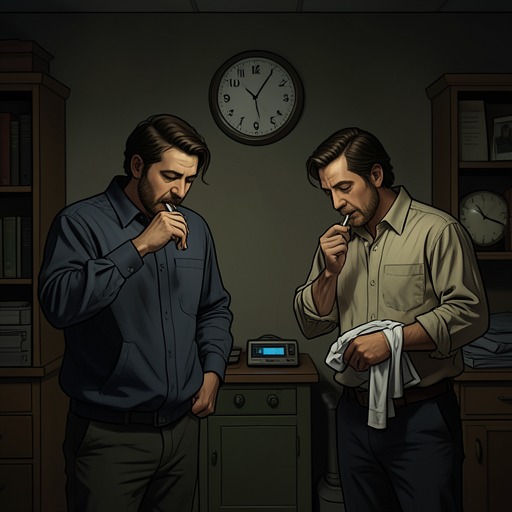
Gerry uses the expression in the context of his drinking and his expectation that alcohol will help him sleep. At home, after Stella has gone to bed, he pours whiskey into his favourite tumbler and tops it with water. He regards the drink as substantial, savours it while listening to music through headphones, and thinks that it will give him a good night’s rest before the next morning. He also expects to need another couple of drinks to “get him over.” The phrasing makes sleep sound like something to be reached or endured, rather than a simple return to rest.
That expectation sits alongside the physical details of the scene: the glass is kept below the sofa arm, where Stella will not see its volume, and Gerry’s headphones shut him off from the room around him. The expression is not itself a diagnosis of his drinking, but its first use belongs to a routine in which alcohol is presented to himself as a means of preparing for sleep and action. When it recurs later, the gap between the matter-of-fact promise of getting rest and the couple’s actual wakefulness gives the phrase a different charge.
The Phrase in a Sleepless Night
During their first night away, Stella names their trouble with sleep as “First night away syndrome.” Gerry complains that she is stopping him “getting over,” then buries his head in the pillow. Her response does not address the complaint literally. Instead, she connects the wording to a sound remembered from comics: “A bit like your storyboarding. How does somebody wolf-whistle in a comic? There has to be a speech bubble. But it’s not speech – so – weet wee-o.” The conversation moves from Gerry’s effort to sleep to Stella’s thoughts about how sounds are represented, and then to her inability to whistle and the nuns’ disapproval of whistling.
The expression’s most revealing turn comes when Stella laughs at Gerry’s wording. “Getting over,” she says, is a quaint phrase she has not heard in years. She remembers that her father used it frequently: when her mother asked whether he had slept well, he would say, “naw, I’d a hard time getting over.” In that recollection, the phrase belongs to her family’s ordinary conversation. Gerry’s complaint has unexpectedly brought a piece of Stella’s earlier life into their shared night.
From Complaint to Shared Language
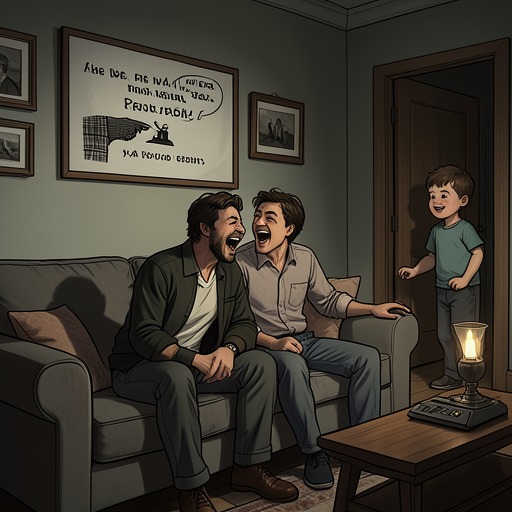
Once Stella explains the family usage, Gerry joins in the laughter. He says, “I’m still half shot,” and asks her to stop talking or they will never get over. The phrase now works in two directions at once: it names the sleep they are trying to reach, and it supplies the joke that keeps them awake. Gerry’s wording also brings his drinking into the exchange without turning the moment into an argument. The earlier image of whiskey as a route to rest meets the present fact of his being “half shot,” while Stella’s remembered idiom makes the situation comic rather than solemn.
The laughter comes in waves, but the second burst is less intense. Afterward they fall silent. Gerry puts an arm around Stella and holds her close for a while; she then moves away from him in the vast bed. The phrase does not resolve their restlessness or establish lasting reconciliation. Its significance is smaller and more precisely situated: for a moment, a complaint and a family saying become shared language, and that language permits laughter and touch before the distance between them reappears.
Recurrence and Narrative Significance
The expression’s movement across these scenes depends on contrast. At home, Gerry privately treats drinking as preparation for sleep and the next day. In the hotel, his attempt to rest is interrupted by conversation, Stella’s remembered family speech, and laughter that neither of them initially set out to produce. The phrase travels from an individual expectation about sleep into an exchange shaped by both of their voices.
Its recurrence also preserves the expression’s ordinary, colloquial character. Stella does not present it as a formal saying or explain it abstractly; she recognizes it because her father used it in response to her mother’s everyday question. Gerry then repeats it in their immediate circumstances, adapting the family phrase to their shared difficulty. “Getting over” thus carries a small history from Stella’s childhood into her marriage, but its force in the scene comes from how quickly it becomes theirs: first a complaint, then a memory, then a joke they make together.