Federal Bureau of Investigation
Missing YouThe Federal Bureau of Investigation employed Jessica Mastriani for almost a year in a special division that put her dream-based ability to find missing people to work. The assignment carried her from searches conducted at a distance to the war in Afghanistan, where she helped identify where people were hidden. It also brought her into direct contact with violence and death, and its psychological consequences ended her work for the agency. Jessica was paid by the Federal Bureau of Investigation, but she was not an agent—a distinction obscured by the television version of her story.
Division and Assignment
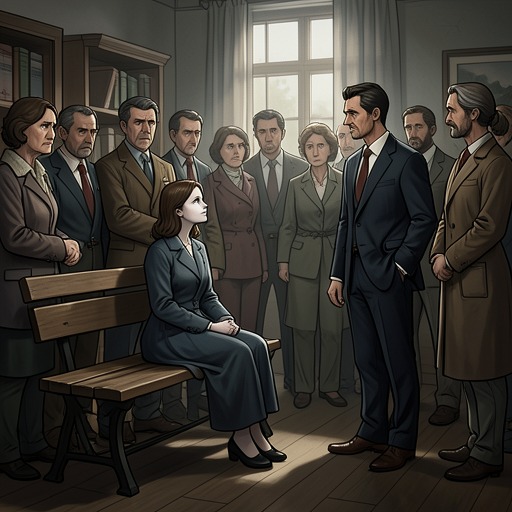
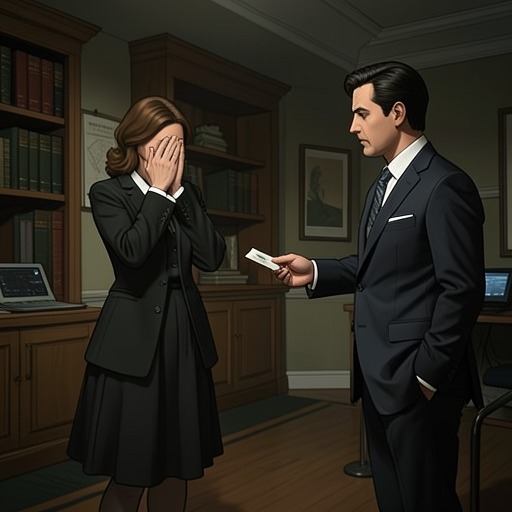
The known structure of Jessica’s employment is narrow but consequential: she worked for almost a year in a special division headed by Cyrus Krantz. The evidence does not specify the division’s formal name, wider staffing, or procedures. Its work, as Jessica describes it, centered on locating people through her ability to find missing persons in dreams.
At first she tried to provide information from home and later from Washington. In some cases, searchers returned saying that no one was at the place she had identified. Jessica remained certain that her ability was not mistaken, and eventually insisted that she be sent to the locations herself. Her move from supplying leads at a distance to working in the field changed the nature of her assignment: she was no longer only relaying a dream’s result, but witnessing the search environment directly.
Searches in Afghanistan
The war made the division’s task urgent. Jessica was sent to Afghanistan, where she experienced the conflict in person rather than through news reports. She directed personnel toward caves in the mountains where people they needed to find were believed to be hiding. The searches were not uniform in their outcomes: some people became known through news coverage, while others remained secret; some could not be reached because of their location, and some were watched while searchers waited. Some were found dead. Jessica’s account holds these different results together with her insistence that she found everyone she was able to locate.
That work made the Federal Bureau of Investigation’s use of Jessica’s ability part of a wartime operation, not simply a missing-person service removed from danger. She understood that people had to be found quickly because there was a war, while also describing the human cost of the searches. The assignment placed a teenager among scenes of explosions, people being killed, and children pleading with her not to take their fathers. In her later work helping children, she recognized a painful reversal: the same search work that had initially seemed to save people could also lead to their fathers’ arrests and, in her view, ruin their lives.
Trauma and Departure
After the searches, Jessica began having nightmares and could no longer sleep. Because her ability depended on dreaming, the loss of sleep also meant she could no longer find people. The agency identified her condition as posttraumatic stress syndrome and tried drugs, therapy, and a week beside a pool in Dubai. None restored her sleep. The sequence connects the end of her practical usefulness to the effects of the work: the ability on which her assignment depended became inaccessible as the war’s experiences followed her home.
The Federal Bureau of Investigation eventually sent Jessica home in the hope that returning to ordinary surroundings would help. Instead, she found that neither she nor her circumstances felt as they had before. At seventeen, after seeing people and children caught in violence, she could not simply resume an ordinary routine. She described herself as no longer being Lightning Girl and as having become normal, but that change was not a simple return to her former life. Later, she recognized that she had come back different and broken. The agency’s efforts to treat her condition and its decision to send her home mark the limits of what its work could restore; the evidence does not establish that her ability returned during her employment.
Employment, Pay, and Public Image
Jessica’s account distinguishes employment by the Federal Bureau of Investigation from becoming an agent. She says she was on salary and would not have worked for the agency for free, but explicitly clarifies that she was not an agent. After leaving the work, she received a pension. Alongside income from a television adaptation and money sent by her parents, that pension helped cover her expenses in New York City. Her employment therefore continued to affect her life materially after her field assignment ended.
The television show based on Jessica’s life altered the public picture of her relationship with the agency. It portrayed her going to Quantico to train as an agent, which she says never happened; her actual service was in the special division, and she did not become an agent. News coverage likewise framed her departure as a public ending to the Lightning Girl story, describing her return home and apparent loss of her psychic ability. These accounts made a dramatic, legible version of her service available to the public, but Jessica’s own history emphasizes the less tidy facts: a paid but non-agent role, searches with varied outcomes, and a return shaped by trauma rather than a straightforward restoration to normal life.
Significance
The Federal Bureau of Investigation is significant in Jessica’s story as the institution that turned her unusual ability into organized search work and placed that work within the conditions of war. Its assignment gave her the means to help locate people, but the results could include secrecy, inaccessibility, surveillance, or death; finding someone did not guarantee that the person could be reached or saved. Jessica’s later discomfort with the consequences for children whose fathers were arrested further complicates the idea that locating a missing person is an uncomplicated good.
The agency’s role also makes the distinction between a public label and an actual job central to Jessica’s history. The television image of an FBI agent trained at Quantico contrasts with the woman who worked for a special division, was paid but was not an agent, lost the ability to dream after the war, and returned home with a pension but without her former capacity to find people. The contrast preserves both the reach and the cost of the work: the Federal Bureau of Investigation could send Jessica into the field, but it could not make her experiences or their aftermath disappear.