
The Gam and Maritime Community
Moby-DickThis flow traces the whale-ships' tradition of sociability and shows how Captain Ahab's obsession rejects the communal world of the fishery.
increasing Bearing strength in each event
 decreasing
Bearing strength in each eventdecreasingWhaler Sociability
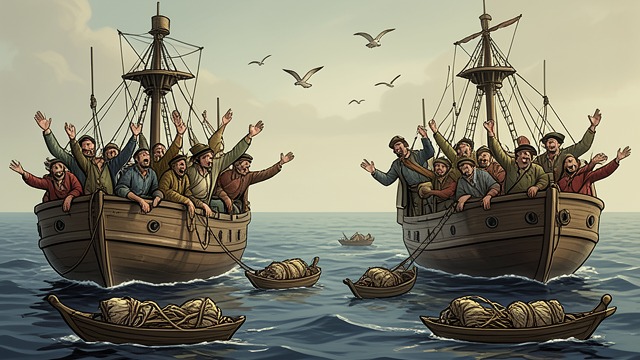
Whaler Sociability
Shared Isolation
Whale-ships meet across immense waters and exchange news, letters, and crews. Their common risks create a maritime community that ordinary merchant vessels lack.
Knowledge Circulation
Information about whale grounds and dangerous animals travels through these encounters. The fishery survives by collective memory.
The Gam Defined
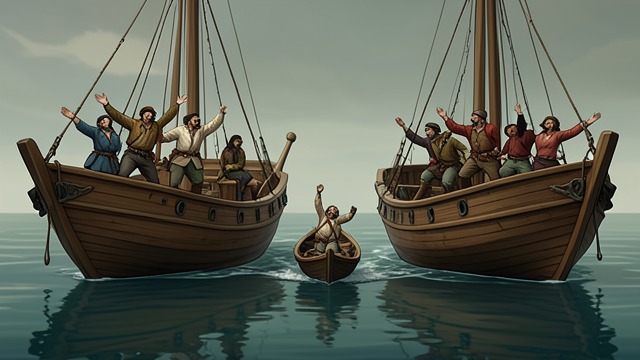
The Gam Defined
Ritual Visit
A gam joins two ships through exchanged boats and temporary hospitality. The practice turns the ocean from emptiness into a network of human contact.
Social Counterweight
The custom embodies reciprocity rather than conquest. It offers a model of maritime life that Captain Ahab increasingly refuses.
Ahab's Selective Fellowship
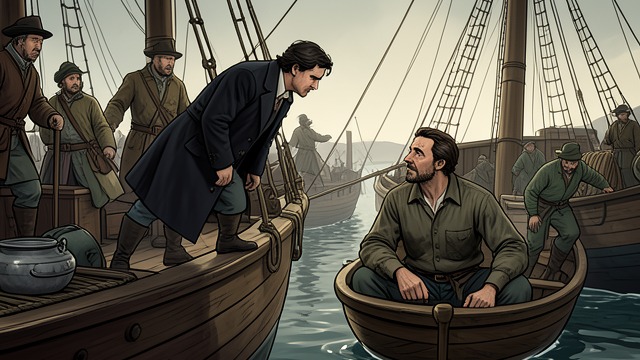
Ahab's Selective Fellowship
Information as Currency
Captain Ahab speaks to other captains chiefly to obtain reports about the White Whale. He values ships as instruments of pursuit rather than fellow communities.
Isolation Intensified
His selective sociability narrows the world around him. Every encounter is measured by whether it advances the hunt.
Rachel's Plea
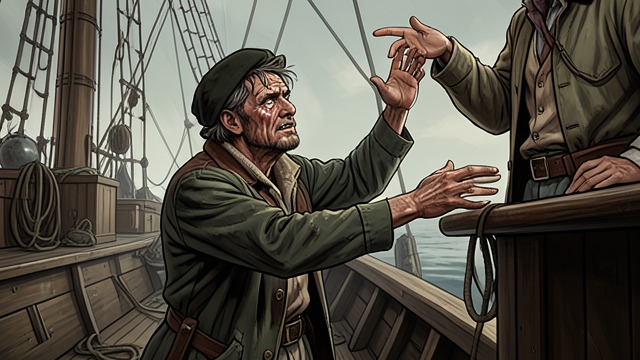
Rachel's Plea
A Father's Request
Captain Gardiner asks the Pequod to help search for his missing son and crew. His appeal invokes the mutual obligations of sailors and fathers.
Rejection
Captain Ahab refuses because time spent searching would delay pursuit. The refusal breaks the moral fellowship represented by the gam.
Rachel's Aftermath
Rachel's Aftermath
Continuing Search
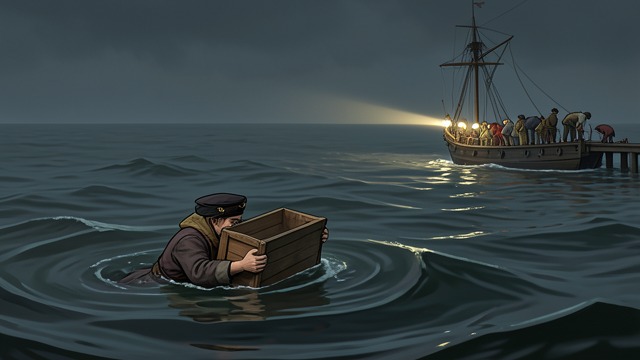
The Rachel later rescues Ishmael while still searching for its missing children. Its voyage remains oriented toward recovery rather than revenge.
Ethical Contrast
The ship's persistence contrasts with the Pequod's refusal to help. One vessel preserves communal obligation; the other destroys it.
during the first intership encounters
before the Pequod's major encounters
after Captain Ahab's oath
three days before the final chase
immediately after the final sinking
