
The Sea as Metaphor
Moby-DickThis flow follows the sea from psychological refuge to cosmic medium that exposes the limits of human control.
increasing Bearing strength in each event
 decreasing
Bearing strength in each eventdecreasingWaterward Desire
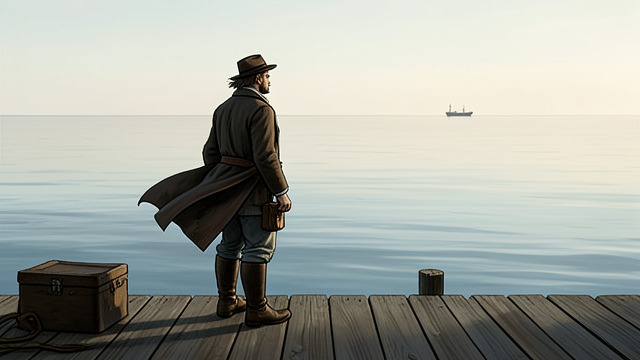
Waterward Desire
Escape from Land
Ishmael turns toward the sea whenever the land becomes spiritually oppressive. Water promises movement where society offers confinement.
Mirror of Life
The ocean reflects the ungraspable phantom of existence. Its attraction comes from both freedom and the impossibility of possession.
Oceanic Community
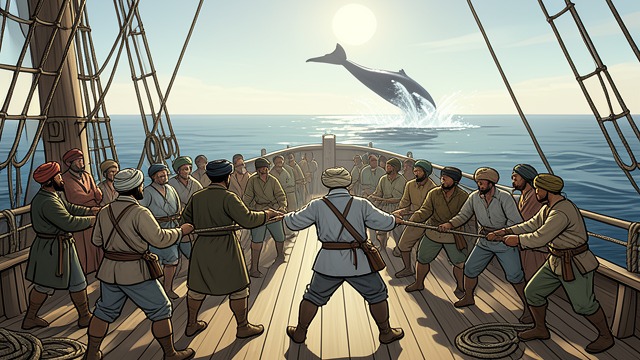
Oceanic Community
Open Horizon
The sea removes familiar social boundaries and brings distant peoples into contact. It creates a harsh but potentially democratic environment.
Hidden Threat
The same openness conceals storms, whales, sharks, and depth. Freedom is inseparable from exposure.
Depth and Knowledge
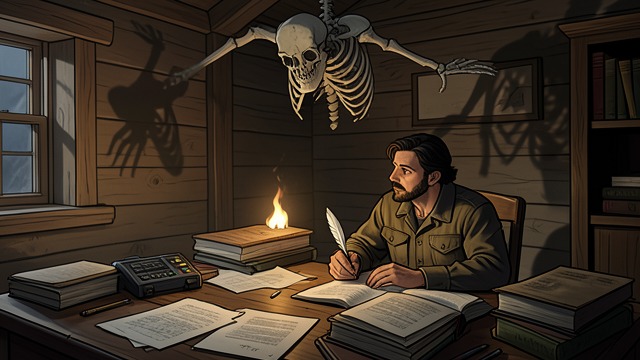
Depth and Knowledge
Classification Attempt
Ishmael tries to organize whales into books, chapters, and species. The ocean resists the neatness of the system.
Unfinished Understanding
Every definition remains partial because the living whale exceeds the observer's categories. Knowledge becomes valuable precisely when it admits its incompleteness.
Ahab's Oceanic Pursuit
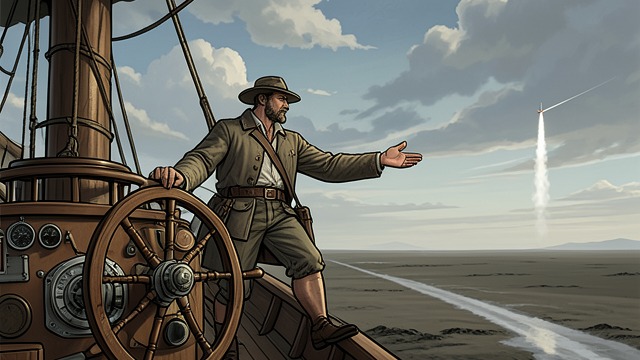
Ahab's Oceanic Pursuit
World as Hunting Ground
Captain Ahab converts the whole ocean into a map of possible encounters. Currents and seasons become instruments of obsession.
Loss of Scale
The solitary whale is tiny within the planetary sea, yet Captain Ahab makes it the center of creation. Human meaning distorts physical proportion.
Closing Vortex
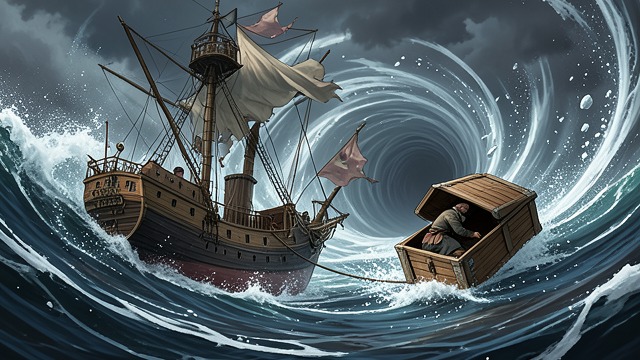
Closing Vortex
Sea as Destroyer
The ocean swallows the Pequod and nearly swallows Ishmael. Human structures dissolve into water, foam, and circular motion.
Sea as Preserver
The same medium releases Queequeg's coffin and carries Ishmael toward rescue. The sea is neither merely hostile nor benevolent; it is the condition of both death and survival.
opening chapters
during the Pequod's early passage
during the cetological chapters
middle and late voyage
epilogue
