
Possession and Maritime Law
Moby-DickThis flow traces the fishery's rules of ownership and shows how possession becomes a model for political and social domination.
increasing Bearing strength in each event
 decreasing
Bearing strength in each eventdecreasingFast Fish Rule
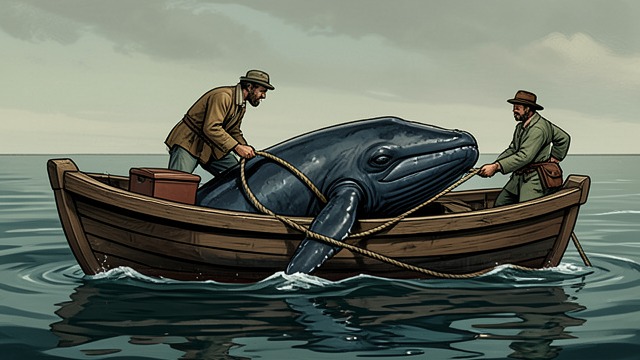
Fast Fish Rule
Technical Ownership
A whale attached to a boat, line, or recognizable waif belongs to the party that has secured it. Possession is defined through physical connection and intention.
Practical Necessity
The rule prevents every chase from ending in dispute. Yet its simplicity hides difficult questions about abandonment and labor.
Loose Fish Rule
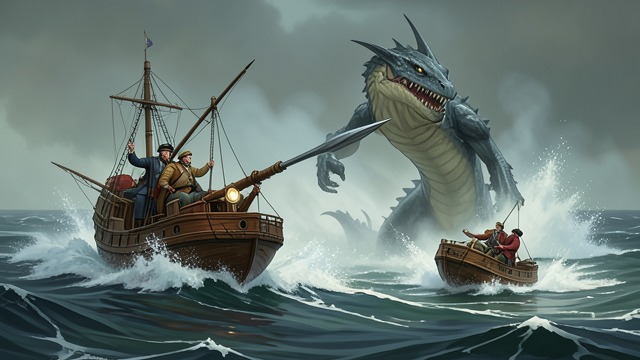
Loose Fish Rule
Open Capture
A whale not secured by another party is fair game for whoever catches it first. The rule rewards speed while ignoring prior effort.
Moral Unease
The distinction exposes a conflict between legal possession and ethical desert. A creature can move from one owner to another without changing its nature.
Political Application
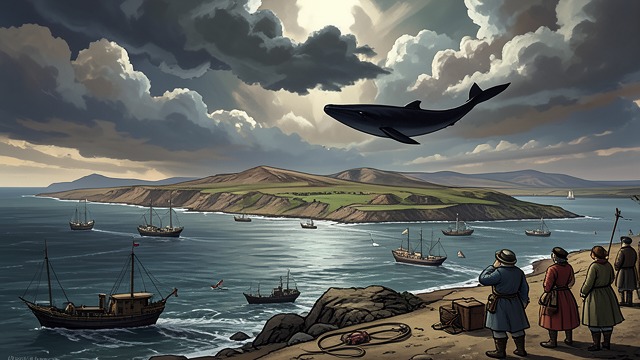
Political Application
Nations as Fish
Ishmael applies fast-fish and loose-fish logic to slavery, colonial conquest, and territorial expansion. Ownership becomes a metaphor for power disguised as law.
Universal Critique
The rule is not limited to whalers. It describes how institutions turn possession into legitimacy.
Royal Fish
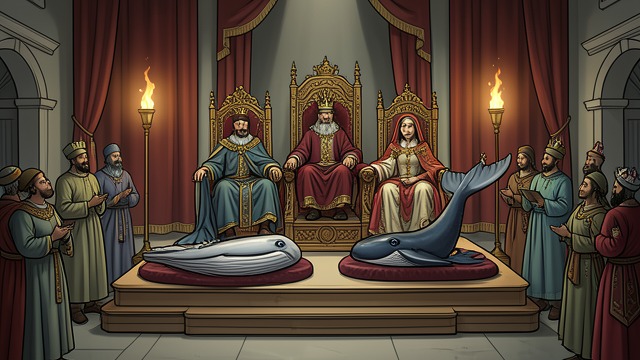
Royal Fish
Crowned Ownership
English law assigns the whale's head to the King and its tail to the Queen. Royal privilege interrupts the ordinary rules of capture.
Legal Absurdity
The royal claim shows how authority can appropriate labor it did not perform. Symbolic excellence becomes an excuse for material seizure.
Ahab's Possession
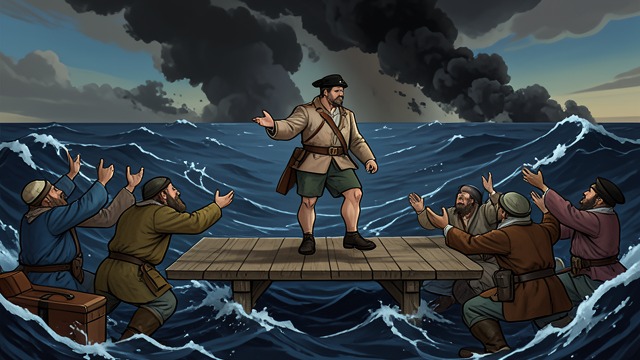
Ahab's Possession
Crew as Fast Fish
Captain Ahab treats the crew's oath as proof that their bodies and wills belong to his purpose. Consent becomes permanent possession.
Reversal
The White Whale cannot be possessed, and the Pequod cannot contain the consequences. The captain's legalistic imagination collapses before the sea's mobility.
after the Grand Armada
during the same legal discussion
after the legal examples are introduced
during the discussion of English maritime law
from the oath to the final chase
