
The Children's Confinement
MomoThis flow traces how official concern about neglected children becomes a system that deprives them of independent play and community.
increasing Bearing strength in each event
 decreasing
Bearing strength in each eventdecreasingAdults Notice the Problem
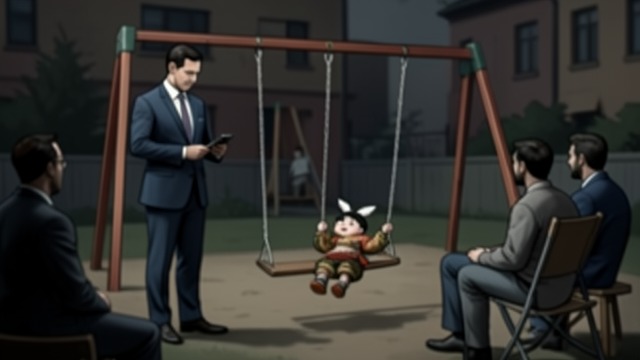
Adults Notice the Problem
Neglect Reframed as Disorder
Some parents acknowledge that children are left alone because adults have no time. Rather than challenging the conditions that created the neglect, they demand that authorities take responsibility.
Other residents describe children as a traffic hazard or future social burden. Their arguments convert a need for attention into a case for tighter control.
A Public Demand
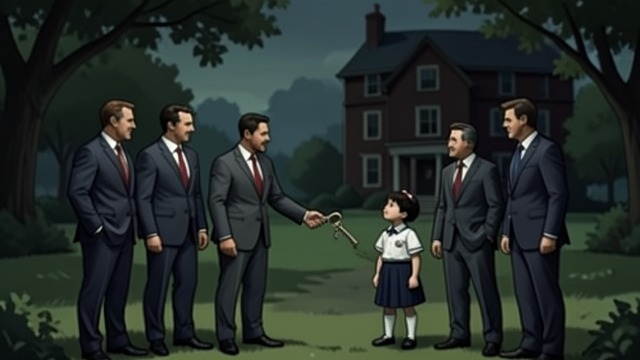
A Public Demand
Efficiency as a Justification
Supporters argue that children need useful training for a technological future and should not waste years in childish play. Time-saving adults endorse a policy that promises order and preparation.
The claims sound practical, but they treat imagination as a defect to be corrected. Children become raw material for the future rather than people whose present needs matter.
The Depots Open
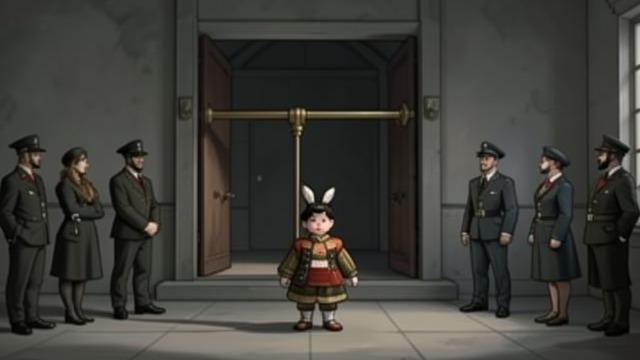
The Depots Open
Care by Compulsion
New Child Depots appear in neighborhoods, and children whose parents cannot supervise them are deposited there. Playing independently in streets and parks is forbidden, with fines for parents whose children disobey.
The policy is described as care, but it is compulsory and designed to keep children out of public space. The language of protection conceals a loss of freedom.
Friendships Divided
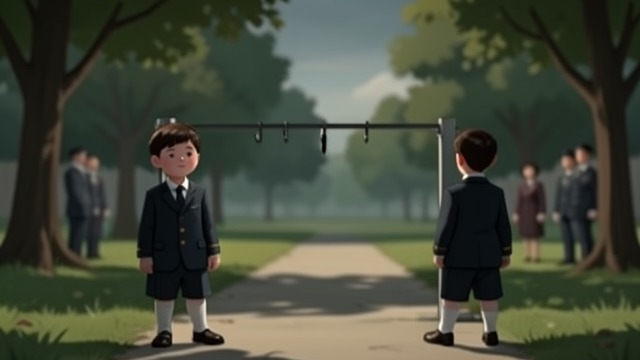
Friendships Divided
Children Sorted by District
Momo's young friends are separated according to where they live and sent to different depots. Their ordinary meetings at the amphitheater become impossible.
The division weakens the children's bond with Momo without requiring the Gray Men to confront them directly. Their old community is dismantled through administrative routines.
Play Becomes Instruction
Play Becomes Instruction
Imagination Unlearned
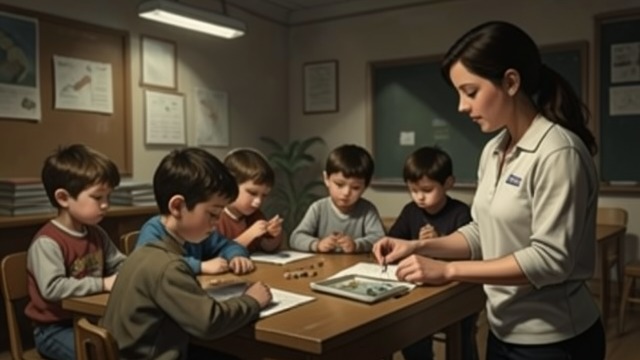
Supervisors assign games with educational purposes, including exercises in data retrieval. Children learn the rules but lose the freedom to invent, dream, and take pleasure in small things.
When Momo encounters Paolo, Franco, and Maria, they look subdued and say that their games are useful even when they do not enjoy them. The institution has not simply occupied their time; it has changed what they believe play is for.
during the year Momo is away
after parents and residents begin pressing authorities
later in the year of Momo's absence
after the Child Depot policy takes effect
during the months the children remain in depots
