
The City's Children and the Future
MomoThis flow traces the conflict between children as people in the present and adults' treatment of them as material for a future economy.
increasing Bearing strength in each event
 decreasing
Bearing strength in each eventdecreasingChildren Without Time
Children Without Time
Neglect as a Consequence
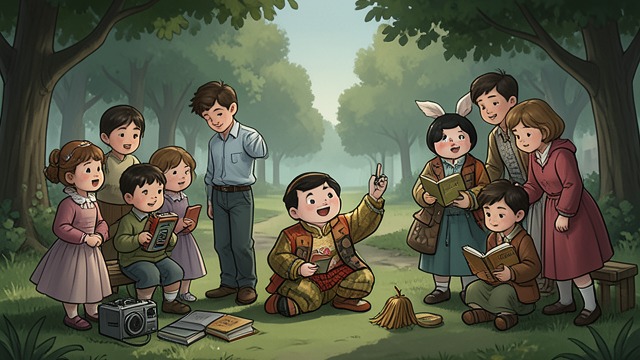
Children notice that their parents are absent, tired, or absorbed in work. Some receive radios, books, or cinema money instead of attention, and come to Momo because they feel abandoned.
Their condition reveals that the time-saving movement does not merely burden adults. It reorganizes family life so that the people most dependent on care receive the least of it.
The Future's Raw Material
The Future's Raw Material
Children Defined by Usefulness
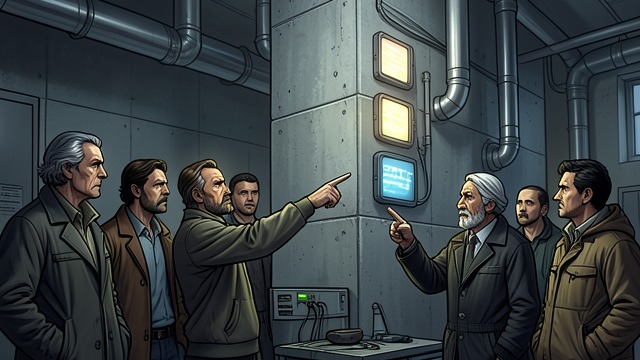
Adults argue that children must be prepared as experts and technicians for a world of computers and nuclear energy. They describe unsupervised play as wasted years and a threat to future generations.
The argument values children according to what they may produce later. It disregards their need for joy and freedom in the present.
Play Reclassified
Play Reclassified
Imagination Under Supervision
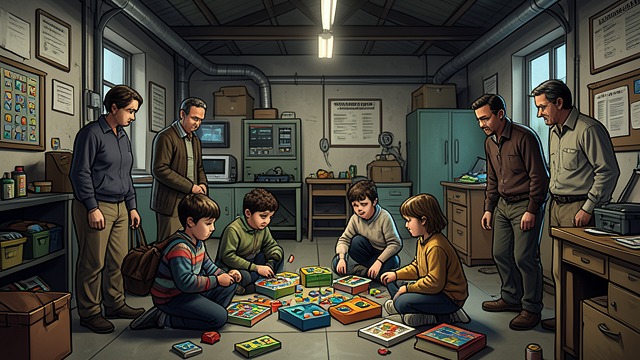
Children are forbidden to play freely in the streets and are given approved educational games in the depots. Activities must demonstrate a useful purpose.
The rule turns spontaneous play into a controlled exercise. It teaches children to mistrust enjoyment that cannot be justified as preparation or training.
The Children Resist Quietly
The Children Resist Quietly
Memory of Another Life
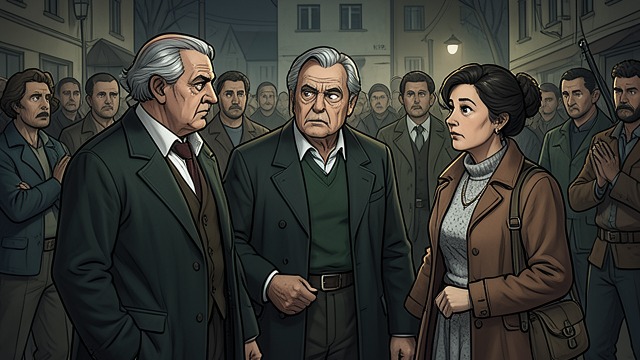
Paolo, Franco, and Maria remember that playing with Momo was more enjoyable, even though adults said it was useless. They are reluctant to speak openly because they expect to be overheard and punished.
Their hesitation is not consent. Memory preserves a judgment that their current arrangements are worse, even when they cannot escape them.
A Future Open to Play
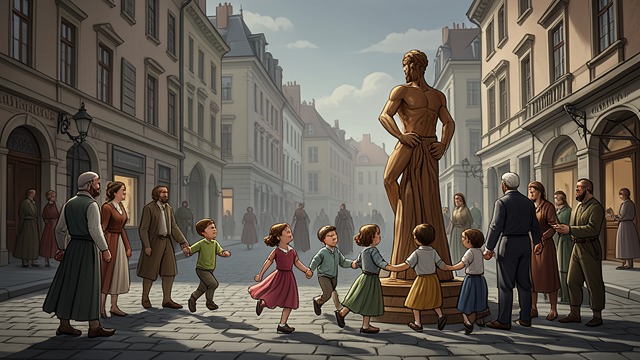
A Future Open to Play
Present Needs Recognized
Children play in the streets again, while adults allow them space and sometimes join in. The city no longer treats every game as an obstruction or a waste.
The ending challenges the assumption that a better future requires the sacrifice of childhood. A society that gives people time can care for the present without abandoning the future.
after the time-saving movement begins
during the public debate over child supervision
after the authorities establish Child Depots
when Momo meets her friends outside the depot
after time returns to the city
