Lycanthropie
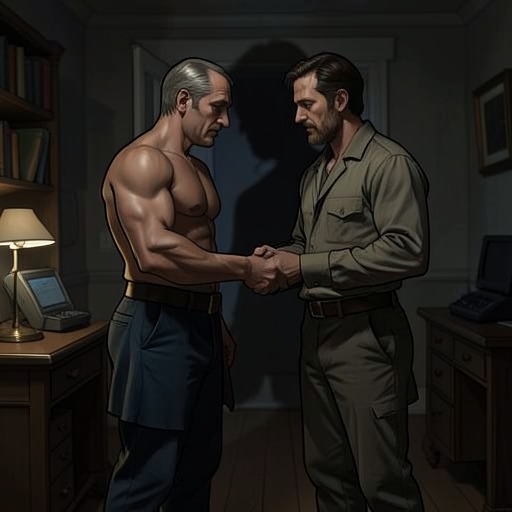
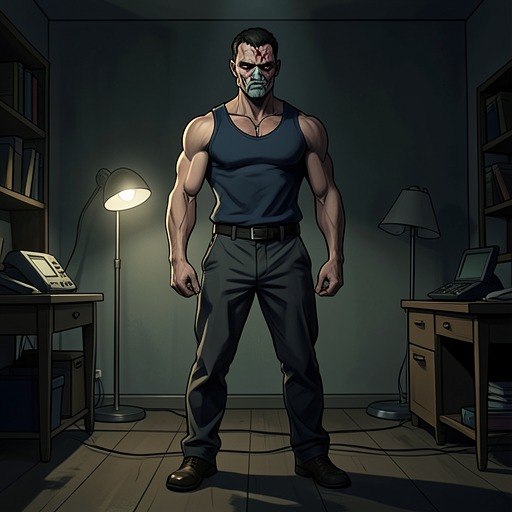
Mon Loup AlphaLycanthropie is the condition that allows Nemrod to move between human and wolf forms. Its decisive revelation comes when Julien sees the change unfold during a jaguar’s attack: Nemrod’s earlier animal-like injuries and unexplained danger become part of a conflict between supernatural beings, while his wolf form makes visible the power he had previously carried in human guise.
Evidence Before the Transformation
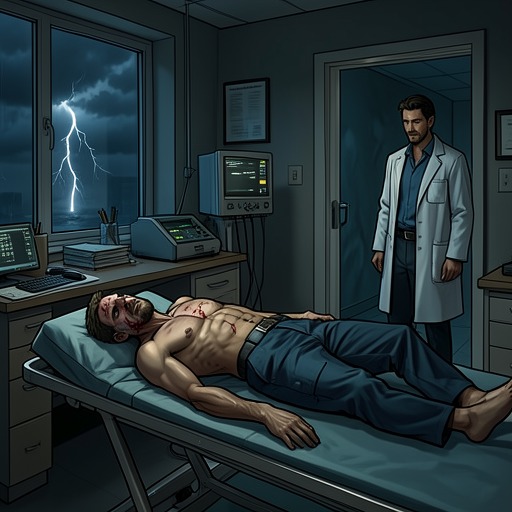
Before Julien knows what Nemrod is, he notices that the wounds along his flanks look less like ordinary injuries than the work of a wild animal, perhaps a dog or wolf. The observation is a clue, not an explanation; Julien can only wonder how Nemrod was hurt. Nemrod’s sleeping speech supplies another fragment. He warns someone named Paimon not to approach, and Julien infers that Nemrod has been in a fight and pursued by someone. The scene establishes danger and animal association without yet identifying lycanthropy or explaining the pursuit.
Nemrod’s name also shapes Julien’s early perception of him. Julien associates it with biblical figures and with masculine authority, predation, and command. That impression acquires a physical counterpart when Nemrod changes form: the strength and ferocity Julien had read in his human appearance persist in the wolf. But the narrative does not make Julien’s first impressions a full account of Nemrod’s nature. The transformation supplies evidence that the injured stranger belongs to a world Julien has not understood, while questions about his pursuer and the wider conflict remain open.
Transformation and Physical Form
The change occurs at night beneath the full moon, after a jaguar appears at Julien’s window. The timing gives the scene a striking atmosphere, but the text does not say that the moon causes the transformation. Nemrod growls in a distinctly nonhuman voice, then changes before Julien’s eyes. His limbs become wolf legs, his hands and feet become paws, and his body stretches until he lands on all fours. His mouth becomes a muzzle, his eyes turn into the dark eyes of a wild wolf, and a tail emerges behind him.
The transformation changes Nemrod’s shape without erasing the qualities Julien already associates with him. In wolf form he is lean, supple, muscular, and covered in thick, shining gray fur; his build retains the athletic and combative impression of his human body. Julien recognizes the same fierce, warrior-like presence across both forms. Lycanthropie is therefore presented not as a replacement of one identity by another, but as a visible change in bodily form through which Nemrod’s existing power becomes unmistakably animal.
After the confrontation, Julien asks how long Nemrod has been a shapeshifter. Nemrod says that he was bitten by a werewolf five years earlier while walking in a park in Montréal. He also says he can generally become a wolf and return to human form whenever he wishes. This brief explanation identifies both the source of his condition and an important feature of its operation: the change is usually under his control, rather than confined to the attack scene or explicitly dependent on the full moon. The story does not provide a fuller account of how the bite works, whether every bitten person changes in the same way, or what limits Nemrod’s ability.
Animal Conflict and Protection
The jaguar’s arrival turns Nemrod’s hidden nature into immediate action. Nemrod warns Julien away with a lifted paw, howls at the intruder, and meets the jaguar’s answering roar. The two animals hold their ground before Nemrod launches through the window, shattering it. The encounter makes the wolf form more than a revelation: it is the means through which Nemrod confronts a real physical threat in Julien’s home.
The fight is closely balanced. The jaguar forces Nemrod down and pins his throat with its paws; Julien searches for something with which to strike the attacker, but Nemrod escapes the hold and throws the jaguar over the balcony. The fall is not high enough to establish that the jaguar has died, though it is likely injured. Alarmed, Julien locks his door and goes out onto the balcony, where he sees Nemrod gradually return to human form. Nemrod then clutches his chest and coughs again. The scene shows the cost and aftermath of the fight without specifying that the coughing is an effect of lycanthropy itself.
For Julien, witnessing the battle produces fear and excitement together. He worries about Nemrod, yet is thrilled by the sight of his companion fighting to protect him. He describes the defense as sensual and primal, and the wolf’s ferocity intensifies the alpha masculinity he had already attributed to Nemrod. This response links the condition to Julien’s changing understanding of their relationship, but it remains Julien’s interpretation of the scene, not a general rule about werewolves or their companions.
Personal and Political Consequences
Nemrod’s explanation places lycanthropie within a larger supernatural and political setting. He identifies himself as a shapeshifter and says he has been one for five years; later, a letter to Julien explains that he is involved in a political conflict to become clan chief. Nemrod says that remaining with Julien would put him in danger, leaves for a time, and asks him not to search for him. He promises to return if he succeeds. The letter does not explain the clan’s complete structure or establish that lycanthropy alone confers leadership. It does, however, connect Nemrod’s nonhuman identity to a community and a contest for power beyond the couple’s private life.
That context sharpens the condition’s narrative significance. The wolf is at once a body capable of extraordinary change, a combatant who can defend Julien, and the visible form of a life entangled in animal rivalries and clan politics. The story’s own introductory note says it departs from conventional gay werewolf romances in pursuit of a more inventive approach. In the scenes available here, that departure is reflected in the way the transformation opens onto unresolved threats and political obligations, rather than ending with the discovery of a secret. Lycanthropie makes Nemrod’s danger legible, but it also reveals how little Julien yet knows about the forces surrounding him.