Paimon
Mon Loup AlphaPaimon is the absent pursuer at the center of Nemrod’s first crisis with Julien: a name heard in sleep, attached to a warning, and gradually linked to the violence that has driven Nemrod into hiding. Paimon’s direct identity remains undisclosed, but the character’s unseen pressure gives the opening encounter its shape and establishes that Nemrod’s private desire is inseparable from a dangerous supernatural pursuit.
Identity and First Revelation
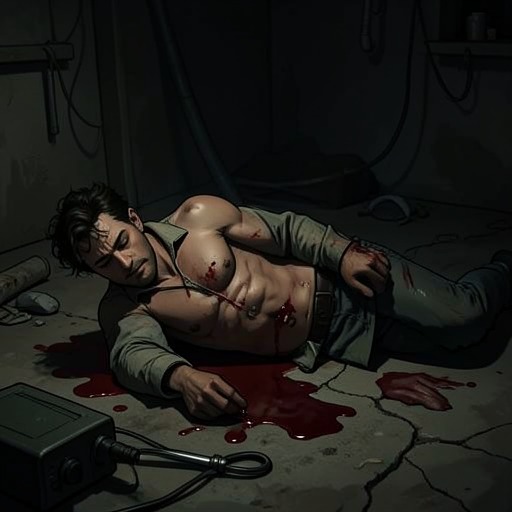
Paimon enters the narrative through Nemrod’s broken, sleeping speech rather than through an introduction in person. After Julien finds the injured man, Nemrod begins murmuring the name in a deep voice and pleading with Paimon not to come closer. Because Nemrod does not answer Julien’s questions, Julien understands that he is speaking in his sleep; the name therefore arrives as involuntary testimony, a fragment that Nemrod cannot consciously explain or control.
The immediate facts are limited but consequential. Julien knows almost nothing about the wounded man, yet he can infer two things: Nemrod has been involved in some kind of fight, and someone named Paimon has been pursuing him. The name transforms Nemrod’s condition from an isolated injury into the aftermath of a continuing threat. Nemrod is not merely hurt; he has escaped from someone or something that remains close enough to haunt his sleep.
Pursuit and Unanswered Memory
When Nemrod later regains consciousness, he describes his memory as blurred and says that something recently knocked him unconscious. Julien reminds him that he had named Paimon while asleep and had told Paimon to stop pursuing him. Nemrod’s response is uncertainty rather than recognition: he repeats the name as a question and concedes that Paimon may be the pursuer. This hesitation preserves the mystery while confirming that the name is connected to his immediate danger.
The uncertainty also characterizes Paimon as a threat that Nemrod cannot yet narrate coherently. Nemrod remembers his own name, but not the circumstances of his injury or the reason for the pursuit. Julien is consequently forced to assemble the danger from bodily evidence, sleep speech, and partial answers. Paimon occupies the blank space between those clues: the implied agent behind an episode Nemrod himself cannot fully retrieve.
Relation to Nemrod’s Injuries and Conflict
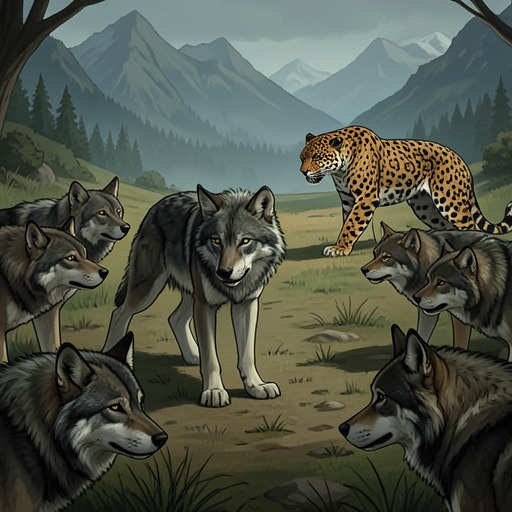
The physical evidence surrounding Nemrod supports the idea that the pursuit has involved animal or supernatural violence. Julien notices lacerations that appear to have been made by a wild animal, perhaps a dog or wolf, rather than by an ordinary human attacker. Later, the appearance of a jaguar at Julien’s window and the confrontation between that jaguar and Nemrod reveal that Nemrod’s world contains predators whose behavior and power exceed ordinary human experience. Paimon is not explicitly identified with the jaguar, so the evidence does not establish that Paimon is the animal or the jaguar-garou; it establishes only that Paimon belongs to the danger surrounding Nemrod.
The name also gains force from Nemrod’s status as an alpha werewolf involved in political struggles within his clan. The narrative presents Nemrod as a powerful, masculine figure who is nevertheless wounded, pursued, and forced into flight. Paimon thus functions as the pressure that exposes the limits of Nemrod’s strength: the alpha can fight to protect Julien, but he cannot simply dismiss the danger that follows him. His pursuit plot runs alongside the conflict over clan leadership, making personal safety and political succession part of the same threatening environment.
Consequences for Julien and Nemrod
Paimon’s importance is first emotional as well as plot-driven. Julien’s compassion intensifies when he realizes that Nemrod has probably been in danger and has escaped. As an infirmier, Julien instinctively helps someone injured and potentially threatened, but his care quickly becomes bound to attraction, sexual intimacy, and the desire to belong to Nemrod. The unseen pursuer therefore becomes part of the foundation of their companion relationship: Julien encounters Nemrod at the precise moment when Nemrod needs refuge, while Nemrod’s danger makes that refuge morally and physically risky.
The contrast between Paimon’s invisibility and the visible jaguar attack heightens the sense of escalation. The jaguar is seen at Julien’s window, responds to Nemrod’s howl, and forces a violent struggle that ends when Nemrod throws it over the balcony. Julien locks the door, moves onto the balcony, and watches Nemrod gradually resume human form. That scene confirms that Nemrod is defending Julien against a real animal-bodied opponent, but it does not resolve the earlier question of Paimon. Instead, it makes the absent pursuer more ominous: one revealed predator may be only a manifestation of a broader threat.
Nemrod’s later letter makes the connection between danger and separation explicit. He tells Julien that remaining beside him would put Julien in danger, that Nemrod could not forgive himself if anything happened to him, and that he is leaving because of an active political conflict over becoming clan leader. He promises to return if he succeeds. Paimon is not named in the letter, so it would be inaccurate to say that Paimon directly causes the departure; nevertheless, the pursuit associated with Paimon belongs to the same network of danger that makes Nemrod’s presence untenable. Paimon helps establish why Nemrod’s relationship with Julien is never safely private.
Narrative Function and Significance
Paimon operates as a withheld antagonist or threatening absence. The character’s name is introduced before the narrative can provide a face, motive, or definitive explanation, so the reader experiences the pursuit as Nemrod does: through fragments, bodily consequences, and disturbed speech. This delayed disclosure gives the opening supernatural plot a pursuit structure while postponing the knowledge needed to understand its rules.
The name also carries a charged symbolic contrast with Nemrod. Julien associates Nemrod’s biblical name with command, predation, and masculine authority, but Paimon is the name Nemrod speaks while vulnerable and unconscious. The pairing suggests that Nemrod’s apparent mastery is shadowed by a force capable of driving even an alpha figure into flight. Within the supplied evidence, Paimon’s decisive role is therefore not as a fully revealed character but as the narrative’s first sign that Nemrod’s erotic arrival in Julien’s life is also an intrusion from a larger clan struggle and a dangerous supernatural world.