
Class, Power, and Escape
Mothering SundayThis thread follows the unequal access to safety and authority that shapes the characters’ lives, and the small ways they contest it.
increasing Bearing strength in each event
 decreasing
Bearing strength in each eventdecreasingThe Workhouse Hierarchy

The Workhouse Hierarchy
Inequality made routine
Children receive thin food and exhausting tasks while staff eat well. Men, women, boys, and girls are separated, and the children have little influence over the rules that govern them.
Poverty limits choice
A workhouse child cannot simply leave or refuse a placement. Sunday’s apparent defiance is costly because she depends on the institution for shelter, food, and any chance of employment.
A Guardian Opens a Door
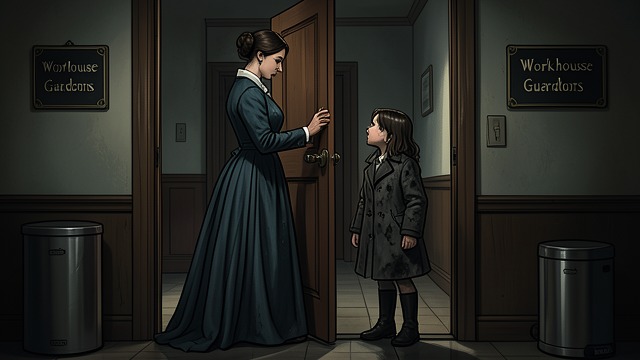
A Guardian Opens a Door
Access through position
Lavinia uses her role on the Board of Guardians to connect Sunday with Biddy Spooner and later to help Daisy and Tommy leave. Her social position gives her leverage the children do not possess.
Opportunity still depends on others
Sunday must prove herself to an employer, while Daisy and Tommy require approval and release papers. The contrast shows how escape becomes possible through solidarity but remains governed by institutional permission.
Biddy’s Home and Social Mobility
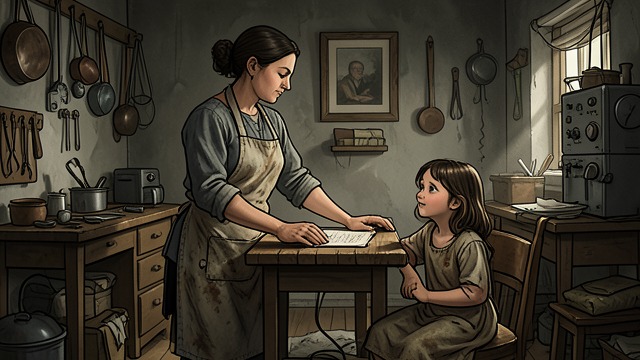
Biddy’s Home and Social Mobility
A different kind of authority
Biddy Spooner owns a lodging house and decides who may live and work there. Her blunt management contrasts with the workhouse’s coercion because she gradually makes room for Sunday’s judgment and proposals.
Initiative rewarded
Sunday helps restore the house and suggests employing her friends. Their work benefits Biddy’s business while giving the young people a measure of security and shared purpose.
Mickey Faces Prejudice

Mickey Faces Prejudice
Exclusion follows him
Mickey Lomax has been rejected by potential foster families because of his mixed-race identity. In town, strangers step away from him and one man spits near his feet.
Solidarity challenges contempt
Sunday links arms with Mickey and insists that his skin does not make him less worthy. Her encouragement cannot erase prejudice, but it refuses to let humiliation define his place in the household.
A Home Opened to Foundlings
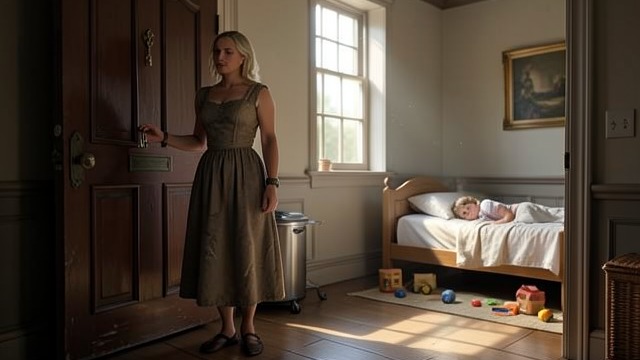
A Home Opened to Foundlings
Wealth redirected
After learning the truth of her birth, Sunday can inherit access to Treetops Manor and resources that would have been impossible to earn through domestic wages alone. She and Tom plan to establish a home for abandoned children.
Security shared outward
The intended use of property is transformed from a marker of class into a shelter for children with little power. Sunday’s future project responds directly to the inequalities that shaped her childhood.
November 1880
1884
1884–1885
1885
1886 onward
