
The Workhouse’s Abusive System
Mothering SundayThis thread traces how neglect and discipline become tools of institutional power, and how exposure produces limited reform.
increasing Bearing strength in each event
 decreasing
Bearing strength in each eventdecreasingRoutine Deprivation

Routine Deprivation
Poverty organized as discipline
The children at Nuneaton Union Workhouse rise early, wash in cold water, perform exhausting chores, and eat meagre food. The staff receive better meals, making inequality visible within the institution.
Families divided
Workhouse routines separate men, women, boys, and girls. Children lose not only privacy and comfort but also the ordinary closeness of family life, reinforcing their dependence on those who control them.
The Punishment Room

The Punishment Room
A threat beneath the building
Miss Frost sends children into a cold, dark cellar containing only a chamber pot. Sunday is held there for days without adequate water or food, despite rules limiting the room’s use.
Secrecy protects cruelty
The children fear reporting what happens, while the adults who could intervene stay silent or defer to authority. The room shows how a nominal disciplinary measure becomes a concealed instrument of abuse.
Neglect in the Nursery

Neglect in the Nursery
Babies left unattended
Sunday discovers that infants are kept dirty and hungry, while an attendant uses gin to quiet them. Their suffering is made ordinary by the staff’s indifference and lack of oversight.
Care as resistance
Sunday changes the babies and warms their milk, revealing how little intervention is needed to improve their immediate wellbeing. The discovery sharpens her determination to create a safer home for children.
The Guardians Hear the Truth

The Guardians Hear the Truth
A witness speaks
After leaving the institution, Sunday tells Lavinia about poor meals, beatings, dangerous confinement, and Pinnegar’s predation. Her testimony gives private suffering a chance to become public evidence.
Reform meets reputation
The Board of Guardians confronts Pinnegar but chooses dismissal over prosecution, worried that public scandal will damage the workhouse’s funding and reputation. The outcome removes him from the post without delivering full justice.
Conditions Begin to Improve
Conditions Begin to Improve
A new administration
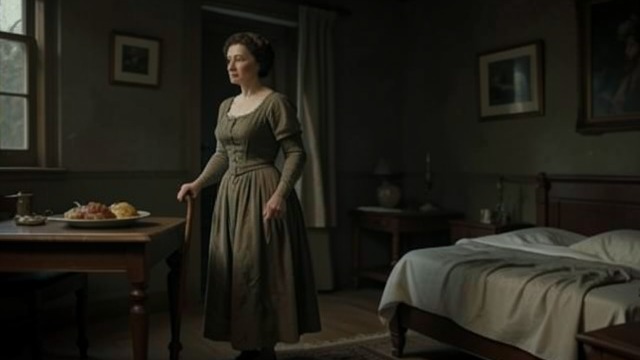
Pinnegar and Miss Frost are expelled, and a new matron ends the cane’s daily presence. Sunday later hears that meals, bedding, and the general atmosphere have improved.
Change remains incomplete
The workhouse does not become a perfect refuge, but removing its most abusive leaders shifts the balance for its residents. Reform begins when cruelty is named and authority is no longer treated as unquestionable.
November 1880
1880–1884
1884
1884
after Pinnegar’s dismissal
