Ashley Hunter
Mothering SundayAshley Hunter, known as Sir Ashley Hunter during the birth of his daughter, is a wealthy husband whose pursuit of a male heir governs his treatment of his wife and the people serving her. He regards a son not as a hoped-for addition to a family but as the condition for inheritance and his own advancement; when Lavinia gives birth to a girl, he orders the child disposed of and threatens silence. His domestic authority is thus exposed as coercive rather than protective, with consequences that reach beyond his marriage to the vulnerable newborn and the servant forced to witness his command.
Identity and Background
Ashley is married to Lavinia Huntley and lives with her at Treetops Manor, a large house given to Lavinia by her father when they married. At the beginning of their life together, Lavinia imagined its nine bedrooms filled with children. The marriage instead becomes marked by loss and estrangement: Lavinia tends the graves of three stillborn daughters, and she and Ashley largely keep to separate wings of the house. Their circumstances are shaped by money as well as intimacy. Lavinia has an allowance from her paternal grandmother, while Ashley stands to inherit substantial wealth from his late uncle only if one of the uncle’s two nephews produces a live male heir first.
The inheritance condition gives Ashley’s desire for a son an explicit financial stake. His younger brother is still unmarried, and Ashley is distressed that he has not yet secured the qualifying heir. Lavinia understands that he blames her for failing to provide one. The narrative also records her eventual belief that he married her for her wealth and for the son she was expected to bear, a painful reinterpretation of a wedding day on which she had loved him and believed herself loved in return. That contrast establishes how his dynastic ambition recasts a marriage once imagined by Lavinia as a loving partnership.
Power Within the Household
Ashley’s authority operates through intimidation. During Lavinia’s difficult labor, he paces outside her room and treats the possibility of a boy as the justification for the ordeal. When Zillah objects that Lavinia should have a proper doctor, Ashley grips her arm painfully and insists that the midwife he selected is capable. His response is directed not only at his wife’s care: it also warns Zillah against challenging the arrangements he controls. The servant recognizes the danger but has little power to oppose him openly.
Ashley makes the stakes unmistakable by threatening that, if the child is a girl, Lavinia will be sent to an asylum and Zillah to the workhouse unless Zillah does what he requires. He links a woman’s worth to her ability to produce a male heir, turning his expectation into a threat against both women. The episode shows the household’s hierarchy in practice: Ashley controls the birth arrangements, while Lavinia is incapacitated and Zillah must weigh her concern for her mistress against the danger of disobedience.
The Newborn Daughter
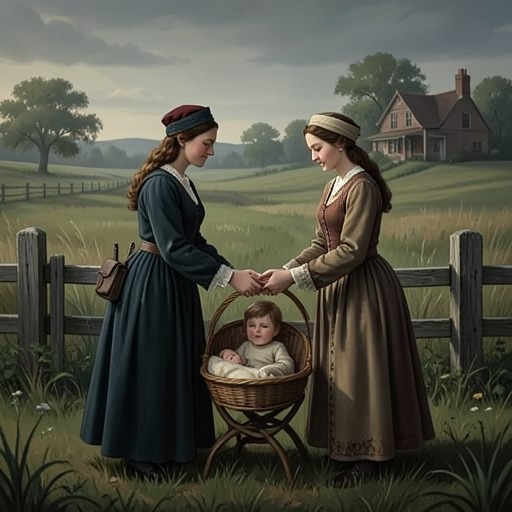
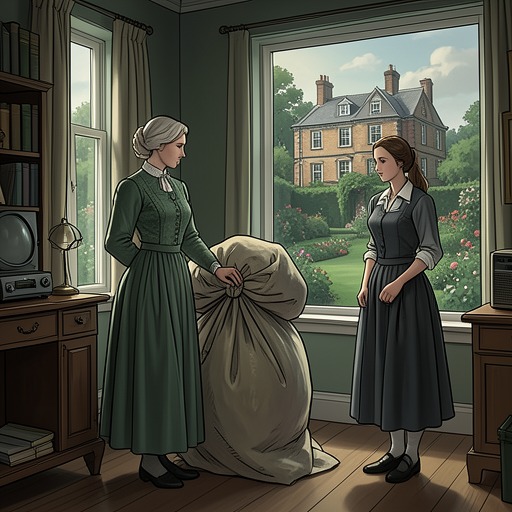
When the baby is born, Zillah sees that the child is a girl. Ashley enters and demands to know the result; on learning the child’s sex, he responds with anger and orders Zillah to get rid of her. He threatens her if she speaks to anyone and says that he will tell Matthews to prepare a grave. The child, whose bluebell-colored eyes and soft blond curls resemble Lavinia’s, is immediately made the object of a decision intended to protect Ashley’s prospects and reputation rather than her life.
The midwife is also prepared to participate in concealment. She expects to tell the doctor that the child was stillborn, after which he would issue a death certificate. This planned false account makes Ashley’s command more than a private outburst: it sets a cover story in motion and recruits the birth attendants into hiding what has happened. The evidence establishes the order and the intended deception, not the newborn’s eventual fate; Ashley’s threat is decisive, but the consequences of the command are not resolved in this episode.
Marriage and Heirship
Years later, Ashley’s fixation on producing an heir continues to shape his dealings with Lavinia. He invokes the uncle’s will and the fortune attached to a living male descendant, while his wife has returned to going out and taking pride in herself. He notices her renewed attractiveness and proposes that they stop living in separate rooms and resume sleeping together. Lavinia’s response is governed by the remembered graves of their three stillborn daughters and fear of enduring that loss again. Ashley dismisses her hesitation by questioning whether she wants a child, then decides that he will sleep in her room that evening so they can appear to be a loving couple when a dinner guest arrives.
The scene exposes a distinction between public appearance and private feeling. Ashley wants the household to present a united, affectionate image, but Lavinia agrees quietly because she knows better than to argue when he is in this mood. She still retains some affection for him despite recognizing his infidelity and shallowness; the narrative therefore presents their marriage as more than a simple absence of feeling. Yet Ashley’s decisions repeatedly override her fear and wishes, while the possibility of a son remains bound to inheritance, status, and the performance of marital respectability. His defining role in the supplied episodes is to make those pressures visible: the demand for a male heir turns both childbirth and intimacy into tests of obedience, and leaves Lavinia and Zillah to bear the immediate risks.