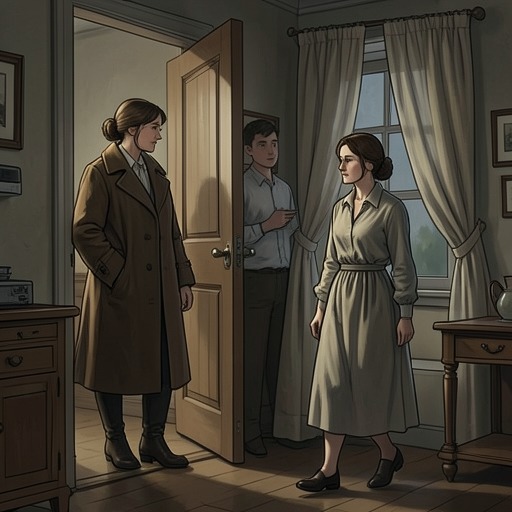
Biddy Spooner—Herbert Spooner
Mothering SundayBiddy Spooner and Herbert Spooner’s marriage changed the course of Biddy’s life: it carried her from a poor childhood in Coton to Jamaica, gave her the opportunity to establish a boarding house, and later brought the couple back to England, where their home became a lodging house after Herbert’s death. The relationship is presented through the practical life they built together and through the family Biddy longed for but never had.
Marriage and a changed life
Annie remembers Biddy as a girl who had run barefoot in the streets, one of many children crowded with their parents into two rooms. Marriage to Herbert altered those circumstances. He took her overseas to the West Indies, where his employment at a sugarcane plantation supported their life in Jamaica. Biddy’s transition into a more comfortable social position was lasting: after returning to England, she came to regard herself as a lady and guarded the respectability she had acquired.
The couple’s marriage also had a local continuity. Herbert was born and raised in Coton, and he and Biddy were married at Chilvers Coton. After their return, they attended the church there; Herbert continued to do so while he was alive. Their own pony and trap enabled them to travel, until Biddy let it go after his death.
Work and enterprise in Jamaica
Herbert kept the accounts at a sugarcane plantation in Jamaica, where the harvested sugar was shipped to London. While he worked, Biddy grew bored of spending her days waiting on the local women who attended to her. She responded by starting a business of her own, employing those women and opening a boarding house. It prospered, giving Biddy an independent enterprise within the life she and Herbert had made abroad.
Herbert eventually began to pine for England, and the couple returned. They bought the property that Biddy later adapted into a lodging house after he died. The changes in the business followed the changes in their shared life: the Jamaican boarding house belonged to their years overseas, while the English lodging house became Biddy’s way of continuing after bereavement.
Bereavement and the family she wanted
Herbert’s death ended their shared travels and prompted Biddy to give up their pony and trap, but it did not end her working life. She converted their home into a lodging house and continued to manage it, later considering its expansion. Her account of the marriage therefore links Herbert’s employment and homesickness to the circumstances of their return, while showing Biddy’s initiative both during their life together and after his death.
The marriage did not bring Biddy the family she most wanted. Annie, her longtime friend, had given birth to eleven children and remembered their childhood with affection, even through times of financial hardship. Biddy, by contrast, had no children, a loss Annie recognizes as the thing she had craved most. Their different lives sharpen the contrast between the security and social respectability Biddy gained through marriage and the maternal fulfillment she did not receive. Annie’s friendship endured despite Biddy’s changed circumstances, preserving a personal bond alongside the material transformation Herbert’s marriage had made possible.