Lady Lavinia Huntley
Mothering SundayLady Lavinia Huntley is a wealthy landowner, a member of the Board of Guardians, and the mother of Sunday Small. For years, grief over her stillborn daughters and a marriage shaped by Ashley Huntley’s demand for a male heir have narrowed her life to Treetops Manor. Her return to public life, her efforts to improve the workhouse, and her eventual embrace of Sunday give her a path from isolation toward active care and belonging.
Identity and Background
Lavinia lives at Treetops Manor, the large house her late father gave her when she married Ashley. Set on a hilltop near Hartshill Hayes, the manor has nine bedrooms and a view across three counties. On returning from their honeymoon in Italy, she imagined that its rooms would be filled with children. Instead, she tends the three small graves of her stillborn daughters in the orchard and has become resigned to childlessness. For much of the time she remains in her own wing, seeing Ashley only when necessary.
Her financial security comes from an allowance left by her paternal grandmother. The contrast between that security and her emotional confinement is central to her history: she has a grand home, but it has not become the family home she expected. Her father, who raised her after her mother died, had been devoted to her, and she misses him. After his death she believed she still had a loving husband; in time, she realized Ashley had married her for her wealth and the son she was expected to bear.
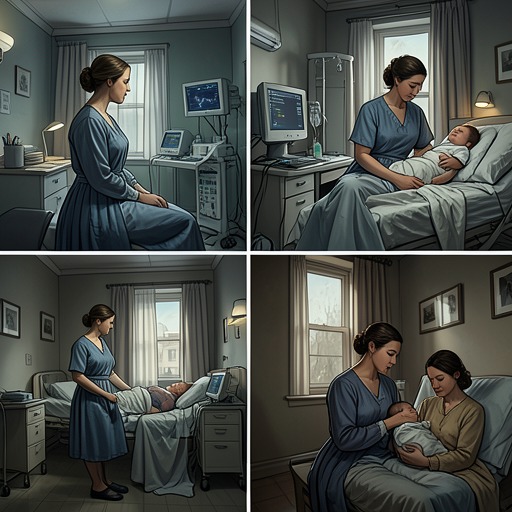
The novel also depicts a childbirth in which Zillah recognizes the newborn girl’s blue eyes and blond curls as resembling her mother’s. When Ashley learns the child is a girl, he orders Zillah to get rid of her, threatens her into silence, and says he will have a grave prepared. The scene places the danger surrounding Lavinia’s reproductive life beyond her grief over stillbirths: Ashley’s concern is the production of a male heir, and a daughter is treated as an obstacle to that demand.
Marriage and the Pressure of an Heir
Ashley’s uncle’s will promises a vast inheritance to the first of his two nephews to produce a male heir. Ashley has not met that condition, and his younger brother Lewis remains unmarried. Ashley blames Lavinia for their lack of a living son, making her repeated losses inseparable from a financial and dynastic contest that she did not create. She also knows that Ashley keeps a mistress in a cottage in Stockingford, though this has long since ceased to trouble her as it once might have.
The couple’s estrangement is both domestic and emotional: they occupy separate rooms, and Lavinia avoids seeing him unless she must. When Ashley proposes that they resume sleeping together, she turns in her mind to the three graves and fears being made to endure the same grief again. She reminds him that earlier attempts had ended with him angry and upset. Her hesitation is not presented as a simple refusal or acceptance; it shows the pressure placed on her to submit to marital expectations despite the cost of pregnancy and loss.
Return to Public Life
After the loss of her last stillborn daughter in 1870, Lavinia became a semi-invalid and rarely ventured beyond Treetops Manor. Joining the Board of Guardians gave her an outside responsibility and, as Verity Lockett observes, something to focus on. The workhouse brings her into contact with lives beyond her isolated household and develops into a practical concern for the people living there.
She objects to the separation of families who enter the workhouse and argues that foundlings should have better prospects of placement with loving families. Her own longing to take in a child is part of this concern: she has asked Ashley to allow it, but he has consistently refused. At a meal attended by the guardians, Miss Frost presents herself as caring, while the girls wish the board could see what she is like when visitors are absent. Lavinia’s presence matters to them as a possible route to change, particularly because the older guardians have shown little interest in Verity’s concerns.
Lavinia also takes action beyond inspection. In late July 1884, she visits the workhouse to speak with Mr Pinnegar about employment for a girl about to leave. She has heard that an elderly woman in Whittleford needs help at her lodging house and can offer board, lodging, and a small wage. Lavinia has Sunday in mind, supported by a reference from Verity. When she explains the opportunity to Sunday, she gives the young woman a chance to leave the institution while also listening as Sunday worries about whether Daisy Branning and Tommy Branning can come too. Lavinia’s intervention therefore helps make employment compatible with the three young people’s wish to remain together.
Witness, Advocate, and Rescuer
Lavinia’s concern for the workhouse becomes more informed when she asks Sunday directly about its conditions. She explains that the guardians provide money intended to feed the residents well, then asks whether Sunday was actually well fed. No longer living there, Sunday decides to tell the truth: meals were often dry grey bread, greasy porridge, and soup, with meat only occasionally and often difficult to eat. Lavinia takes notes rather than relying on the institution’s outward presentation.
Sunday also describes the punishment cell in the cellar: it has only a bucket, no bed or blanket, and is dark, cold, and damp. She recalls being confined for three days without food or drink, becoming so weak that Verity had to take her to the sickbay. She also says that two little girls locked there were never seen again; Miss Frost claimed they had died of influenza. The disclosures give concrete force to Lavinia’s reforming purpose: the harm is not merely a matter of poor management but of punishment and neglect hidden behind official appearances.
Later, improvements are visible in the workhouse. Verity reports that meals and the general atmosphere have improved, that fear and bullying have gone, and that the new matron has broken Miss Frost’s split cane. She and Lavinia intend to continue the work, including by obtaining better bedding. In another crisis, Lavinia is present when police constables seize Miss Frost’s knife and Tom frees the captive Sunday. Her presence at the rescue links her concern for Sunday’s safety to the practical protection she has come to offer.
Sunday and a Changed Meaning of Motherhood
The ending brings Lavinia’s private history and public acts of care together. On Mothering Sunday, Tom encourages Sunday with a squeeze of her fingers and a nod. Sunday crosses the aisle carrying violets and offers them to Lavinia as her mother. Lavinia is overcome, embraces her daughter, and Sunday cries in her arms. The scene confirms their mother-daughter relationship and makes visible a bond that Lavinia’s years of bereavement and isolation had left unspoken.
Lavinia’s significance lies in the change from longing without agency to care expressed through action. Her own experience of loss does not make her a substitute for every child in need, nor does the novel erase the harm of her marriage. Instead, she uses her position to question workhouse practices, supports a practical route out for Sunday, and stands beside her when danger returns. The final embrace answers the story’s earlier image of motherhood as an experience governed by loss and male demands with a relationship freely acknowledged by both mother and daughter.