Lavinia Huntley’s childlessness and grief
Mothering SundayLavinia Huntley’s childlessness is both a private bereavement and a force shaping her marriage, her years of withdrawal, and her concern for abandoned children. The novel links her longing for motherhood to repeated infant loss and to the power her husband exercises over family decisions; it then brings that grief into a new relationship with the children she encounters through the workhouse and, finally, with Sunday Small.
Loss and the life imagined
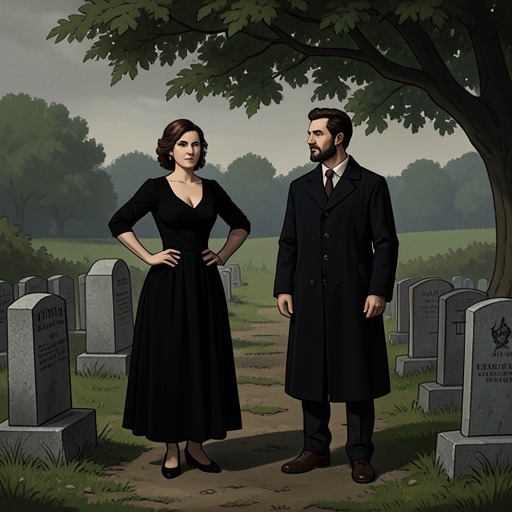
Lavinia’s marriage began with an expansive hope for family life. Her father gave her Treetops Manor as a wedding present, and when she and Ashley Huntley moved into its nine bedrooms after their honeymoon in Italy, she imagined them filled with children. The house’s scale made that future seem almost tangible. Instead, she came to tend the tiny graves of daughters she believed had been stillborn, returning to them faithfully as the years passed.
The losses were not only private sorrow but part of a pattern surrounding the birth of her children. At the birth of one daughter, the baby cried and was plainly alive, yet Ashley demanded that the child be disposed of and threatened silence. Zillah carried the infant toward a grave beside two earlier graves, where the previous babies had in fact been stillborn. The scene places Lavinia’s grief beside the secret violence that has shaped it: she understands herself as a bereaved mother, while the circumstances of the latest birth include a living child whose fate has been concealed from her. Later, the narrative describes her as tending three tiny graves of stillborn daughters, showing how completely the loss has structured her understanding of her own past.
Marriage and isolation
Lavinia had loved Ashley and believed that he loved her, but she gradually concluded that he had married her for her wealth and for the son she was expected to bear. His uncle’s business and fortune would pass to Ashley only if there were a living male heir, making Lavinia’s pregnancies part of a wider inheritance pressure. She knew Ashley blamed her for failing to provide that heir. The distinction between a daughter and a son thus carries a material as well as emotional weight in the marriage.
After the loss of her last stillborn daughter in 1870, Lavinia became semi-invalid and rarely ventured beyond Treetops Manor. The marriage itself had become a disappointment, and the couple increasingly kept to separate parts of the house, seeing one another only when necessary. Lavinia lived on an allowance inherited from her paternal grandmother; Ashley’s disappointment and her grief confined her to a life organized around what had not happened. Zillah’s devoted presence helped her endure that life, but did not erase the absence of children or the refusal that reinforced it.
From private grief to public concern
Lavinia’s reclusion began to loosen when she joined the Board of Guardians and developed a close friendship with Verity Lockett. The work offered an outside concern on which to focus, and her visits to the workhouse repeatedly brought her face to face with babies and children whose need for a secure family echoed her own unfulfilled desire to mother a child. Seeing a newborn could make her recognize anew how much she had missed.
Her concern was not limited to wishing for a child of her own. Lavinia objected to the separation of families who entered the workhouse and argued that more foundlings should be placed with loving families, especially babies, whom childless couples might welcome. She had wanted for years to take a workhouse baby and raise the child as her own, but Ashley would not agree. That refusal left her arms and heart empty while also sharpening her attention to the institutional arrangements that kept vulnerable children from family life.
When Lavinia asked Sunday Small about conditions in the workhouse, she approached the inquiry with a notebook and a willingness to hear an account that contradicted the official appearance of adequate provision. Sunday described poor meals and punishment in a dark cellar, including an occasion when she had been confined for three days without food or drink and was so weak that she needed the sickbay. Lavinia’s response connects her personal compassion for children with her public role: she listens to a former inmate as a witness to conditions that the guardians must address, rather than treating the workhouse as an abstract institution.
Motherhood and recognition
The workhouse later improves: meals are better, fear and bullying have receded, and the new matron has broken Miss Frost’s split cane. Lavinia and Verity discuss further changes, including better bedding, while Lavinia recovers from the birth of Stephen. These developments place her maternal concern within practical work for children and inmates, even as her own family life has long been marked by loss.
The emotional resolution comes on Mothering Sunday. With Tom Branning’s encouragement, Sunday Small rises from her place and offers Lavinia violets, addressing her as Mother. Lavinia is overcome and embraces her; Sunday, who has not cried for years, weeps in her mother’s arms. The scene does not cancel the earlier bereavements or the years in which Lavinia believed herself childless. Instead, it gives her grief a changed direction: the woman who had wanted to adopt a foundling and whose motherhood had been defined by graves and denial is finally met by a daughter who names their bond.