Nuneaton Workhouse punishment regime
Mothering SundayThe Nuneaton Workhouse punishment regime was part of a wider system of control over residents’ daily lives: people were separated by sex and age, assigned work, and subjected to physical punishment or confinement. Through Sunday Small’s account, the novel contrasts official assurances about provision with hunger, fear, and the lasting effects of discipline on children. Later improvements, including the destruction of Miss Frost’s cane, mark a change from routine intimidation toward reform.
Structure and Daily Discipline
The workhouse was divided into separate sections for women, boys, girls, and men. Work was allocated according to residents’ capacity and the institution’s needs. Some men and stronger boys picked oakum, teasing fibres from old hemp ropes for use by shipbuilders; others crushed bones delivered from a local slaughterhouse, which were then sold as fertilizer. Gardening offered some residents the comparatively fortunate task of growing fruit and vegetables for workhouse meals. Women and girls made uniforms in the sewing room, repaired or made clothes for parish families, cooked, cleaned, and worked in the laundry.
This division of labor also restricted family contact. Residents rarely came together except on Sundays, when they were allowed to attend church. The workhouse’s daily routine extended beyond labor: after breakfast, Miss Frost read out the children’s duties, and she inspected the dormitories each morning. The rules organized where residents went, what they did, and when families could meet, making discipline a feature of the institution rather than an occasional response to misconduct.
Confinement and Physical Punishment
The punishment room was in the cellars. According to Sunday, it contained only a bucket, with no bed or blanket; once the door was closed, the room was completely dark, cold, and damp. She recalled being confined there for as long as three days without food or water. Verity Lockett eventually found her and took her out so weakened that she spent the night in the sickbay.
Sunday also described two little girls who were locked in the room and never seen again. When someone asked Miss Frost what had happened to them, she said they had died of influenza. The girls were buried in the small graveyard behind the workhouse, but Sunday could not recall anyone saying that they had received a proper funeral. The account leaves the circumstances uncertain while showing how confinement and the institution’s control over information deepened residents’ fear.
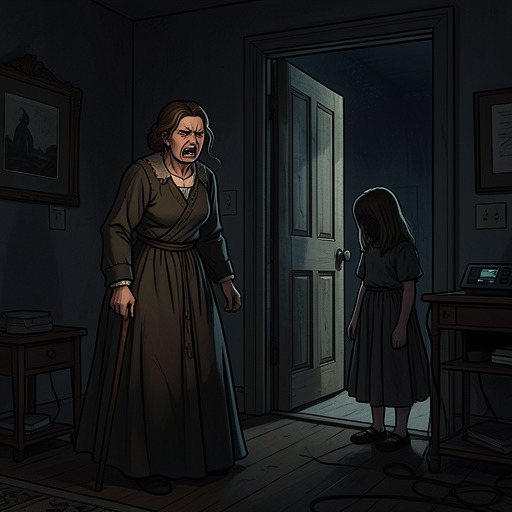
The other punishment Sunday identified was the split cane carried by Miss Frost. She said that its use left children barely able to stand straight for a day or two, and she showed Verity Lockett scars on her legs as evidence of past beatings. The cane thus represented more than an individual punishment: its constant presence made the threat of physical discipline part of the children’s ordinary environment.
Testimony and Institutional Challenge
When Lady Lavinia Huntley asked whether the residents were as well fed as the guardians’ contributions were meant to ensure, Sunday described meals of dry grey bread, thick porridge, and soup with floating vegetables. Meat appeared only about twice a week, or three times in a good week, and was often too gristly to chew. Her account directly challenged the impression Lady Lavinia had formed during visits, when the food had appeared adequate.
Lady Lavinia took notes as Sunday described the punishment room and the cane. Sunday spoke after leaving the workhouse, believing that honesty might improve conditions for those still living there. Her testimony made visible both the difference between reported provision and children’s experience and the vulnerability of residents whose accounts had previously been difficult to hear.
Change and Significance
Later, Verity Lockett reported that the meals had improved and that the atmosphere in the workhouse was better. The fear and bullying had receded, and the new matron had snapped Miss Frost’s cane in two and thrown it away. Verity also proposed providing new bedding because the existing blankets were inadequate. These changes do not erase the earlier punishments, but they show a material shift in the conditions Sunday had described and a continuing effort to improve them.
The regime links routine administration to coercion: work assignments and separation governed daily life, while the punishment room and cane enforced compliance through fear. Sunday’s testimony turns those hidden practices into grounds for scrutiny, and the later reforms give that testimony consequences beyond her own departure.