Sunday’s birth and abandonment at the workhouse
Mothering SundaySunday’s birth and abandonment at the workhouse was not an act of simple desertion but a secret attempt by Zillah to save a newborn whose mother had been told she was stillborn. Zillah hid the baby, substituted a wrapped pillow for her in the grave, and left her at the workhouse steps; the child grew up there as Sunday, unaware of her parentage until Zillah finally told Lavinia Huntley the truth.
Concealment and Abandonment
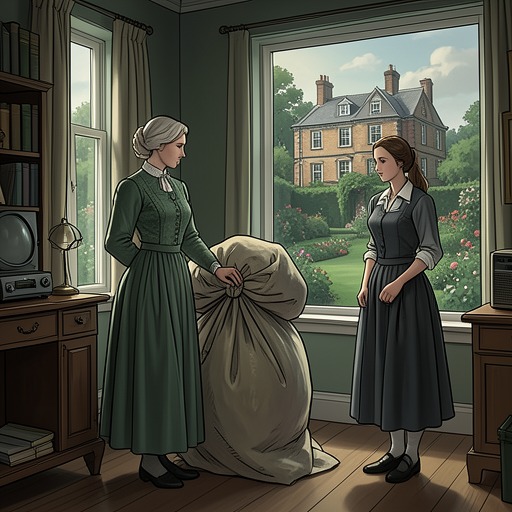
Zillah’s later account explains the deception: after the midwife had left, she took the baby and hid her in her own room. A grave had already been prepared, so Zillah wrapped a pillow in a shawl and placed it there, allowing the burial to be taken for the burial of the child. The infant remained alive and hidden with Zillah while those around her believed that Lavinia’s baby had been stillborn.
When Zillah judged that no one was about, she carried the baby to Nuneaton Workhouse, left her on its steps, and rang the bell. She then hid nearby until someone came and she knew the child was safe. The act secured the newborn’s immediate survival but also separated her from her mother and concealed her identity. Zillah did not know another way to protect the child or secure her care.
Childhood in the Workhouse
The institution that received Sunday organized its residents by sex and divided them into separate sections for women, boys, girls, and men. Inmates were assigned labor: some men and boys picked oakum or crushed bones, while others worked in the gardens; women and girls sewed uniforms, cooked, cleaned, or worked in the laundry. The separation meant that families rarely came together except on Sundays, a consequence Sunday later recognized as devastating to family life.
Sunday’s own routine included assigned kitchen duties and occasional work in the nursery. She recalled that the meals were often poor, describing dry grey bread, porridge, and soup, with meat only sometimes available. She also reported being confined for as long as three days in a dark, cold cellar without food or drink, and described two young girls who disappeared after being locked there; Miss Frost said they had died of influenza. These accounts, given after Sunday had left the institution, show that the workhouse was not merely the place where Zillah deposited a child but the setting that shaped her early life through labor, deprivation, and punishment.
The Secret and Its Delayed Revelation
Zillah had a connection that allowed her to follow Sunday’s welfare from a distance: Verity Lockett had recently begun working at the workhouse, and Zillah hoped to hear through her how the child was faring. She did not tell Verity who Sunday was. Nor did she tell Lavinia. As Zillah later explained, she feared what Ashley Huntley might do while he was alive, and the secret weighed on her conscience until his death made disclosure possible.
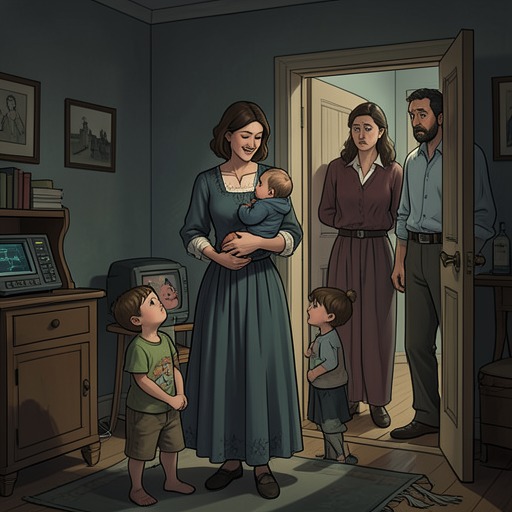
When Zillah finally spoke, she corrected the story Lavinia had been made to believe. The grave contained only a pillow wrapped in a shawl; the baby had survived and had grown up as Sunday Small. Lavinia learned that the girl she knew was her own flesh-and-blood daughter, nearly sixteen years after the birth. The revelation recast their existing closeness: Lavinia recognized a familiar likeness in their hair and eyes and understood why she had felt a special bond with Sunday, although she had not known its cause.
Consequences and Significance
The truth did not erase the years of separation. Sunday initially turned away from Lavinia and did not want to discuss the matter. Tom urged her to consider Lavinia’s grief and the fact that she had been told her child was stillborn; Sunday said she would think about it. The account therefore presents recognition as the beginning of a difficult choice, not an instant repair of the lost relationship.
The event also binds Sunday’s private history to the workhouse’s public conditions. She had been left there to keep her alive, yet she grew up within a system marked by segregated living, compulsory work, and severe deprivation. Later, Verity reported that conditions had begun to improve: the meals were better, fear and bullying had receded, and the new matron had destroyed Miss Frost’s split cane. The movement from hidden infant to surviving child and, finally, acknowledged daughter gives the event its decisive significance: Sunday’s abandonment concealed her origins, while Zillah’s eventual confession restored the possibility of a relationship with her mother.