Treetops Manor
Mothering SundayTreetops Manor is the Huntley family home near Hartshill, a hilltop estate whose history turns on a stark contrast: its orchard conceals the secret burial of Lavinia Huntley’s newborn daughter, while its rooms later shelter people harmed by the workhouse and become part of a home for abandoned children. The house is at once a place of privilege, a refuge shaped by women’s care, and the setting in which a family secret is finally brought into the open.
Setting and Architecture
Treetops Manor stands on a hill close to Hartshill Hayes, on the outskirts of Nuneaton. Its elevated position gives a fine-day view across three counties. The large red-brick house has endured the elements; by the time Lavinia returns from one of her visits, its bricks have mellowed to gold, its long windows catch the sunlight, and spring flowers brighten the beds below the lawns. A gardener scythes the grass as her carriage follows the tree-lined drive to curved stone steps, carved oak doors, and towering marble pillars.
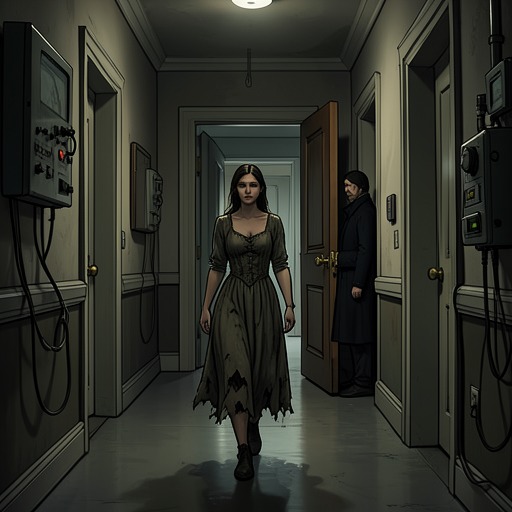
The interior is equally imposing. When Sunday Small first arrives, the tall chimneys, many windows, lamplit rooms, and ivy climbing the facade make the house seem almost like something from a book. Inside, she finds a luxurious contrast to the confinement of the workhouse and even to the more comfortable household where she is employed. Treetops is not merely a grand backdrop: its scale and division into rooms give different forms of power and intimacy a place to reside, from the private wing where Lavinia withdraws from her husband to the nursery, servants’ quarters, and orchard.
Lavinia’s Home and Its Hidden History
Lavinia’s late father gave her the Manor when she married Ashley Huntley. After their honeymoon in Italy, she entered its nine bedrooms imagining that they would ring with children’s laughter. Instead, she came to tend three small graves in the orchard: the graves of her stillborn daughters. The contrast between the house’s apparent abundance and the empty nursery made her childlessness a daily presence. She lived largely in her own wing, seeing Ashley only when necessary, while the couple’s marriage became a bitter disappointment.
The orchard also holds a darker secret. In September 1870, after Ashley ordered that Lavinia’s newborn be disposed of and threatened her into silence, Zillah carried the tiny living child past the kitchen and stable block to a waiting grave. Two other small graves were already there, belonging to daughters who really had been stillborn. Zillah refused to surrender the baby to the man waiting beside the hole and clutched the bundle to herself. The concealed act turns the grounds into a record of what the house’s respectable appearance hides: the coercion surrounding Lavinia’s pregnancies and the effort to erase a child rather than acknowledge her existence.
Ashley’s wealth and expectations sharpened the pressure within the marriage. He blamed Lavinia for not producing a son, whose birth would have secured him an inheritance from his late uncle. Lavinia knew he kept a mistress in Stockingford, but the greater wound was the recognition that he had married her for her wealth and the male heir he expected her to bear. Her allowance came from her paternal grandmother, and her independence did not free her from the emotional and physical consequences of Ashley’s conduct. When his drunken violence left Lavinia unconscious, with a broken arm and in premature labour, Zillah tended her through the dangerous hours and resolved that she would no longer obey Ashley if it meant risking Lavinia or the child.
Rooms of Refuge and Care
The nursery concentrates both Lavinia’s longing and her hope. On Christmas evening, while the household staff celebrate downstairs, she goes up alone to a small rocking crib with a lace-frilled canopy and blankets ready for a child. Pregnant again, she prays that it will be her last childless Christmas. The room is a promise rather than a fulfilled domestic scene: her hopes remain vulnerable to the violence and misfortune that have already marked her pregnancies.
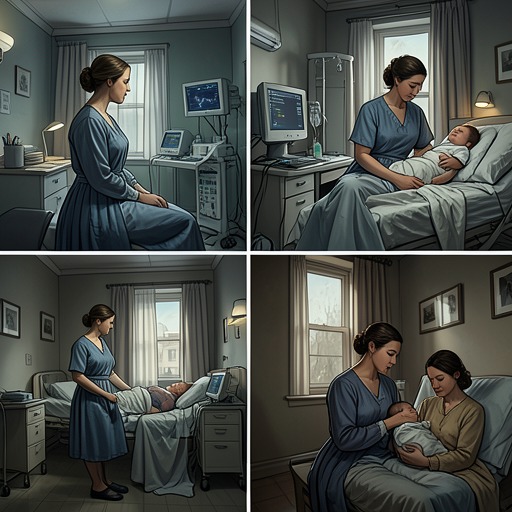
After Lavinia gives birth prematurely to Stephen, Zillah gradually reduces the laudanum that has been given to her. When Lavinia wakes lucidly, she learns that she has a son. Later, when measles threatens him, the nursery becomes a place of vigil. The servants move about quietly, and Lavinia refuses food and drink, leaving Stephen only briefly to dress before returning to his side. Mrs Lockett and Edgar pray for the child; Molly Worthington helps care for him. Stephen’s death leaves Lavinia in mourning. At Cissie Burns’s later wedding preparations, the servants are packing away his baby clothes because seeing them in the nursery is too painful for her.
The Manor also offers a practical refuge to people recovering from institutional harm. After Lady Lavinia Huntley rescues Cissie from Hatter’s Hall, the housekeeper, Mrs Roundtree, places her in a room beside her own so she can keep watch over her. When Sunday comes to visit, Cissie sits turned away in the chair by the window, her long confinement still visible in her withdrawn manner. In time, she joins the servants’ quarters and works in the laundry. Mrs Roundtree and Zillah monitor her health and make sure she eats; with this care, Cissie gains weight and some of her former brightness returns. Her grief for the baby taken from her and for the years of confinement remains, but the house gives her safety, work, and the possibility of a future. The sight of Cissie talking with George prompts Lavinia and Zillah to notice that affection may be growing between them.
From Private Estate to Foundling Home
Treetops changes meaning as its household’s relationships change. Lavinia’s own wish to take a workhouse baby into the family had once been blocked by Ashley. Her visits to the workhouse repeatedly brought home what she had missed by being childless, while the estate’s wealth and space made that exclusion especially painful. After Ashley is no longer alive, Zillah can finally tell Lavinia that the baby carried to the orchard survived and grew up as Sunday. Lavinia immediately sets out to find her daughter, intending to bring her to the Manor and restore her place as the daughter of the house.
The final transformation extends that private reunion into a public act of care. Sunday and Tom Branning, married for almost seven years, run a home for foundlings with the help of Sunday’s mother, Lady Lavinia Huntley. Sunday has no child of her own, but the house keeps her among babies and children; its work answers the abandonment and institutional neglect that shaped her childhood. When another infant is left on the doorstep, Sunday lifts the bundle into the warmth of the hallway, and Tom discovers that the child has been abandoned there. Their response makes Treetops a place of welcome rather than concealment.
Narrative Significance
The estate’s meaning is built through contrasts between its spaces and the histories they hold. The orchard’s graves preserve a secret produced by Ashley’s power; the nursery embodies Lavinia’s repeated hopes and losses; the rooms given to Cissie make attentive care tangible; and the entrance, where foundlings are received, turns the house outward toward children without homes. The transformation does not erase the deaths, coercion, or grief associated with Treetops. Instead, the same household that once concealed a living daughter becomes a place where abandoned children can be seen, taken in, and given a home.