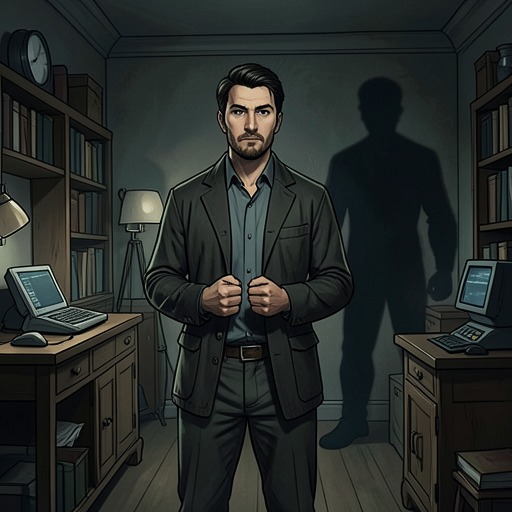
Choose which battles are worth fighting
Motherless BrooklynChoose which battles are worth fighting is Frank Minna’s concise counsel on where to spend one’s loyalty and attention. Lionel Essrog eventually makes it more than a tactical maxim: it becomes a way to distinguish responsibility from compulsive guilt, and care from being drawn into every cruelty and loss.
The Rule and Its Limits
Frank Minna used to say, “You choose your battles.” The sentence sounds practical, but Lionel’s later use of it gives it ethical weight. His next thought is that a person must also distance himself from cruelty; he recognizes that he is beginning to acquire the sense to do so. The rule is therefore not simply permission to avoid difficulty. It asks what deserves involvement, and what involvement would only perpetuate harm.
The maxim comes from a mentor who was influential without being an uncomplicated moral model. As boys, Lionel and the others watched Frank’s manner with women: his teasing and physical familiarity were met with eye-rolls, slaps, or indifference, while the boys studied his gestures and silently hoped to learn from them. That history complicates any notion that Frank’s advice automatically supplies a sound ethical code. Lionel’s later emphasis on distancing himself from cruelty marks a judgment of his own, not merely obedience to Frank.
Tony Vermonte’s Chosen Ambition
Tony Vermonte provides a sharp contrast to Lionel’s eventual restraint. At St. Vincent’s Home for Boys, Tony was convinced that he did not belong there and expected an Italian rescue; when Frank recruited the boys, Tony saw the encounter as destiny. Frank, in turn, imagined the boys as future Minna Men to be cultivated and commanded. The early bond between recruitment and Tony’s yearning suggests how readily a chosen identity could become an ambition.
Later, Tony wants Frank Minna’s share of the Fujisaki scam, unaware that there is nothing left to take over. Lionel describes their opposing longings: he wants to be a virtuous detective, while Tony wants to be corrupt, even an outright wiseguy. Tony had been preparing himself for the darkest role in Frank’s wardrobe, and the smashed windows of Frank’s van had shown him that power could change hands. After Frank’s death, Tony imagines replacing him in dealings with The Clients in Brooklyn and Gerard Minna and the Fujisaki Corporation in Yorkville, but with greater efficiency and brutality. Against that appetite to claim a role and its power, the rule’s force lies in refusing to treat every available conflict as a call to participate.
Lionel’s Practice of Letting Go
At the end, Lionel applies the maxim not to a scheme but to his own grief. Frank and Tony had seemed like people he was meant to protect; he understands that he was wrong. Julia Minna remains harder to release. His guilt takes her shape, fixed in memory on the lighthouse rail amid bullets, shoes, salt air, and his own saliva. Yet Lionel does not go looking for her. He lets the obsessive impulse trace the image, expecting it eventually to become abstract and disappear.
That decision is followed by a more explicit limit: Lionel cannot feel guilty about every body. Ullman haunts the story despite never having come into view, and Lionel has never met him; Bailey, too, is someone he never happened to meet. Rather than turn absence into an endless personal obligation, Lionel refuses those claims on his guilt. The closing recollection of Frank’s maxim makes the choice unavoidable rather than easy: whether or not one accepts the rule, one still chooses which battles to fight.
The Rule’s Ending
Lionel’s goodbye to a polished leather shoe gives this principle a physical gesture. He feels its stitching and fraying lace, kisses the top of its tongue, then throws it into the waves. The moment joins attachment to relinquishment: he can honor what has served him without keeping it, just as he can acknowledge grief without pursuing every ghost it produces.
The rule does not erase what happened or declare that the dead do not matter. It marks a boundary around Lionel’s responsibility. In the final address, he leaves Ullman and Bailey among the people he never knew and turns away with Frank’s familiar injunction to “Tell your story walking.” Choosing a battle, in this ending, means deciding when guilt must be faced—and when carrying it further would only keep the past in command.