L&L's clean operation
Motherless BrooklynL&L's clean operation is the late-stage reorganization of Frank Minna’s company into a legitimate car service and a detective agency with no clients. Its significance lies in the contrast with the company’s earlier life: the same organization that began with boys paid twenty dollars to move goods through ambiguous jobs had become entangled in covert investigations and powerful clients, then emerged into lawful work only after Frank and Tony were gone.
From Moving Crew to Agency
Frank Minna established the boys as L&L Movers with four business cards and eighty dollars: twenty dollars for each boy, their first pay from him. The card advertised a moving company, and Frank insisted that moving was what they called the work. The boys became junior staff, summoned irregularly, sometimes with no notice. Their customary pay remained twenty dollars and a beer, whether or not the job was hurried.
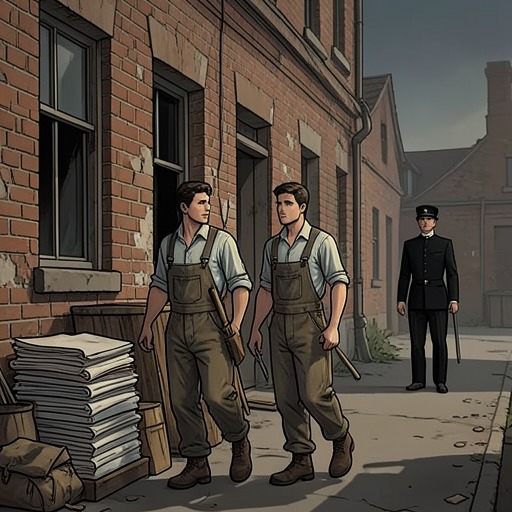
The assignments ranged from ordinary household moves to work whose circumstances were harder to explain. The boys carried merchandise through storefront basement grates along Court Street, moved furniture from brownstone walk-ups, and helped clear a fire-damaged factory beneath the Brooklyn end of the Manhattan Bridge. They also emptied an electronics showroom, carrying away stereos and equipment while Frank drank beer and joked with the man who had unlocked the gates. The work’s outward label of moving covered a wide range of transactions, and Frank’s clients watched the boys for signs of theft or disloyalty. The boys took nothing; instead, they watched the clients and listened, learning the habits and information-gathering that would later serve the agency.
The Agency and Its Shadowed Work
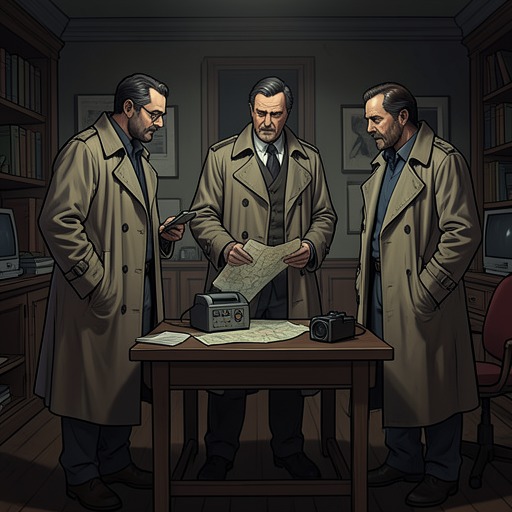
L&L eventually stopped being a moving company. The old brownstone on Degraw Street disappeared from the boys’ working lives, and they became errand boys as well as detectives. Under Frank, they tracked spouses, watched employees suspected of stealing or falsifying accounts, and assembled evidence with cameras and listening devices. Their reports formed a detailed record of ordinary life in Cobble Hill and Carroll Gardens. These assignments gave the young men a defined task and a sense of mastery over the small stories they investigated.
Work associated with The Clients was different. Their assignments arrived in fragments, without clear beginnings or endings, and left the boys unsure of the larger purpose. When those clients’ influence was present, Frank changed his habits: he avoided familiar places, closed the L&L storefront, kept his back to restaurant walls, and watched the street. His joking became more strained and discontinuous. The contrast revealed two kinds of agency work: investigations the boys could understand and complete, and jobs in which they were merely tools within stories beyond their knowledge.
The Zendo’s service arrangement illustrates the scale of the interests behind those opaque jobs. Gerard explained that students performed building maintenance and service work as part of their training, while the valuable service contract was worth millions; he said his brother and Ullman kept most of the difference. The detail connects labor, property, and concealed financial advantage, rather than the small, legible cases the boys had handled under Frank.
A Clean Business and a New Leader
After Frank and Tony were gone, Danny assumed leadership of L&L. He sat apart from the others, dressed more sharply as the nights passed, and accepted their account of events in Maine with a single nod; the subject was not discussed again. His authority settled into place without a formal announcement. The others recognized the change through visible habits and the everyday deference of Court Street, where Danny began to occupy the position Frank had held.
The company’s new arrangement paired a legitimate detective agency with a real car service. The agency was clean for the first time, but had no clients. The car service, by contrast, took calls unless it genuinely lacked available cars. Danny arranged for flyers and new business cards to advertise the service’s economy and efficiency across the boroughs. The Lincoln in which Frank had died was clean again and joined a small fleet making regular runs between the Cobble Hill Nursing Home on Henry Street and the Promenade Diner, as well as between the Boerum Hill Inn and apartment buildings along Prospect Park West and Joralemon Street.
The Meaning of the Reorganization
The final business is not simply the old enterprise with a new name. Its detective work has been separated from the covert client network that once shaped assignments and unsettled Frank, while its transport work has become an ordinary service with regular routes and open advertising. Yet the absence of detective clients makes the clean status feel economically precarious: legitimacy has been achieved, but it has not supplied the agency with cases.
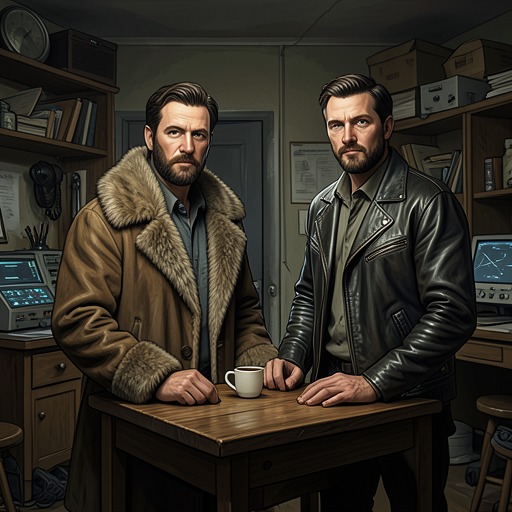
The change also appears in the men’s after-hours routine. In the L&L storefront, they play poker and listen to Danny’s preferred music, a freedom that had been curtailed while Frank and Tony were present. Gilbert, recently released after five nights in custody for Ullman’s killing, has returned to the group and takes pride in his hand; Danny leads from a little apart. The storefront remains their gathering place, but the work conducted from it has changed. L&L’s clean operation is therefore both a practical reset and a quiet measure of what has been lost: the old company’s dangerous, intimate authority is gone, leaving a lawful business whose future depends on ordinary calls and the uncertain prospect of clients.