The Reorganization of L&L
Motherless BrooklynThe Reorganization of L&L is the transformation of Frank Minna’s makeshift operation from a boys’ moving crew into a covert detective agency and, after his death, a clean agency paired with a real car service. Its final form is practical and outwardly ordinary: Danny Fantl leads, the cars take regular calls, and the Lincoln once stained by Frank Minna’s death returns to the streets as working transport.
From Moving Crew to L&L
The enterprise began with four boys, four twenty-dollar bills, and four white business cards. Frank Minna handed each boy a twenty and a card for L&L Movers, whose slogan promised that no job was too small and some jobs were too large. He insisted that the work be called moving. For the boys, the label was part of the job itself: it gave a recognizable name to an arrangement whose real boundaries they did not yet understand.
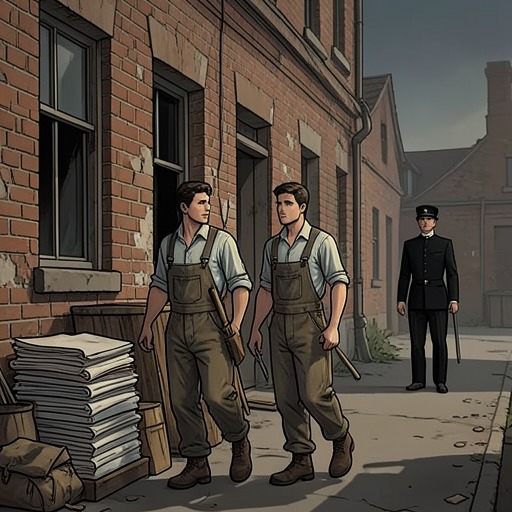
They remained junior staff for years. Their usual pay was twenty dollars and a beer, and Frank Minna summoned them with little warning. The work ranged from moving merchandise through storefront basement grates along Court Street to carrying furniture up brownstone stairs. They hauled sofas through third-story windows using a makeshift pulley, helped clear a fire-damaged factory building beneath the Brooklyn end of the Manhattan Bridge, and built and dismantled temporary stages for the Atlantic Antic. In one especially brazen-looking job, they emptied an electronics showroom, carrying out stereos and amplifiers while Frank Minna joked with the man who had opened the gates. His clients watched the boys for signs of theft or disloyalty; the boys watched back, and learned to listen.
The Detective Agency and Its Hidden Work
L&L eventually stopped being a moving company, although its work did not become straightforward. The boys became errand runners as well as detectives, and the influence of Matricardi and Rockaforte could be felt in assignments that made Frank Minna anxious. He changed his routines, closed the L&L storefront, kept to the corners of restaurants, and watched the street over his shoulder. The change in his conduct marked a difference in the work: under pressure from The Clients, the Minna Men could be sent into stories whose beginnings and endings they could not see.
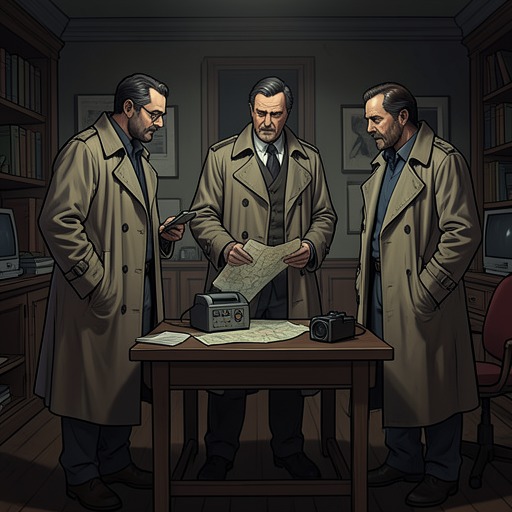
For ordinary investigations, they followed spouses or watched employees suspected of theft or falsifying accounts. They used surveillance equipment and cameras, then recorded what they found in duplicate reports. In this work Frank Minna’s crew could understand the small, complete dramas they documented. Other assignments made them feel like tools, moved through events too large or obscure for them to grasp. The contrast matters to the later clean reorganization: the detective-agency name had already covered work shaped by secrecy, unequal knowledge, and clients whose influence Frank Minna feared.
A further account of the agency’s entanglements concerns maintenance at the Zendo. Students performed cleaning and cooking as training, while a service contract for the building was said to be worth millions. Gerard Minna said that he and Ullman had diverted most of the difference into their own pockets, and that the doormen were involved as well. This episode exposes the kind of concealed economic arrangement surrounding the agency; it does not, by itself, explain the later decision to operate cleanly.
Danny Fantl Takes the Lead
The final reorganization is presented after Frank Minna and Tony Vermonte are gone. In the L&L storefront at two in the morning, Danny Fantl, Gilbert Coney, Loomis, and Lionel Essrog play poker. Danny sits apart, his fedora beside his hand, and appears to dress more sharply with each passing night. Leadership has settled on him without a formal contest. The others read his quiet, composed appearance as a way of occupying Frank Minna’s former place: he dresses the part and waits for Court Street to recognize him.
Gilbert Coney has recently come back from five nights in lockup, having been released for lack of evidence in Ullman’s killing. Detective Seminole has apologized to the group. Gilbert resumes smoking and indulging in food and drink, while complaining that the others left him to face the ordeal alone. Against this unsettled background, Danny’s authority is presented as an everyday fact rather than a declared promotion. He accepts Lionel Essrog’s account of events in Maine with a nod, and the subject is dropped.
A Clean Agency and a Working Car Service
Under Danny Fantl, L&L is a detective agency that is clean for the first time. It has no clients. The absence of investigative work does not leave the business idle: L&L also operates as an actual car service and now accepts calls unless it has no available cars. Danny has flyers and new business cards printed, advertising economy and efficiency across the boroughs. The company’s public identity has shifted from the flexible cover of moving work toward ordinary, advertised service.
The physical fleet registers the change as clearly as the paperwork. Frank Minna’s Lincoln, inside which he had bled to death, has been cleaned and put back into service. It now makes regular runs between the Cobble Hill Nursing Home on Henry Street and the Promenade Diner at the end of Montague, as well as between the Boerum Hill Inn and stylish apartment buildings along Prospect Park West and Joralemon Street. The car once associated with the company’s defining violence becomes part of a routine transportation network.
At the Boerum Hill Inn, Gilbert Coney offers to drive Siobhain home after the Inn closes. His gesture suggests a new, more personal rhythm within the ordinary work of the service: he has lately been volunteering to chaperone her, and Lionel Essrog suspects he has a crush on her. Frank Minna is no longer present to tease Gilbert about it. In the same scene, Danny’s preferred music plays in the storefront because Frank Minna and Tony Vermonte are gone. These small changes accompany the institutional ones: L&L’s new legitimacy is expressed not only through clean operations and regular fares, but through the altered habits of the people left behind.