The world (or my brain—same thing)
Motherless Brooklyn“The world (or my brain—same thing)” is Lionel Essrog’s formulation of how inseparable his perception is from the reality he moves through. The phrase gives shape to a life in which words and compulsions continually interpret the world, while also suggesting how exposed he becomes when that verbal framework falls away.
Meaning and Mechanism
Lionel describes his Tourette syndrome not simply as speech that escapes his control, but as an ongoing activity of mind and language. Much of the time, he whispers or subvocalizes: his Adam’s apple bobs and his jaw moves while the words remain nearly silent. He imagines those words as a peaceable force moving across reality, smoothing imperfections and putting things in order. But when the world seems too orderly, the same activity turns disruptive, searching for a vulnerable point until an itch becomes an urge to shout. The phrase’s parenthetical equivalence captures this two-way relationship: his brain reacts to the world, yet its words also supply the means by which the world is felt and interpreted.
That connection is not an abstract claim that the outside world literally originates in Lionel’s mind. It describes the intimacy of his experience: the world reaches him through the activity he cannot simply switch off. When medication slows his thinking to what he experiences as a morose crawl, he refuses it rather than accept a dimmed version of that world. The phrase therefore holds both dependence and resistance: his mind can make reality exhausting, but dulling it would also diminish his access to reality.
A Mind Formed by Brooklyn
The expression gains context from Lionel’s childhood at St. Vincent’s Home for Boys, where he spent much of his time in the library, trying to read every neglected book. He describes that compulsion as connected both to fear and boredom at the Home and to an early impulse to count, process, and inspect. Reading is an effort to find language for an emerging self, though the books and television he turns to do not provide it. In this history, words are at once a refuge and an incomplete instrument: they help him examine his experience without resolving the mystery of who he is.
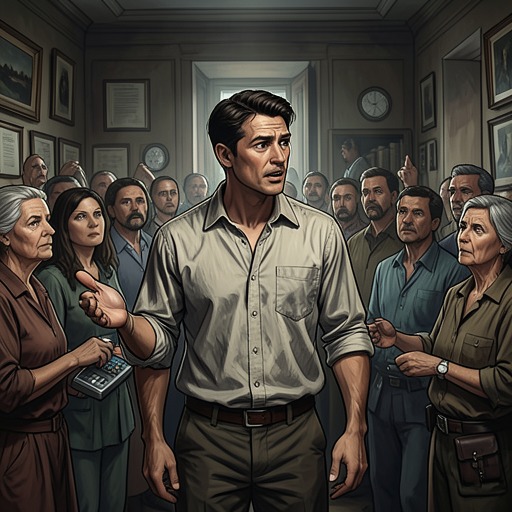
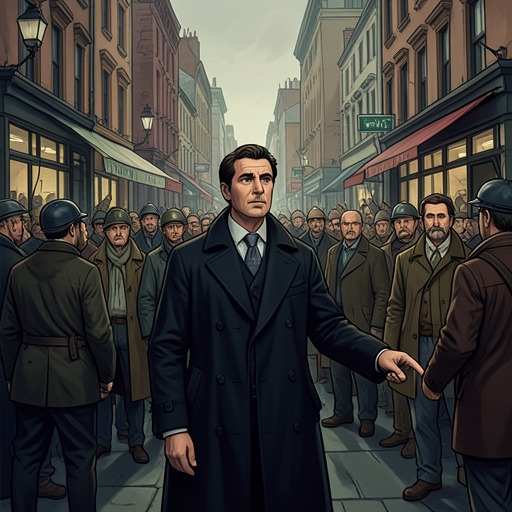
The city offers another field for that inspecting mind. On Court Street, where Frank Minna brings the boys, ordinary storefronts conceal a web of favors, deals, and unwritten understandings. A barbershop doubles as a social club and a front for poker; the neighborhood’s seemingly inexplicable routines make sense to those who belong to its informal trust. Lionel’s account of the Casino newsstand similarly focuses on people waiting to scratch and count lottery tickets, and on the discarded tickets left behind. He reads this collective ritual as a pattern of compulsive counting, extending his own mode of attention outward. The phrase’s equivalence thus has a social dimension: his mental habits shape how he recognizes repetition and hidden structure in the city, even when the world’s arrangements are not his alone.
The Coast and the Failure of Language
In Maine, the expression’s balance is tested by a landscape unlike the built environments Lionel knows. At Yoshii’s, he leaves the parking lot, crosses a barrier of logs, and descends toward the water. After urinating on a boulder and watching its surface darken temporarily, he turns toward the ocean and is struck by vertigo. Waves, sky, trees, and his own presence no longer sit within the familiar grammar of skyscrapers and pavement. He experiences the change as language being sucked away: the verbal walls that had surrounded and supported him are suddenly absent beneath the vast sky.
His shouted cry of “Freakshow!” disappears into the swirling foam. The moment reverses the phrase’s usual assurance. If his brain and the world have seemed effectively one, the coast reveals how much that union has depended on language: without the urban surfaces and verbal structures he leans on, Lionel feels himself reduced to a fragment of Brooklyn at the edge of an immense silence. The expression names both his means of inhabiting reality and the precariousness of that means.
Significance
The phrase condenses a recurring tension in Lionel’s account of Tourette syndrome. His words can order, interpret, and touch the world, but their activity can also turn against smoothness and demand a disruption. The novel’s movement from the crowded, tacitly organized neighborhood of Brooklyn to the Maine shore gives that tension spatial form: one environment is saturated with human routines that his mind can read, while the other confronts him with a silence those routines cannot contain.
“The world (or my brain—same thing)” is therefore less a slogan than a provisional description of lived experience. It makes the boundary between perception and surroundings feel porous without erasing the difference between them. In Brooklyn, that porosity allows Lionel to find patterns in books, streets, and rituals; at the ocean, the disappearance of language exposes the support those patterns have been giving him.