Ullman
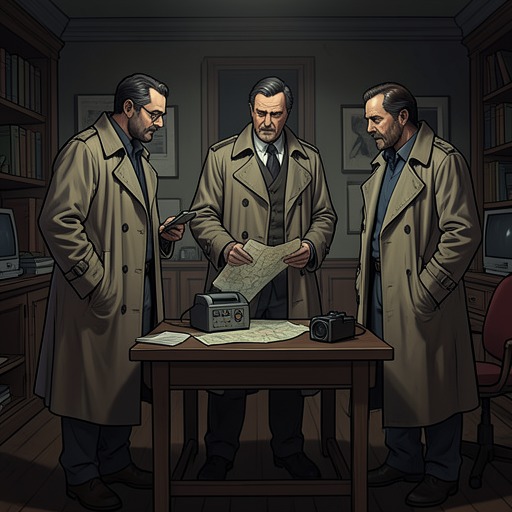
Motherless BrooklynUllman is a New York bookkeeper whose work connected Frank Minna and Gerard Minna to a scheme that diverted money from Fujisaki Corporation. He never appears directly in the supplied scenes, but his name moves from a cryptic instruction in Frank’s notebook to the center of the inquiry into Frank’s death, and later into the investigation of Ullman’s own killing. His importance lies in that chain of clues: he is both a participant in the financial arrangement and a person the investigators struggle to locate and understand.
Identity and Business Role
Ullman is identified as a bookkeeper and another New Yorker. Gerard Minna describes him as Frank Minna’s partner in fleecing the Japanese. This places Ullman inside the scheme, but the evidence does not establish how long he worked with Frank, how they met, or what his specific bookkeeping duties were. Nor does it provide a first name or personal history.
The arrangement involved a building-services contract associated with the Yorkville Zendo. Gerard says that his students did the building’s maintenance and service work as part of their training, including cleaning and cooking. Such a contract was worth millions, while Frank, Gerard, and Ullman diverted most of the difference into their own pockets. Ullman’s role is therefore tied not simply to accounting in the abstract, but to the financial handling of the gap between the contract’s value and the labor actually supplied.
Gerard presents himself as the source of the labor, while describing Frank and Ullman as the men who took most of the proceeds. He says he supplied that labor in return for consideration equivalent to his mortgage on the Zendo. His account makes the arrangement look like a division of services and money among participants with unequal interests: the students performed the work, Gerard received a benefit connected to the building, and Frank and Ullman pocketed most of the difference. The evidence does not specify the exact sums either man received or how the proceeds were divided between them.
Ullman as a Missing Lead
After Frank’s death, his notebook becomes one of the few concrete tools available to the surviving members of L&L. Lionel Essrog circles three entries: a woman, glasses, and Ullman downtown. The last phrase records where Frank was supposed to go after leaving the Yorkville Zendo. Lionel interprets it as the destination to which the man at the Zendo had sent Frank, turning an obscure note into a possible route through the events preceding Frank’s death.
Gilbert Coney recognizes that the note may matter and asks who Ullman is. Lionel explains its connection to Frank’s movements, but at this stage the name yields more uncertainty than explanation. The group does not know who Ullman is, and the note alone does not establish what Frank intended to do downtown or what happened there. The destination nevertheless gives the investigation a specific person to find.
Tony Vermonte assigns Gilbert to look for Ullman, in part because Gilbert is already exposed as a name in the investigation and needs to do fieldwork. Tony suggests using Gilbert’s contact in the Sanitation Police to search police records and assess Ullman. He also raises the possibility that Ullman might be Giant Killer, who may have been waiting for Frank. This is a working hypothesis, not a confirmed identification. Lionel instead believes that the man upstairs at the Zendo and Giant Killer acted together, while Tony insists that Ullman’s identity still needs to be checked. The disagreement shows how little the name initially resolves: Ullman is a lead, but not yet an explanation.
Gerard Minna’s Account
Later, Gerard gives Lionel a more direct account of Ullman’s place in the scheme. Gerard says that he himself supplied the labor but had never met anyone from Fujisaki Corporation; he had also not been introduced to them by Frank. He identifies Ullman as Frank’s bookkeeper and partner in the fraud, then explains how the Zendo’s student labor formed part of the building-services arrangement. These details connect the name in the notebook to the financial structure behind the case.
Gerard’s account clarifies the method without making Ullman a fully known character. Ullman and Frank are described as taking most of the money saved or generated through the difference between a multimillion-dollar service contract and the work performed by Gerard’s students. Gerard’s version also has limits: it is his explanation to Lionel, and the available evidence does not independently detail Ullman’s actions or confirm every part of Gerard’s account. Ullman remains known through what other people say he did, rather than through a scene in which he speaks or acts.
Killing and Aftermath
Ullman’s story ends in a killing, though the supplied evidence does not give the circumstances, identify the killer, or explain the motive. Gilbert is arrested in connection with Ullman’s killing and spends five nights in lockup. Detective Lucius Seminole later releases him for want of evidence and calls L&L to apologize. The account confirms Ullman’s death while leaving the central question of responsibility unresolved.
That unresolved outcome gives Ullman a double function in the narrative. His downtown destination helps Lionel and the others pursue the mystery surrounding Frank, while the later arrest of Gilbert shows that the search for answers carries consequences for the investigators themselves. Yet the information recovered about Ullman remains partial: he is named as a bookkeeper, linked to Frank’s fraud with Gerard, sought as a possible lead, and finally remembered as the victim of a killing for which Gilbert could not be held. The gap between those facts and the unanswered questions is central to his role as an offstage figure in the investigation.