Yorkville Zendo under Wallace
Motherless BrooklynYorkville Zendo under Wallace is the remnant of Gerard Minna’s community after his disappearance: a congregation diminished by departures but not dissolved. Its survival under Wallace contrasts with the exploitation that had made some of its students useful to Gerard’s operations, and gives the Zendo a quieter successor to its former charismatic leadership.
A Community in Retreat
Within days of Gerard Minna’s disappearance, most of the Zendo’s students had trickled away. Some joined an established Zendo on the Upper East Side, twenty blocks south, whose ranks grew with defectors seeking what they regarded as truer essences. The movement of students left the Yorkville community with only a diminished flock, but its decline did not become its closure.
The students who had become doormen had begun as authentic seekers drawn to Gerard’s teaching. Their susceptibility to his charisma made them vulnerable to being put to work first in a Park Avenue building and later as drivers and strong-arms. The apparent gap between their religious beginnings and their practical use in Gerard’s schemes marks how thoroughly the community’s ideals had been entangled with his other activities.
Labor, Property, and Corruption
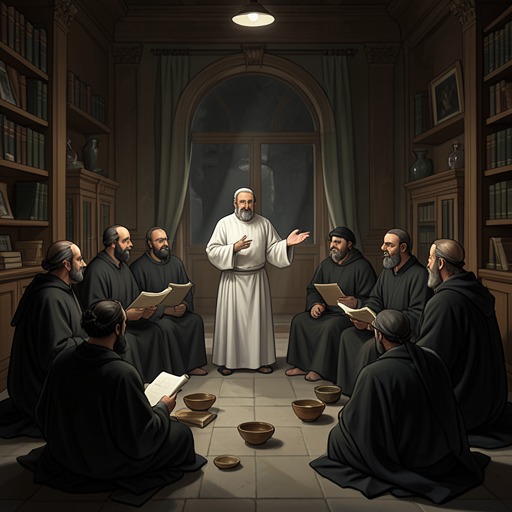
The Zendo’s institutional arrangement included service work for the building. Gerard’s students performed maintenance and other tasks, including cleaning and cooking, as part of their training; the work resembled labor they might have done in a monastery, but took place in a different setting. The services contract was worth millions, and Gerard’s brother and Ullman diverted much of the difference into their own pockets. Doormen were also involved in the arrangement.
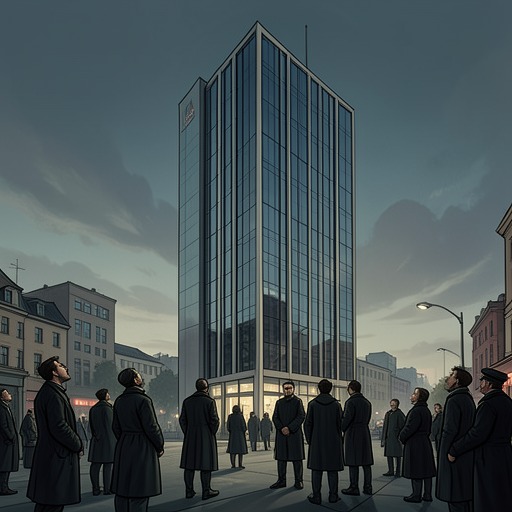
This business context connected the religious community to the investigation of the Park Avenue operation. Lionel Essrog found a rental car’s registration showing a six-month lease to Fujisaki Corporation at 1030 Park Avenue, then asked Loomis to investigate the building, its management, and its board. Later, Gerard explained the student labor arrangement and said Fujisaki had sent Giant Killer after Frank Minna and the bookkeeper. The Zendo’s students were therefore not simply a congregation in the background: their labor and, later, some of their members’ coercive work placed them within the chain of events around the building.
Wallace’s Stewardship
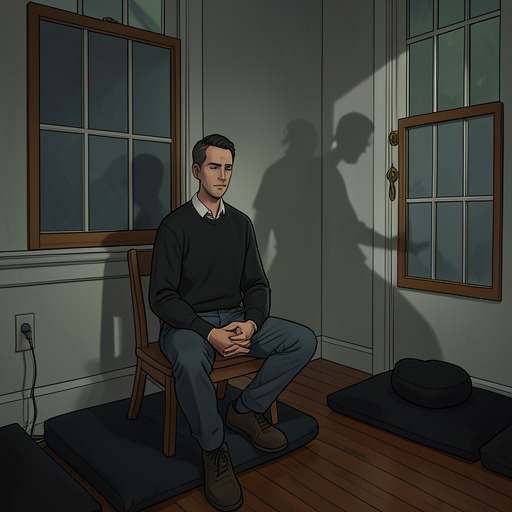
After Gerard was gone, Wallace, described as a stoic sitter, took stewardship of the students who remained. He declined to call himself Roshi and instead asked to be addressed as sensei, a lesser title for an apprentice-instructor. His choice establishes a modest form of leadership rather than a claim to Gerard’s former authority.
The change also belongs to a broader contrast between the brothers’ organizations. Frank Minna had the Minna Men; Gerard had followers who could be deployed as drivers and strong-arms. In the narrator’s retrospective assessment, that difference may have affected how the case unfolded. After the leaders’ corruption had put both organizations in danger, the quietest disciples gently steered Frank’s and Gerard’s groups past its shoals. The Zendo’s continuation under Wallace is one part of that quieter redirection.
Survival and Limits
Wallace’s stewardship preserved the Yorkville Zendo, but it did not restore its former numbers or undo its history. Most students had already left, and the institution’s survival depended on the small group that remained. The Fujisaki Corporation and The Clients, by contrast, withdrew from the affair unharmed and barely disturbed; the consequences fell more visibly on the Minna organizations than on those larger powers.
Lionel learned what had become of the Zendo from Kimmery, the only time he saw her, two weeks after his return from Maine. They met at a coffee shop on Seventy-second Street and talked about the Zendo before she turned to their brief intimacy and asked whether he had her keys. The account reaches Lionel—and the reader—as news of an institution that has outlasted its leader, even as its congregation contracts and the larger forces around it escape lasting damage.