
Edwina and Alicia’s Chosen Family
MovingThis flow traces how practical help between two very different women grows into a durable bond of trust, shared care, and lasting gratitude.
increasing Bearing strength in each event
 decreasing
Bearing strength in each eventdecreasingA Meeting on the Bench

A Meeting on the Bench
A chance encounter
Edwina is exhausted and overwhelmed in the grounds of the Imperial War Museum, struggling with the crying twins and the weight of her grief. Alicia sits beside her, retrieves a baby’s discarded shoe, and finds a way to make the children laugh.
Edwina’s composure breaks. Alicia does not demand an explanation or judge her for being unable to cope; she simply helps her get the pram and babies home through the rain.
Help becomes belonging
The encounter matters because Edwina’s need is immediate and profound: she has been left alone to mother two infants after Ollie’s sudden death. Alicia’s unceremonious kindness offers the first relief she has felt in a long time.
Their relationship begins not with shared background but with an act of care that Edwina cannot provide for herself in that moment.
Alicia Holds the Household Together
Alicia Holds the Household Together
Care without judgment
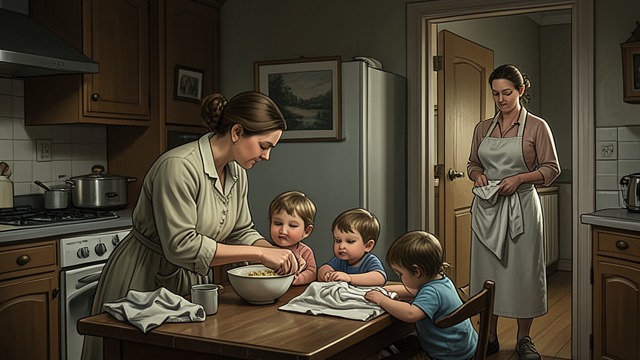
Alicia returns to the house day after day, first helping care for the twins and then staying on as housekeeper. She feeds and dries the children, manages the domestic routines, and makes practical order where Edwina feels there is none.
Edwina knows she cannot cook well and cannot always bear the demands of motherhood. Alicia takes the children into her lap and loves them steadily, without treating their difficult moods as evidence against them or their mother.
A sustaining friendship
Alicia’s care gives Edwina the space to resume illustrating and earn money, while also helping the family survive the long aftermath of bereavement. The work is practical, but its emotional significance is greater: Edwina is no longer alone in the house with two children and a dead husband’s absence.
Edwina sometimes feels jealous of Alicia’s effortless affection for the twins. Still, the bond grows through daily trust, and Alicia becomes the person whose presence makes family life possible.
Loyalty Under Suspicion

Loyalty Under Suspicion
An accusation in the household
When valuables disappear from the house, Dickie, Lucas, and the police turn their suspicions toward Alicia. Edwina regards the accusation as absurd and defends the woman whose honesty she knows from years of close companionship.
She explains that Alicia’s faith would make even taking a bar of soap without permission unthinkable to her. The defense is personal as well as moral: Edwina refuses to let the household reduce Alicia to a convenient suspect because of her race or position as a servant.
Trust tested by betrayal
Edwina’s faith in Alicia is vindicated by the deeper truth: the burglary was arranged by Lucas. The episode exposes how vulnerable Alicia is to other people’s assumptions and how fiercely Edwina has come to regard her as family.
In later years, when Charlie’s actions leave Alicia badly injured, the bond is tested by a different kind of pain. Edwina’s loyalty to Alicia becomes a turning point in how she sees her son, whose failure to help Alicia fractures the trust she had extended to him.
The Lasting Shape of Gratitude
The Lasting Shape of Gratitude
A letter that cannot arrive
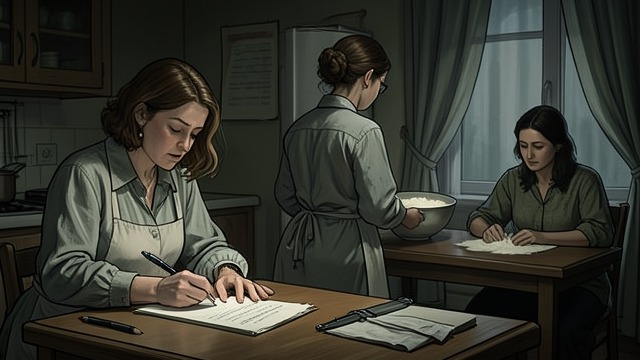
While preparing to leave the house, Edwina writes to Alicia about selling and imagining a new life in Cornwall. She describes the traces of Alicia that remain in the kitchen: flour-covered hands, the twins’ meals, songs, and food brought home with care.
For a moment, the letter feels like an ordinary message between old friends. Then Edwina remembers that Alicia died the previous year and that she missed the funeral while arranging her passport.
Love embedded in a home
The realization makes the house’s rooms more than a collection of neglected possessions. They hold the imprint of Alicia’s labor and affection, and Edwina recognizes that the life she built after Ollie would not have been possible without her.
Her grief over the missed farewell echoes her larger fear of leaving things unsaid. Alicia is gone, but Edwina’s gratitude remains active: it shapes how she understands her home, her children, and the people who sustained her.
Alicia’s Place in the Family Memory
Alicia’s Place in the Family Memory
Beyond employment
As Edwina reviews the past, Alicia’s role cannot be separated from the family’s most intimate routines. She cared for the twins, supported Edwina through widowhood, and remained present long after the children no longer needed a nanny.
The relationship was never based on similarity or social equality. Its depth came from repeated acts of attention and from Alicia’s ability to offer care without demanding that Edwina perform gratitude or maternal competence in return.
A bond that endures absence
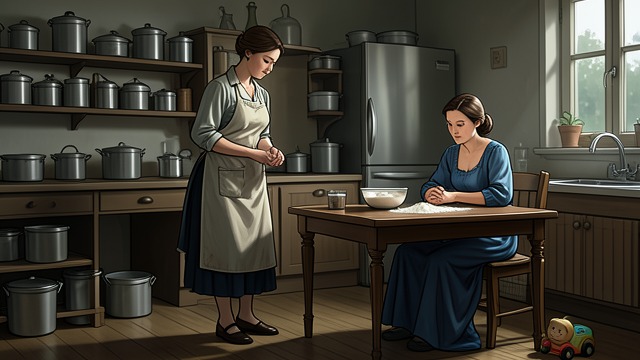
Edwina’s memories of Alicia persist in ordinary household details rather than in grand declarations. The kitchen, the children’s meals, and the rhythms of care keep their relationship present even after Alicia’s death.
As Edwina prepares to move, she understands that leaving the house does not erase the life Alicia helped make there. The friendship becomes part of the inheritance Edwina carries forward, one of the strongest reasons she can look toward a new home at all.
After Ollie’s death, when the twins are infants
The first years after Ollie’s death
During the years of the twins’ childhood
After Alicia’s death, as Edwina prepares to sell the house
Near the novel’s ending, during Edwina’s reckoning with the past
