
The House as a Vessel of Memory
MovingThis flow traces how 137 Kennington Road changes from a living family home into an archive Edwina must confront, relinquish, and finally carry forward through recovered objects and new plans.
increasing Bearing strength in each event
 decreasing
Bearing strength in each eventdecreasingA House Turning Against Its Keeper
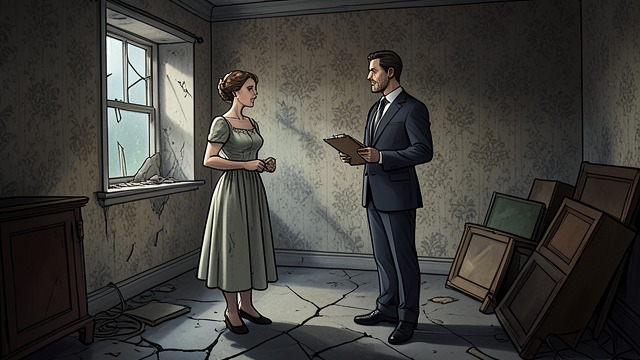
A House Turning Against Its Keeper
A home becoming a burden
Edwina sees the failing Georgian house as more than an inconvenient property. Its cracks, damp, mouse droppings, and overgrown garden seem to speak for a past that has accumulated beyond her ability to manage. The building’s decay mirrors her own frailty, but it also represents years of memories she has left undisturbed.
Her decision to sell is therefore not merely practical. She recognizes that remaining in the house has made her a prisoner of what happened there, and decides that she can leave without erasing the life she lived within its walls.
The first act of release
The imagined move to Cornwall gives Edwina a future that is not organized around the old house. She pictures a small home by the sea, painting again and choosing a dog, turning the idea of moving into a chance to recover an identity beyond widowhood and motherhood.
Yet even as she makes this plan, she knows that sorting the house will bring her into contact with what she has avoided. The sale begins a physical clearing-out whose real task is deciding which memories she can carry and which she must finally face.
Rooms Layered with Lives
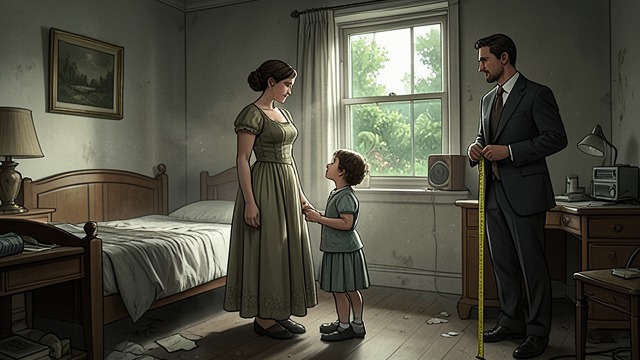
Rooms Layered with Lives
A guided tour of the past
As Lee measures the rooms, Edwina experiences each one through several periods of family life at once. The nursery recalls the birth and childhood of Rowena and Charlie; the spare room recalls Lucas and the difficult place he occupied in the household; the studio recalls a career that once gave Edwina independence and purpose.
The estate agent sees space, condition, and market potential. Edwina sees the scenes that those surfaces have absorbed: children playing, marriages forming, grief interrupting ordinary life, and rooms gradually being abandoned as the family disperses.
A private history beneath the listing
Her memories expose the limits of a house description. The same room can be a nursery, a workroom, a bedroom, or a site of painful recollection, depending on who remembers it and when. The home’s apparent stillness conceals a history that a new owner will never fully know.
The tour also makes Edwina see how little of the building she still inhabits. Selling it will transfer its rooms to strangers, but the memories that give them meaning remain hers, even when she can no longer bear to enter them.
Objects Left Behind
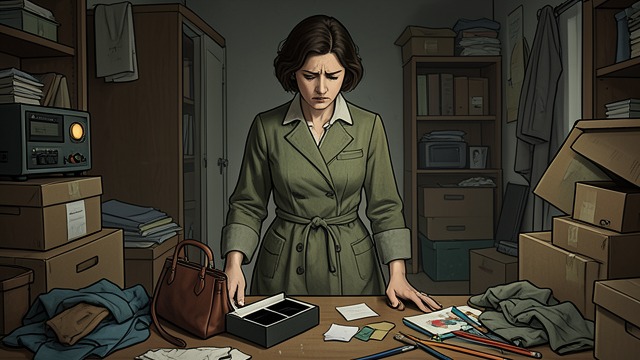
Objects Left Behind
The burden of choosing
Edwina begins culling possessions but repeatedly finds that even a mundane object can open onto an earlier life. Handbags recall Dickie’s gifts and his expectations of respectability; clothing and old art materials summon the children and her lost working life. The clutter is difficult not because every item is valuable, but because each one can become evidence of someone who is gone.
She understands that she cannot take everything, yet the demand to sort objects into keep, give away, or discard makes the house’s history feel newly immediate. Clearing space means accepting that memory cannot be preserved by keeping every thing associated with it.
A keepsake’s hidden history
The missing jewelry box has long stood for more than lost jewelry. Edwina remembers the burglary as an unresolved wound and has carried suspicion and grief around what vanished, including small objects that mattered for their personal meaning rather than their price.
When the box eventually returns, its emptied compartments reveal that an object can preserve a history of harm as well as affection. Its few surviving keepsakes reconnect Edwina to a family past she thought had been irretrievably stripped away.
The House Gives Up Its Secret
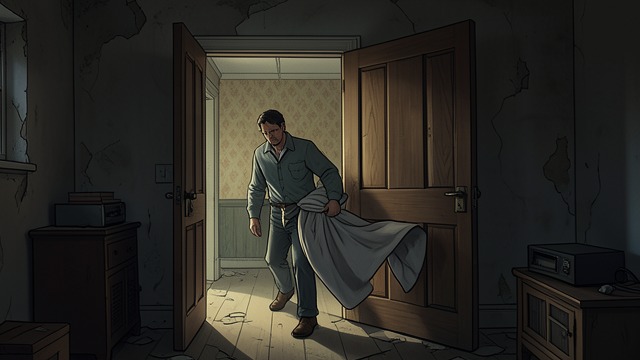
The House Gives Up Its Secret
Returning to the old rooms
Lucas returns to 137 Kennington Road carrying a pillowcase that contains Edwina’s long-missing jewelry box. The house is still recognizable, but its disorder and deterioration make his childhood feel close enough to touch. He has come not as the boy who resented the household, but as an adult who can no longer leave his own part in its history unspoken.
The house once offered him both refuge and discomfort. Its rooms hold the memory of his divided childhood, his mother’s crisis, and his estrangement from Edwina and the twins. Coming back forces him to recognize how much of that past he has carried into his later life.
Confession and recovered keepsakes
Lucas explains that he arranged the burglary when he was young and in trouble, revealing the truth behind a loss Edwina had long misunderstood. The recovered box contains only a few small keepsakes, but their return gives her the chance to recover family objects and reconsider a story shaped by suspicion.
Their encounter does not undo the damage or restore the family as it was. Instead, the house becomes the place where a hidden fact is finally spoken, allowing both of them to stop treating the past as an unanswered accusation.
Carrying Memory Forward
Carrying Memory Forward
From possession to choice
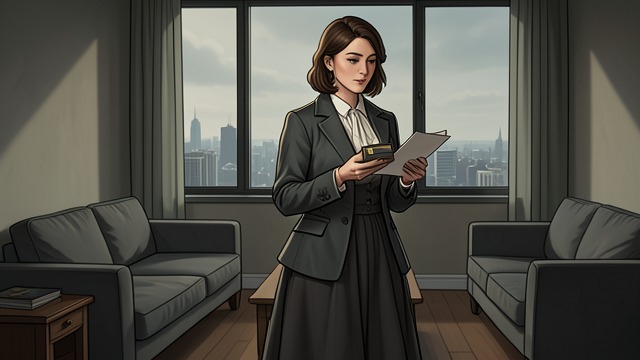
After Lucas leaves, Edwina considers the returned keepsakes alongside her plans for the sale. The objects no longer require her to remain in the house in order to remember the people and events attached to them. She can bring the most meaningful pieces with her rather than trying to preserve an entire household of accumulated things.
The decision marks a change in how she understands memory. A home can hold a life, but it is not the only place where that life can continue to matter. Letting the house go does not require Edwina to deny the past or pretend that it has been resolved perfectly.
A possible new home
Rowena’s letter invites Edwina to Australia, to a life in which she might paint again and be welcomed by her daughter. The recovered family objects and the invitation together make departure imaginable: she can carry selected traces of the old home toward a relationship and future she once believed were lost.
The house is still for sale and the family’s wounds are not simply repaired. But Edwina is no longer imagining only what she must leave behind. She begins to imagine where she might go, and whom she might find there.
London, 2015, before the valuation
The Friday valuation visit, 2015
The weeks after the valuation
Lucas’s return to London, 2015
Near the ending, after Lucas’s visit
