
The Inheritance of Guilt
MovingThis flow follows guilt as it passes through accusation, silence, addiction, and estrangement, then traces the limited acts of honesty that allow some characters to stop repeating blame.
increasing Bearing strength in each event
 decreasing
Bearing strength in each eventdecreasingThe First Unanswerable Loss
The First Unanswerable Loss
Grief without a cause to blame
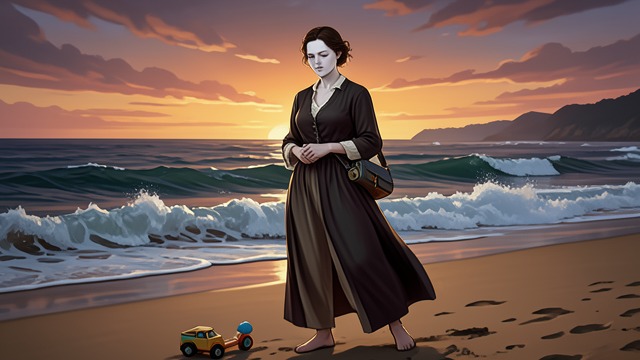
Ollie’s sudden death at Sennen Cove divides Edwina’s life into a before and an after. A family day at the beach becomes the scene of an irreversible loss, leaving her alone with young twins and a house she does not know how to manage without her husband.
Because the death appears sudden and arbitrary, Edwina has no explanation that can make it feel fair. She turns her attention to survival, but the years afterward remain shaped by the fear that love cannot protect anyone from catastrophe.
The work of surviving
Alicia’s practical help enables Edwina to keep caring for the children and maintain the household. Her support does not remove the loss, but it offers a form of care that does not demand Edwina first make sense of her grief.
The death also establishes a pattern that later losses intensify: when something terrible happens, the family searches for a person or decision that might have prevented it. The desire to find responsibility becomes a way of struggling against the helplessness of chance.
A Family Builds Its Case
A Family Builds Its Case
Suspicion after Elise’s death
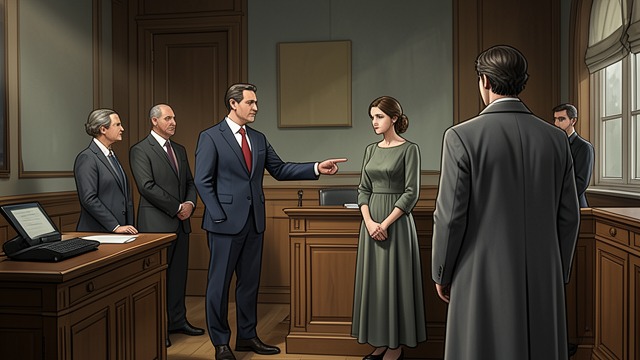
When Elise dies after a party in Oxford, grief quickly becomes entangled with questions about who supplied the drugs and who could have stopped what happened. Lucas says he saw Charlie involved in an exchange; Barbara turns that identification into a call to the police, and the case begins to define the family’s relationships.
The evidence and accusations have serious consequences, but the emotional response is not confined to the court. Each witness occupies a different position in the chain of events, and the family’s need for a clear culprit overwhelms the uncertainty and complicated loyalties surrounding the death.
Blame becomes a family inheritance
Lucas testifies against Charlie, while Edwina experiences the accusation through the life of the son she believes she may be losing. The court can determine legal responsibility for the charge, but it cannot settle the wider questions of motive, regret, or what the family members owe one another.
The trial gives some characters a decisive story—someone acted, someone was guilty—while leaving others with the private knowledge that the events were more entangled. That difference becomes a source of lasting estrangement.
Blame Replaces Understanding
Blame Replaces Understanding
Relationships narrowed by accusation
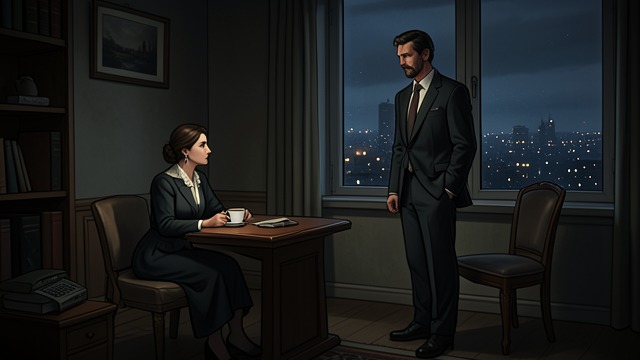
Charlie’s conviction and imprisonment make the rupture in the family tangible. Lucas’s testimony gives Edwina another reason to feel that her stepson has harmed the people she loves, while Lucas himself carries the knowledge that his evidence helped send Charlie away.
The family members do not share the same account of what the verdict means. Legal judgment cannot settle their emotional debts, and silence lets each person preserve a version of the past in which someone else’s actions explain the pain.
The cost of an unresolved story
After Charlie is released, his life continues to deteriorate. Edwina tries to support him, but the family’s accumulated injuries leave her with few resources besides hope and repeated forgiveness. Lucas, living far away, remains caught in the memory of his decision and the conviction that his testimony can never be taken back.
Blame appears to offer clarity, but it does not repair the bonds it has damaged. Instead, it separates family members from the possibility of hearing how fear, resentment, and earlier betrayals shaped the decisions each made.
Guilt Becomes Self-Destruction
Guilt Becomes Self-Destruction
A private punishment
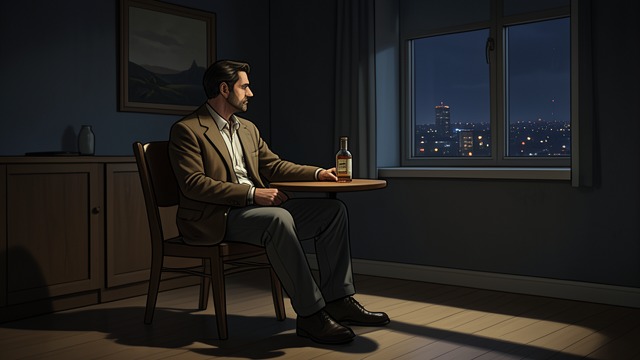
When Lucas learns that Charlie has died in Thailand, his old guilt returns with new force. He begins drinking and using drugs while continuing to function at work, constructing a private life in which he can avoid confronting the consequences of his choices.
The pattern is not a resolution of guilt but a method of keeping it at a distance. Lucas repeatedly harms himself without making amends to anyone, as if his own deterioration might balance the death and suffering that he cannot reverse.
The possibility of choosing life
Lucas eventually enters recovery after recognizing that he no longer wants to die. His sobriety does not cancel his history or offer a simple forgiveness, but it changes what he can do with the years that remain.
That change becomes essential when he returns to London as an adult. Rather than numbing the guilt or turning it into another accusation, he begins looking for a concrete act that might acknowledge the harm he caused.
Truth Without a Full Repair

Truth Without a Full Repair
Confession at the old house
Lucas tells Edwina that he arranged the theft of her jewelry box when he was young. The confession changes her understanding of a loss that had remained surrounded by suspicion, and he returns what survived rather than asking her to declare the past forgiven.
His honesty does not erase the earlier accusation against Charlie or restore the family to its former shape. It gives Edwina a specific truth she had lacked, while making Lucas accept responsibility for an act that had remained concealed for decades.
The limits of reconciliation
Edwina thanks him, but the exchange is neither a complete reconciliation nor a declaration that all injuries are repaired. Their encounter matters because neither must continue treating the old theft as an unexplained wound or a reason to imagine the other as wholly unknowable.
After Lucas leaves, Edwina recognizes that she too has used blame to manage grief, particularly in her estrangement from Rowena after Charlie’s death. The possibility of reunion begins when she can acknowledge her part without demanding that the past become simple.
Sennen Cove, shortly after the twins’ birth
The Oxford party and the weeks after, 1981
After Charlie’s conviction and imprisonment
New York, after Charlie’s death in Thailand
London, 2015, during Lucas’s visit to Edwina
