
Photographs Against Forgetting
MovingThis flow traces how photographs and keepsakes preserve, distort, and reconnect family memory, showing that images can hold evidence of lives while never containing their full truth.
increasing Bearing strength in each event
 decreasing
Bearing strength in each eventdecreasingA Face Held in the Mind
A Face Held in the Mind
Fear of losing the image
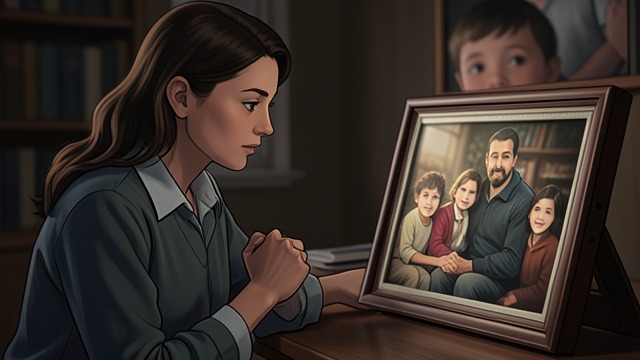
After Ollie dies, Edwina worries that grief will make her forget his face. Photographs become a fragile aid to remembering a person she cannot ask to return, while the children’s inherited features seem to preserve separate pieces of him.
The pictures offer comfort but also sharpen the awareness of absence. Edwina can look at an image of her husband and children together, yet the frozen scene cannot explain why the family’s future has been cut short.
The image as incomplete witness
A photograph records a moment without explaining what came before or after it. Edwina studies a snapshot from the beach, wishing that the image could reveal a warning, but its apparent happiness cannot provide the knowledge she now longs to find.
That gap between what a photograph shows and what a life means will recur across the book. Images keep the past visible, but they do not make it fully recoverable or protect the living from later change.
A Family in the Frame
A Family in the Frame
A picture of temporary accord
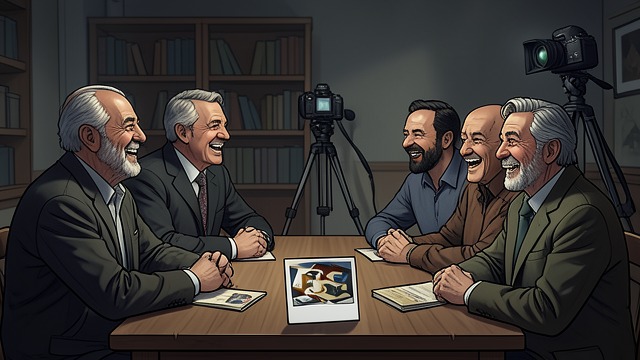
At the twins’ twenty-first birthday gathering, photographs and a Polaroid preserve an afternoon that Edwina remembers as unusually easy. Rowena, Charlie, Lucas, Dickie, and Edwina share a meal and moments of celebration, giving the image the appearance of a family that might yet become more settled.
The photograph matters partly because the family’s resemblance is uneven: the twins share a visible bond, Lucas belongs through marriage, and Edwina’s place beside them is less obvious in the frame. The camera records their proximity but cannot settle what each person feels about belonging.
A clue waiting in plain sight
Years later, the birthdays printed on the twins’ jewelry help Edwina solve the combination to Charlie’s trunk. The image from that gathering therefore becomes more than a record of a happy day: it supplies the clue that opens a container of long-hidden material.
The picture’s meaning changes with the moment of viewing. What once represented a family occasion becomes a practical key to Charlie’s private past, showing how an image can outlast the original event and acquire new significance.
The Box Behind the Picture
The Box Behind the Picture
A recovered portrait
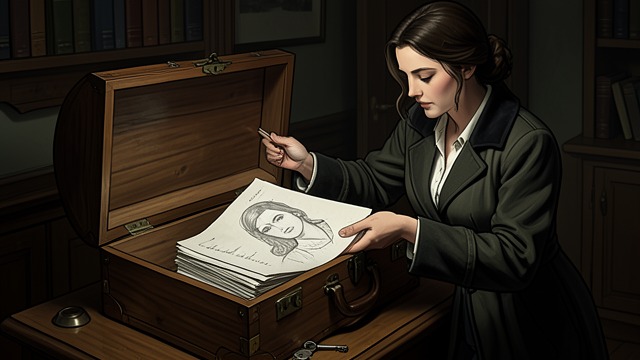
Edwina opens Charlie’s locked trunk after recognizing the combination. Among its contents she finds an old art-school portfolio and a drawing of a naked young woman whose face seems familiar. The picture connects the present-day Edwina to the story that will unfold in Fern’s memories.
The portrait does not immediately explain the relationship between its subject and Charlie. Instead, it acts as an image that prompts a new narrative: the older woman must revisit what the drawing preserves and discover how that earlier life became entangled with her son’s.
Art as a route back
The trunk contains evidence that Charlie kept pieces of his life private, including work Edwina had never seen. Opening it therefore unsettles her earlier belief that she could safely sort the house by discarding its contents without reopening the history attached to them.
The drawing is not a complete account of the past, but it gives Edwina a starting point. Its power lies in making the past newly visible—and in reminding her that images can initiate questions as readily as they preserve answers.
The Album’s Double Exposure
The Album’s Double Exposure
A life arranged in captions
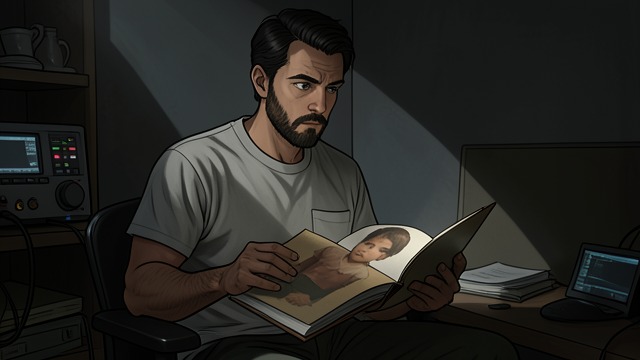
While staying in his mother’s flat, Lucas studies Barbara’s photograph album, a collection of scenes and captions assembled to preserve the life she remembers. The album brings together childhood, family occasions, social events, and the versions of Lucas his mother took pride in recording.
The images let him revisit people and places, but they also expose the distance between a caption and an experience. The album’s orderly sequence cannot contain the shame, resentment, and grief that shaped the lives shown inside it.
Looking again at the past
As Lucas revisits the photographs, familiar scenes acquire new weight. Images of his younger self and the people linked to his history make him reconsider what he did, what he failed to understand, and what his mother may have been trying to hold onto as her memory deteriorated.
The album is therefore not simply a record of a family; it is a prompt for reinterpretation. Lucas can neither recover the people as they were nor make their stories agree, but he can look at the evidence with greater honesty than he did as a young man.
Keepsakes Returned to Their Owner
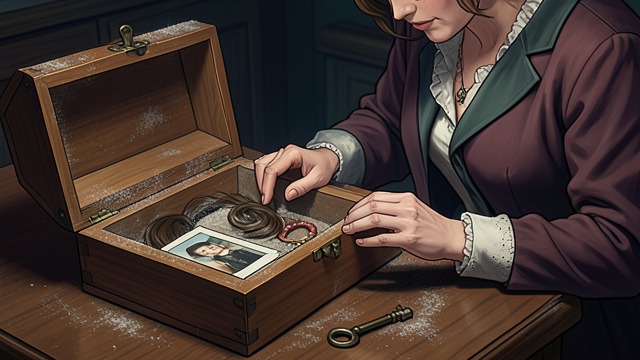
Keepsakes Returned to Their Owner
Small objects, long histories
Lucas returns Edwina’s jewelry box, and she finds a handful of surviving keepsakes in its lowest compartment. A ring, a lock of hair, baby teeth, and a family photograph have endured where the rest of the contents disappeared, preserving intimate traces of people and relationships.
Their importance is not measured by their monetary value. They matter because they connect Edwina to her mother, Ollie, and the children she has lost or become estranged from. The returned objects make visible how a small remnant can carry a much larger history.
Memory made portable
Edwina begins preparing for a possible journey to Australia and includes the restored keepsakes in what she intends to take. She no longer needs the old house to serve as the only container for her past; selected objects can travel with her into a future that may include Rowena.
The photographs and keepsakes cannot reverse loss or guarantee reconciliation. They do, however, turn remembrance from a fixed attachment to one house into something Edwina can carry, choose, and share.
After Ollie’s death, during Edwina’s early widowhood
The twins’ twenty-first birthday gathering, March 1981
Edwina opens Charlie’s trunk, 2015
Lucas’s return to London, 2015
After Lucas confesses, near the ending
