
Home, Escape, and Belonging
MovingThis flow follows characters who try to escape homes that confine or estrange them, then asks whether belonging comes from a place, a chosen life, or the people willing to receive them.
increasing Bearing strength in each event
 decreasing
Bearing strength in each eventdecreasingLeaving the Protected World
Leaving the Protected World
Freedom in an unfamiliar city
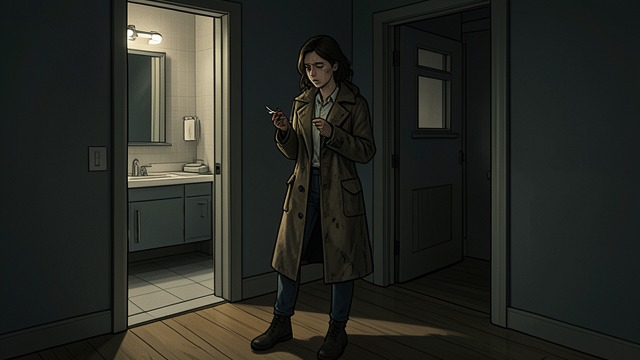
Fern arrives in Manchester expecting the beginning of a joyful acting life, but instead encounters cold rooms, a shared bathroom, loneliness, and the social uncertainty of living away from home. Her childhood in Godalming had offered comfort and protection; the student flat offers independence without immediate security.
The contrast forces Fern to test which parts of her old identity are genuinely hers. She experiments with clothes, drinking, smoking, and performance, but often discovers that imitation does not make her feel at ease. The city is both a place of discomfort and a place where no one knows her history.
Belonging through ordinary contact
Over time, Fern’s relationships with her flatmates and fellow students begin to soften the sense of isolation. Jill’s humor and practical kindness, especially when Fern is ill or upset, create a community that is untidy and unfamiliar but increasingly dependable.
The flat does not become a substitute for her family home in a simple way. It becomes a different kind of home, one built through shared food, arguments, invitations, and the recognition that Fern can be cared for outside the world her parents arranged.
The Home She Cannot Keep
The Home She Cannot Keep
Familiarity turned into confinement
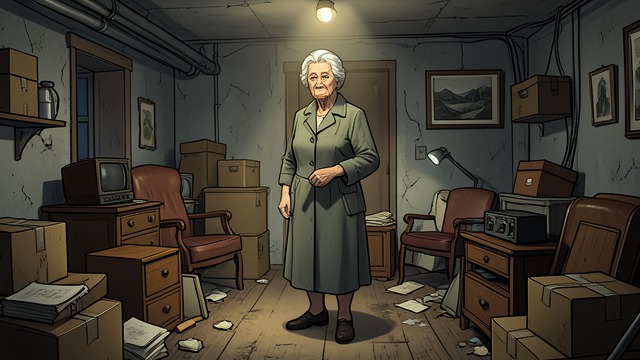
Edwina’s long residence at 137 Kennington Road has made it the central setting of her life, but by 2015 much of it has become difficult to use and frightening to maintain. She spends most of her time in the basement, surrounded by household clutter and the memory of a family no longer gathered there.
The home offers continuity, yet its size and deterioration make continuity feel like entrapment. Edwina’s choice to sell acknowledges that belonging to a place does not always mean being able to live well within it.
Imagining somewhere else
Her picture of a home in Cornwall includes a veranda, sea views, painting, and a dog. The details are modest but significant: she imagines a life in which her day is shaped by present choices rather than by the upkeep of old rooms and the obligations of memory.
This future remains uncertain, and the work of clearing the house repeatedly pulls her backward. Still, the imagined departure gives her a direction beyond simply enduring the place where so much has happened.
A Home Built from Divided Loyalties
A Home Built from Divided Loyalties
No place feels wholly his
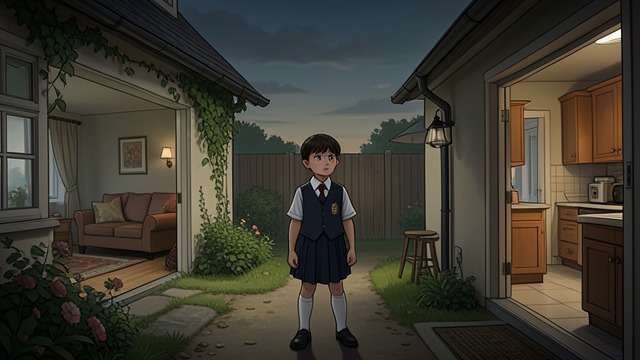
After Dickie leaves Barbara, Lucas moves between his mother’s home at River Walk and his father’s household with Edwina. He experiences the change not as an orderly arrangement between two homes but as a repeated displacement: at one house he misses his father, and at the other he longs to return to his mother.
The twins already share an established world, while Lucas feels out of context within their home. School offers a predictable structure, but neither residence gives him an uncomplicated sense that he belongs without having to compete for a parent’s attention.
Reinvention as a form of escape
As an adult, Lucas imagines the American version of himself as a cardboard cut-out. His life in the United States allows him to live apart from the family history that he has never resolved, but the separation does not make him feel at home in himself.
Returning to London for Barbara’s decline brings his abandoned history back into reach. He must decide whether to remain the person who escaped his past or to return to the place where his earlier choices still have consequences.
The Journey Back Across the River
The Journey Back Across the River
Revisiting the site of estrangement
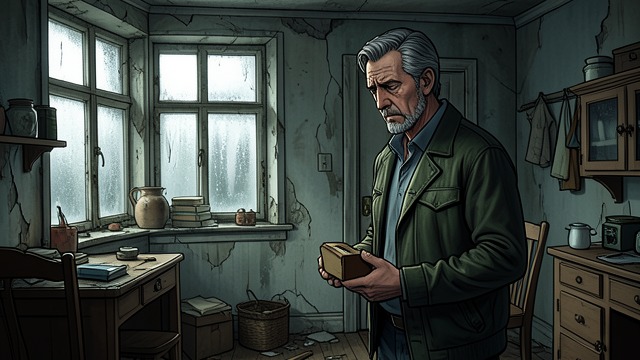
Lucas returns to Kennington Road after decades away, carrying a truth he has avoided disclosing. The journey through a changing London takes him back toward a house associated with childhood division, his father’s second family, and the consequences of decisions he made there.
The building is diminished and deteriorating, but its recognizable rooms make the past feel immediate. Lucas’s physical presence in the house contrasts with the boy who once wanted to leave it and the adult who had tried to live as though its history belonged to someone else.
Belonging through accountability
Lucas does not return expecting the house to welcome him or Edwina to accept him as family. He comes to confess and return the jewelry box, actions that acknowledge a connection he previously treated as a source of resentment.
The meeting creates a limited form of belonging based not on shared affection or a repaired childhood, but on speaking honestly to someone he harmed. He leaves lighter because he has taken responsibility, not because the past has disappeared.
An Invitation Toward Reunion
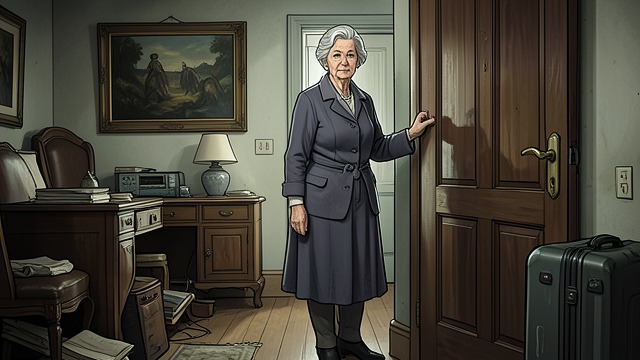
An Invitation Toward Reunion
A daughter’s open door
Rowena’s letter tells Edwina that she and her partner are waiting in Australia and that Edwina can paint there. The invitation answers a long estrangement without pretending that the years of hurt never occurred.
For Edwina, the message makes another home imaginable. The prospect is not simply a change of scenery; it means allowing herself to consider that her daughter may still want a relationship with her after the blame that followed Charlie’s death.
Going somewhere as an act of hope
Edwina checks her travel documents and adds the recovered keepsakes to her preparations. Her departure is not guaranteed, and the family’s history remains complicated, but she now has both a destination and a person who has asked her to come.
The ending presents belonging as something that can be offered again rather than something permanently secured by a house or by blood alone. Edwina’s decision to move becomes an attempt to meet that offer while there is still time.
October 1980, Fern’s first weeks in Manchester
2015, before and during the sale preparations
Lucas’s childhood between River Walk and Kennington Road
Lucas returns to 137 Kennington Road, 2015
Near the ending, as Edwina prepares to leave
