
Alicia’s Place in the Treadaway Home
MovingThis thread traces how Alicia’s practical help becomes the emotional support that sustains Edwina and her children across decades, even after Alicia has left the household.
increasing Bearing strength in each event
 decreasing
Bearing strength in each eventdecreasingA Chance Meeting
A Chance Meeting
Crisis in the Park
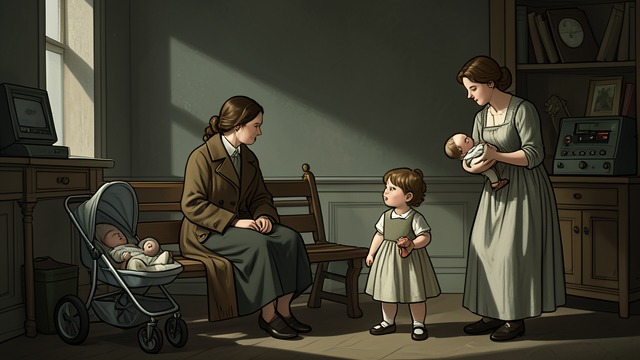
After Ollie dies, Edwina is left to care for infant twins in a house and life she can barely manage. At the Imperial War Museum, exhausted by the pram and the babies’ crying, she breaks down on a bench.
Alicia retrieves a baby’s lost shoe, then calms both children with an ease Edwina cannot summon. When the rain begins, she helps wheel the pram home and carries the twins up the front steps.
Help Becomes a Bond
The encounter matters because Alicia’s help is immediate and practical, not a lecture about how Edwina should grieve or mother. Edwina finds herself able to breathe for a moment while someone else takes charge.
What begins as a kindness becomes the foundation of a relationship that will hold the household together through years of loss and change.
A Household Rebuilt

A Household Rebuilt
Daily Care
Alicia returns to Kennington Road and becomes the twins’ nanny, caring for them day after day. She changes their wet clothes, feeds them toast and honey, and brings an order to the domestic chaos that Edwina, grieving and inexperienced, cannot create alone.
She later stays on to do the ironing and cleaning after the twins no longer need a nanny. Her work gives Edwina the time and space to resume her illustration career and keep the household financially secure.
A Different Kind of Mothering
Alicia’s care is affectionate and steady, but it does not depend on the children behaving as Edwina hopes. She loves the twins without judging their personalities, even when Edwina feels overwhelmed or jealous of that ease.
The arrangement reshapes the family: Alicia is not their mother, yet she becomes one of the most reliable sources of care in their childhood. Her presence makes Edwina’s survival as a widowed parent possible.
Trust Under Suspicion

Trust Under Suspicion
Accusations at Home
When the house is burgled and Edwina’s jewelry box disappears, there is no sign of forced entry. The police, Dickie, and Lucas turn their suspicion toward Alicia, whose work gives her access to the house.
Edwina rejects the accusation. She knows Alicia’s religious convictions and sees her as more honest than the people who are ready to blame her. She also remembers that Dickie had once proposed disguising Alicia’s wages as his personal-secretary expenses, a scheme that would compromise his own integrity.
A Truth Left Hidden
At the time, Edwina defends Alicia, but the theft remains unresolved. Years later, she will learn that Lucas arranged the burglary, confirming that Alicia was innocent.
This episode exposes a crucial difference between familiarity and trust: Alicia is treated as suspect because she is a domestic worker, while those with greater status escape scrutiny. Edwina’s faith in her friend proves better grounded than the household’s assumptions.
Alicia’s Last Intervention
Alicia’s Last Intervention
The Theft and the Fall
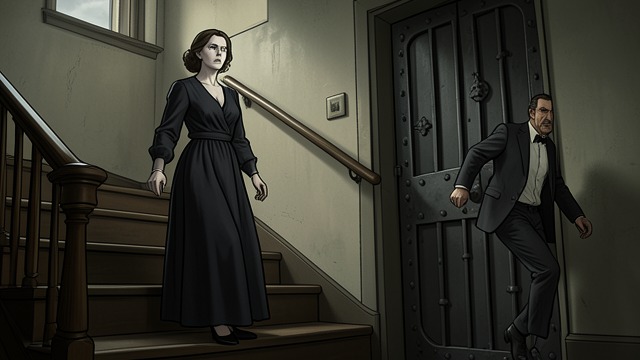
After his release from prison, Charlie returns to his old home and takes antiques he can sell. Alicia catches him as he tries to leave and confronts him on the stairs.
In the ensuing stand-off, Alicia falls or is pushed; Dickie later says the exact mechanics are less important than what follows. Charlie runs without helping her, leaving Alicia with a badly injured hip and collarbone.
A Breaking Point for Edwina
Edwina has forgiven Charlie repeatedly, but his abandonment of Alicia changes the terms of their relationship. She has the locks changed and believes that he has broken her trust beyond repair.
Alicia’s injury becomes the event that makes Edwina stop excusing her son’s actions. The person who once helped save Edwina’s household is now the person whose suffering exposes how far Charlie’s recklessness has carried him.
A Bond Carried Forward
A Bond Carried Forward
Memory in the Kitchen
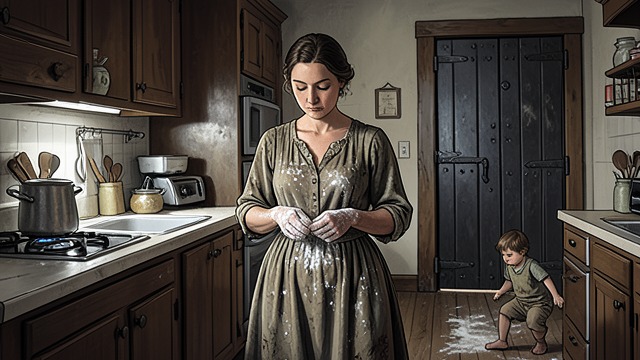
Decades after Alicia has left the household, Edwina still finds reminders of her in the kitchen: flour-covered hands, the babies’ meals, songs, and the taste of food Alicia brought home. Edwina understands that the house and the life she built there were not hers alone to sustain.
She tries to write to Alicia about selling the house and moving to Cornwall, but remembers that Alicia died the previous year. Edwina had meant to attend the funeral and did not get there in time.
Gratitude and Regret
The failed letter gives Edwina another reason to confront the cost of leaving things unsaid. Her gratitude is still vivid, but it can no longer be delivered to the person who earned it.
Alicia’s importance therefore survives as more than a memory of domestic help. She was Edwina’s closest ally, and her care helped the family through grief that might otherwise have overwhelmed it.
Soon after Ollie’s death, in the early 1960s
The twins’ infancy and early childhood, after Ollie’s death
After the burglary at 137 Kennington Road, while the children are at school
During Charlie’s return to the house after prison, years after the Oxford trial
2015, as Edwina prepares to leave Kennington Road
