
Communication and Its Failures
Mrs DallowayThis flow traces the novel’s many attempts to communicate across private boundaries, from intimate speech to failed medical listening and social gathering.
increasing Bearing strength in each event
 decreasing
Bearing strength in each eventdecreasingPeter Demands an Answer
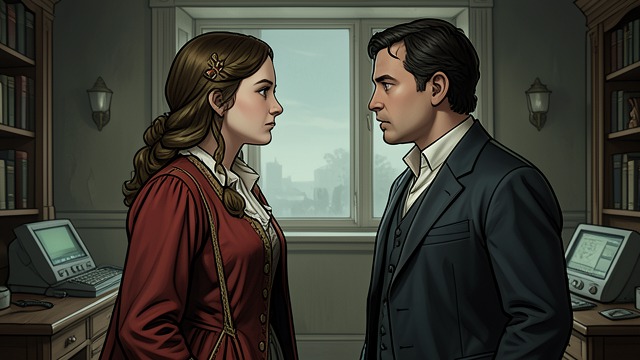
Peter Demands an Answer
A direct question
Peter asks Clarissa to tell him the truth about their future. His demand seeks clarity and commitment from someone who experiences intimacy differently.
Words divide them
Clarissa’s refusal gives him an answer, but not the mutual understanding he wants. Their break shows that speech can be explicit and still fail to reconcile two inner lives.
A Message in the Sky

A Message in the Sky
Signs seek an audience
Septimus reads the aeroplane’s smoke as communication addressed to him. He wants the beauty he sees to be shared and understood.
No common translation
The crowd reads the letters as advertising, while Septimus receives something personal and transcendent. Their shared sight does not provide a shared language.
Writing for Septimus
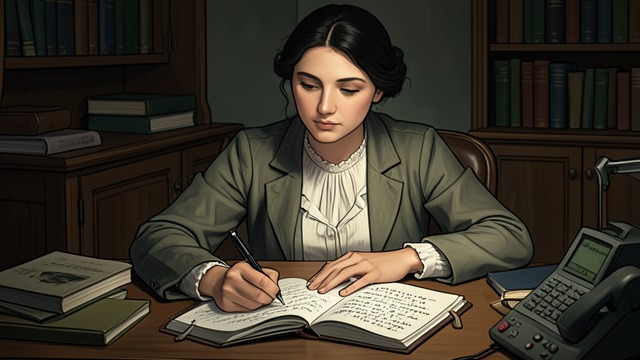
Writing for Septimus
Words recorded
Lucrezia writes down Septimus’s thoughts and preserves his papers. The writing gives his ideas a form outside the immediate turbulence of his speech.
Meaning contested
She finds some pages beautiful and others nonsensical, while Septimus fears the doctors will seize them. Communication becomes both an effort at connection and an object of institutional suspicion.
Richard’s Unspoken Love

Richard’s Unspoken Love
A declaration prepared
Richard walks home intending to tell Clarissa that he loves her. He recognizes the value of saying plainly what people feel.
Gesture takes the place of speech
He gives her roses but cannot say the words. The affection reaches Clarissa, yet the moment shows how reserve limits even communication between spouses.
The Party’s Many Voices

The Party’s Many Voices
Conversation as contact
Clarissa’s guests speak, listen, and move through rooms shaped for social exchange. The party creates opportunities for encounters that ordinary routine might prevent.
Connection remains partial
The visitors do not thereby know one another fully. The party offers contact rather than perfect understanding, an imperfect but meaningful answer to isolation.
At Bourton in their youth
Late morning
During the afternoon at home
At three o’clock
Late evening
