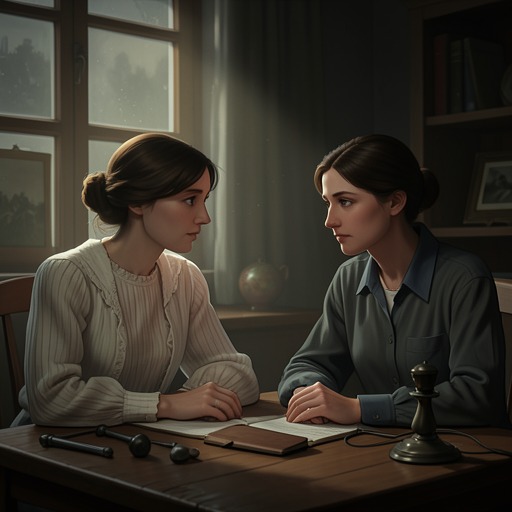
Clarissa Dalloway’s heart condition
Mrs DallowayClarissa Dalloway’s heart condition is a private bodily constraint woven into her public, social identity. It appears in her sensitivity to strain and in the possibility of sudden vulnerability, yet the novel never lets illness define her entire life: her care for flowers, her preparations for the evening party, and her conviction that she brings people together remain active responses to the limits she feels.
Signs and Everyday Limits
Clarissa’s physical vulnerability is linked to her past illness and to the heart trouble associated with influenza. While crossing Victoria Street, she experiences a pause before Big Ben strikes and wonders whether the sensation belongs to the city’s suspense or to her heart. The uncertainty matters: bodily feeling and public time briefly converge, leaving the stroke of the clock both an external measure and a private apprehension.
Her condition also shapes how other people interpret her choices. Richard thinks she knows excitement is bad for her heart and regards her enthusiasm for parties as childish. Clarissa understands that judgment as a misreading: she does not value the gatherings simply for status or famous guests, but because she loves life. Her heart imposes a limit, while the social world she creates gives her a way to answer that limit without withdrawing from experience.
Care, Work, and Self-Understanding
After Richard leaves her resting on the sofa, Clarissa reflects on the contrast between his immediate attention to public duties and her attachment to her roses. She recognizes that she may feel little for distant political suffering, yet the flowers matter to her as something living and close. The scene does not resolve this contrast into a simple moral verdict; it shows how her daily affections and physical circumstances govern what she can feel and do.
The party, too, is bound up with her understanding of life. Clarissa imagines people scattered across London and sees her role as bringing them together. She calls the gathering an offering, a gift she can make despite believing that she cannot think, write, or play the piano. Her heart condition therefore belongs to a broader tension between restriction and contribution: she is not physically invulnerable, but she can still make a meeting point for others.
Vulnerability and Continuance
Clarissa’s awareness of dependence becomes stark when she thinks that, without Richard reading The Times nearby, she might have perished under the burden of living. Her image of herself crouching like a bird and gradually reviving connects bodily fragility with a need for shelter and companionship. The passage presents this not as a medical diagnosis but as her felt experience of life’s weight and the support that helps her endure it.
The novel sets this private fear beside the death of Septimus Warren Smith, which Clarissa learns of during her party. His death intensifies her sense of life’s terror and makes her feel implicated in a shared human vulnerability, though the evidence does not establish a direct connection between his death and her heart condition. Her own response turns back toward ordinary acts: she straightens chairs, pushes a book into place, and walks to the window. These gestures do not cure or erase her fear; they show her returning to the continuing life that her condition makes precarious but has not made meaningless.