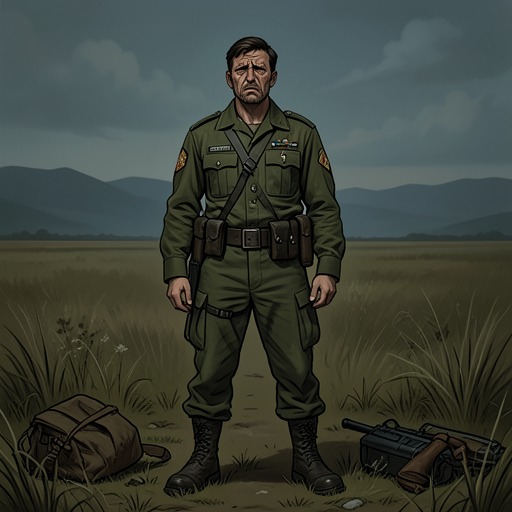
Death of Evans
Mrs DallowayEvans is the fellow soldier and officer whose death shortly before the Armistice ends his close wartime relationship with Septimus Warren Smith. The loss is a turning point not because Septimus openly grieves, but because he takes his lack of feeling as evidence that he has survived the war and become reasonable; the later return of fear and numbness unsettles that apparent composure.
Identity and Wartime Bond
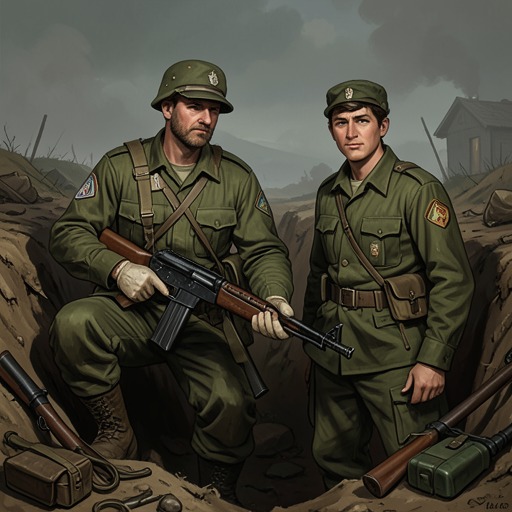
Septimus volunteers early for military service and goes to France. In the trenches he is promoted and draws the attention and affection of Evans, who is both his officer and his companion. The narration presents their closeness through the rough play of two dogs: they share, quarrel, snap at one another, and remain bound to one another through these ordinary contests. The comparison conveys a relationship made through sustained proximity and mutual familiarity rather than formal declarations.
Lucrezia Warren Smith, who has seen Evans only once, remembers him as a quiet, sturdy, red-haired man, undemonstrative in the company of women. Her brief impression contrasts with the more intimate account of the men’s shared life in the trenches: she can identify his outward reserve, while Septimus’s wartime history establishes the closeness that his death will break.
Death and Septimus’s Response
Evans is killed in Italy shortly before the Armistice. Septimus does not recognize the death as the end of a friendship, and congratulates himself on feeling very little and remaining, as he sees it, reasonable. He regards the war as a completed ordeal through which he has passed: he has experienced friendship, war, and death, gained promotion, and is still under thirty. The last shells miss him, and he watches them explode with indifference. Evans’s death is thus presented alongside Septimus’s belief that he has escaped the war’s consequences.
That belief does not hold. After the truce is signed and the dead are buried, Septimus experiences sudden episodes of fear, particularly in the evenings, and says that he cannot feel. His engagement to Lucrezia takes place in Milan during one such panic. The narration places the loss of Evans within this postwar change, but does not reduce Septimus’s later condition to a single cause: the death marks the rupture in his closest wartime friendship, while the war and its aftermath frame the numbness and fear that follow.
Aftermath and Narrative Significance
The effects of Evans’s death extend beyond Septimus’s recollection of the front. In London, Lucrezia seeks help when Septimus’s condition becomes difficult to manage. Dr. Holmes dismisses the possibility that anything is seriously wrong, while William Bradshaw judges Septimus to be in a state of complete physical and nervous breakdown. When Lucrezia confirms that Septimus has threatened suicide, Bradshaw prescribes a long rest away from her. The contrast between Septimus’s earlier claim to feel little and the later medical crisis makes the death part of a broader account of how wartime experience persists after the fighting has ended.
Evans is therefore significant both as Septimus’s companion and as the person whose death exposes the inadequacy of Septimus’s self-congratulation. The friendship has been established through shared life and conflict; its ending is met not with acknowledged grief but with apparent indifference. The gap between that response and the fear that follows gives Evans’s death its lasting place in the novel’s portrayal of war trauma and its aftermath.