Dogs
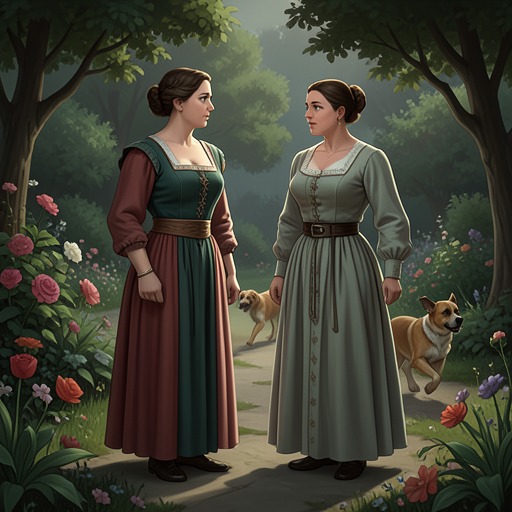
Mrs DallowayDogs in Mrs. Dalloway are not a single plot-driving presence but a recurring part of domestic, social, and remembered life. They are companions to Clarissa Dalloway and Elizabeth Dalloway, belong to Peter Walsh’s recollections and Elizabeth’s thoughts, and enter Septimus Warren Smith’s altered perception. Their varied roles make them more than background decoration: dogs prompt practical care, mark the habits and obligations of home, and offer a recurring measure of how human characters relate to lives beyond themselves.
Domestic Companions and Responsibilities
Dogs are part of the work and atmosphere of Clarissa’s household. As she walks through London on the morning she is preparing for her party, she thinks that Elizabeth cares most about her dog. She contrasts the dog’s distemper and the treatment of the house with the uncomfortable prospect of Elizabeth spending time in Doris Kilman’s stuffy bedroom. The dog is thus bound up with Clarissa’s concern about her daughter’s attachment to Kilman, although Clarissa recognizes that this attachment may be only a phase. The animal’s ordinary care becomes one element in a larger, uneasy maternal calculation.
A past incident gives Clarissa’s own dog a more active place in the household’s history. When the dog is caught in a trap and its paw is badly injured, Clarissa turns faint, while Richard Dalloway takes over: he dresses the paw, makes splints, and directs Clarissa to assist. Peter Walsh remembers the incident as evidence of Richard’s practical competence and of the kind of support Clarissa valued in him. Richard speaks to the dog as though it were a person while managing its care. The scene establishes the dog not simply as an object of affection but as the occasion for a concrete act of mutual reliance between the Dalloways.
Dogs also figure in the routines that surround the party. During the evening, Elizabeth’s fox-terrier has to be shut away because it bites. Elizabeth worries that it may want something, and tells the household staff to remember it even as guests are arriving and the preparations move upstairs. The small instruction runs alongside the larger machinery of hospitality: arrivals, food, drink, and the servants’ divided tasks. Attention to the dog persists within the social event rather than disappearing behind it.
Country Memories and the Desire for Freedom
The dogs associated with country life recur as part of a remembered alternative to London’s social demands. Elizabeth would rather be in the country doing as she pleased with her father and the dogs than be compared to garden lilies and expected to attend parties. Her preference is connected to a larger contrast between being left alone and being displayed or interpreted by others. When she boards an omnibus without waiting for anyone, her delight in leaving is linked to the fresh air and the freedom of movement, while the dog remains part of the home life she imagines and misses.
Peter’s memories of Clarissa likewise place dogs among the ordinary particulars of country life. He recalls the dogs, along with other animals and outdoor experiences, as part of a past that belongs to a different rhythm from the party-bound London day. The novel does not make every such recollection into a developed episode; instead, the brief returns of animals help convey how personal memory gathers around concrete details of place and companionship.
Dogs and Perception
For Septimus, the surrounding world can become charged with meanings that exceed ordinary perception. As he sits outdoors, he imagines leaves and trees as alive and connected to his own body, while sparrows and sounds participate in a pattern that seems to announce a new religion. Rezia calls his name, and he starts violently back to the immediate human situation. In this sequence, animals belong to a field of living presences that Septimus experiences as interconnected, although the moment also shows the distance between his perception and Rezia’s attempt to reach him.
A later encounter with a dog turns that heightened perception into fear. Septimus fumbles for his card and pencil while repeating ideas of innocence and love; when a Skye terrier sniffs his trousers, he believes with terror that it is becoming a man. The dog trots away, but the experience reveals how unstable the boundary between animal and human has become in his frightened consciousness. The scene belongs to Septimus’s crisis, not to any change in the dog itself: the animal’s ordinary movement is transformed by the meaning he imposes on it.
Companionship, Care, and the Novel’s Animal Life
The dogs’ roles vary rather than resolve into one fixed symbol. Clarissa’s injured dog brings Richard’s attentiveness into view; Elizabeth’s fox-terrier is both a beloved responsibility and a practical concern during the party; and dogs in country recollections belong to a desired life beyond social display. Septimus’s encounter, by contrast, shows an animal entering a mind in which the categories of human and nonhuman seem dangerously unstable. These differences keep the animals tied to particular people and circumstances.
The novel also gives dogs a modest presence within the larger textures of human connection. Peter’s snapshot of Daisy shows her on a verandah with a fox-terrier on her knee, fixing the animal within an image of the woman he desires and remembers. Elsewhere, an image of affectionate play with chow dogs appears in a remembered vision of exuberant country life. At the party, Elizabeth’s concern that her dog may need something coexists with her appearance as a young woman among guests. Across these moments, dogs accompany affection and memory but do not merely explain either one; their recurrence preserves a sense of living company that continues alongside social performance, private longing, and distress.