Doris Kilman
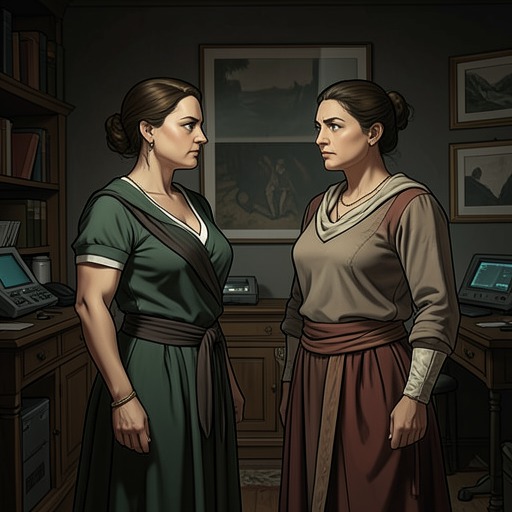
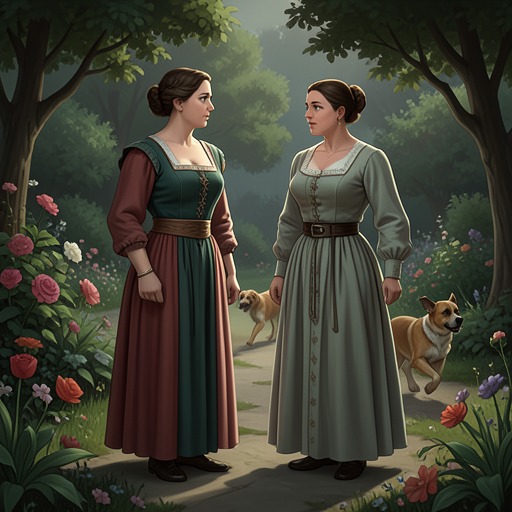
Mrs DallowayDoris Kilman is Elizabeth Dalloway’s history teacher, a poor woman whose wartime loss of employment and turn to religion inform both her sense of grievance and her efforts to draw Elizabeth close. Seen first through Clarissa Dalloway’s hostility and then from within her own consciousness, she is not simply the figure Clarissa fears: her bitterness has causes, her faith offers relief, and her longing for Elizabeth is entangled with resentment. Her divided portrayal makes the conflict between the two women a study in class, judgment, and the difficulty of seeing another person whole.
Identity and Background
Doris Kilman is over forty and poor enough to take work from the wealthy Dalloway household. Richard Dalloway allows her to teach his daughter history, an act she regards as generous; Clarissa, by contrast, seems to her condescending. The difference between those judgments establishes the relationship’s class tension: the same household that provides Kilman with work also represents the social world she believes has excluded and diminished her.
Her green mackintosh is a recurring marker of her circumstances. Clarissa notices that Kilman wears it year after year and reads it as part of the oppressive presence she associates with her. Kilman’s own account makes the coat less a symbol of mere antagonism than a sign of limited means: it is cheap, and she does not dress to please. The opposing perspectives on this concrete detail show how quickly material difference becomes moral judgment between the women.
Kilman’s grievance reaches back to her dismissal from Miss Dolby’s school during the war. Her family had German origins, and she had German friends; when she would not pretend that all Germans were villains, Miss Dolby decided she would be happier among people who shared her views and Kilman had to leave. Her brother had been killed. Unable to secure the life she had hoped for, she took what work she could find, including teaching history to Elizabeth and doing some extension lecturing. The war thus enters her present not as an abstract public event but as a direct break in her work and prospects.
Faith and Grievance
Two years and three months before the day’s events, Kilman heard the Reverend Edward Whittaker preach. She went to his home in Kensington afterward, where he told her that the experience was the hand of God showing her the way. In church she wept, and the painful feelings that had been boiling within her were assuaged. She subsequently turned to God and to thoughts of Whittaker when anger or resentment rose again; rage gave way to calm. Her conversion offers an actual means of managing distress, rather than merely an opinion she imposes on others.
That relief coexists with a powerful sense of having been cheated. Kilman believes that a girl has a right to some happiness and that poverty and clumsiness have kept it from her. She feels she was denied a chance at Miss Dolby’s school and punished for refusing to disown her German connections. Against the Dalloways’ expensive furnishings, carpets, and servants, she sees a social order in which the wealthy can afford to be kind while the poor must accept whatever work is available. Her faith does not erase this account of injustice; instead, it gives her a framework through which to contain the anger it produces.
Clarissa sees the same religious intensity very differently. She thinks that religious ecstasy, like devotion to causes, can make people callous, and regards Kilman’s willingness to sacrifice for Russians and Austrians as sharply at odds with her insensitivity in private. Clarissa also fixates on Kilman’s apparent sense of superiority and on the contrast between her poverty and Clarissa’s wealth. The gap between these impressions and Kilman’s own account matters: neither woman’s view can simply stand for the whole person.
Attachment to Elizabeth and Conflict with Clarissa
Kilman’s position in the household is intimate but precarious: she teaches Elizabeth, while remaining an employee of people she considers condescending. Clarissa resents the closeness between teacher and daughter and fears that Elizabeth is being drawn away from her. She interprets Kilman’s presence as a threat, but also recognizes that the hated figure has gathered meanings beyond Kilman herself. In her private reflection, Clarissa imagines that under different circumstances she might have loved Kilman. The admission complicates her hostility without ending it.
When Elizabeth is with her, Kilman’s desire for closeness becomes painfully absolute. She wants to clasp Elizabeth and make her hers forever, yet feels unable to find anything to say and believes Elizabeth is turning against her. At the prospect that Elizabeth may go to Clarissa’s party, Kilman says that she never goes to parties and that people do not ask her. She knows as she speaks that this self-pitying appeal works against her, and recalls Whittaker’s warning, but cannot stop herself. She also says she is plain and unhappy. The exchange reveals a relational loop: fear of losing Elizabeth drives Kilman to press her claim, while her own awareness that this pressure is egotistical cannot keep it from surfacing.
The conflict is not a simple contest between a loving mother and a hostile teacher. Kilman believes Clarissa has treated her with condescension; Clarissa experiences Kilman’s influence as invasive and resents what she sees as religious and personal insensitivity. Meanwhile, Elizabeth’s presence intensifies both women’s feelings without making either relationship fully legible to the other. Their antagonism is sharpened by unequal wealth, but neither woman’s interpretation of the other exhausts what the narrative shows.
Work, Household, and the Novel’s Wider Social World
The Dalloway household brings Kilman into contact with domestic life and social rituals from which she feels excluded. Clarissa’s day is organized around buying flowers, preparing for a party, and managing the house; the gathering is her way of bringing people together, an offering she believes she can make even though she doubts her abilities in other areas. Kilman, who is not part of this social world on equal terms, approaches the party through Elizabeth’s invitation and her own experience of not being asked. The contrast makes the party both a household event and a measure of who belongs.
The novel’s attention to work also sets Kilman beside other forms of labor and service. As party preparations proceed, maids pass through doors in an orderly current, while Clarissa repairs a torn green evening dress herself and thanks her servant Lucy for offering help. These domestic details do not directly resolve Kilman’s grievance, but they situate her paid role within a household sustained by work that is visible in some moments and taken for granted in others. Her employment gives her access to the Dalloways and at the same time continually marks the distance between them.
Kilman’s history teaching and extension lecturing offer evidence of capacities that Clarissa’s resentment can obscure. Clarissa acknowledges that Richard considers her able and possessed of a historical mind, even as she associates her with an oppressive grievance. Kilman, for her part, insists that she can read history and sees her dismissal as unjust. The shared recognition of her intellectual ability does not overcome their antagonism, but it prevents that antagonism from being reduced to a question of personal dislike.
Narrative Significance
Kilman’s characterization depends on a shift of perspective. In Clarissa’s mind, she is at first a hated presence associated with a green coat, religious intensity, and the threat of losing Elizabeth. The narrative then enters Kilman’s consciousness, where the coat reflects poverty, the dismissal from Miss Dolby’s school carries a specific wartime cause, and religion follows a remembered encounter with Whittaker. This movement does not simply replace Clarissa’s account with Kilman’s; it makes the distance between their accounts itself part of the subject.
Her story connects private hostility to wider pressures without treating social hardship as a complete explanation for every action. Poverty and wartime prejudice narrow her prospects; faith calms feelings she experiences as painful; her attachment to Elizabeth becomes so urgent that she recognizes her own self-pity yet continues to express it. Clarissa, meanwhile, knows that her hatred has become more than a fair judgment of the woman before her. Through these partial recognitions, Kilman becomes a figure through whom the novel examines how grievance, class difference, and longing can distort perception while remaining rooted in real injuries and needs.