Elizabeth Dalloway—Doris Kilman
Mrs DallowayElizabeth Dalloway—Doris Kilman is a relationship of intellectual and religious influence that draws Elizabeth toward her teacher and unsettles her mother, Clarissa Dalloway. Its significance lies in the sharply different meanings the connection holds for the women involved: Elizabeth’s companionship with Kilman is a source of attachment and guidance, while Clarissa sees it as a possible phase, an intrusion, and a challenge to the family’s intimacy.
Formation and Context
Doris Kilman teaches Elizabeth history after Richard Dalloway allows her to work with his daughter. Kilman has been dismissed from a school during the war because she would not pretend that Germans were all villains; her family was of German origin, and her brother had been killed. She believes she was deprived of a chance at happiness and has had to accept the work available to her. Her teaching position with Elizabeth therefore joins practical employment to a relationship in which she can exercise intellectual and personal influence.
Kilman’s circumstances shape her view of the Dalloways. She recognizes Richard’s kindness in allowing her to teach Elizabeth, but regards Clarissa as condescending and resents the comfort and privilege of the household. Her religious conversion, which she dates to two years and three months earlier, changes the terms in which she understands social difference: she says she no longer envies women like Clarissa but pities them. The connection with Elizabeth develops within this mix of gratitude, grievance, class hostility, and faith.
Elizabeth’s Attachment and Clarissa’s Concern
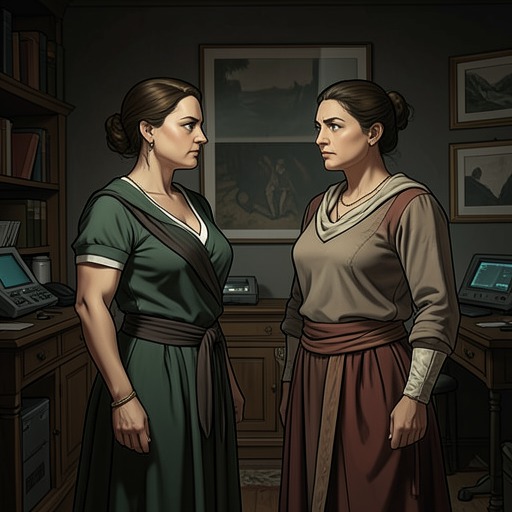
Clarissa observes that Elizabeth and Kilman are inseparable and that Elizabeth has begun going to Communion. She wonders whether this attachment is only a phase, as Richard suggests, or whether Elizabeth is falling in love with Kilman. Clarissa’s worry is sharpened by her sense that religious ecstasy can dull feeling: she sees Kilman’s willingness to sacrifice for causes as incompatible with the sensitivity and consideration she expects in private life.
Clarissa’s response is not simply disapproval of Kilman’s beliefs. She objects to Kilman’s effect on the household and to the superiority she feels the teacher projects, which makes Clarissa acutely aware of the difference between Kilman’s poverty and the Dalloways’ wealth. At the same time, Clarissa concedes that Kilman has been badly treated and that Richard considers her able, with a genuinely historical mind. The relationship therefore reaches Clarissa through both sympathy for Kilman’s circumstances and fear that Elizabeth is being drawn away from her.
Faith, Class, and Divergent Judgments
Kilman’s religious commitment supplies her with a framework for judging the life around her. She regards the Dalloways’ luxury as evidence of an unjust social order and believes that a woman in Elizabeth’s position should be working rather than resting amid expensive possessions. She describes her own conversion as an encounter with the divine; from her perspective, pity for Clarissa and other privileged women follows from that change in belief.
Clarissa interprets the same religious intensity differently. She suspects that devotion and political causes can make people callous, and she experiences Kilman’s presence as a reminder of her own wealth and of the teacher’s resentment. The two women thus do not share a common account of what Kilman offers Elizabeth: Kilman sees religious truth and a critique of privilege, whereas Clarissa fears emotional insensitivity and an unwelcome claim on her daughter.
Separation and Lasting Significance
When Elizabeth leaves Kilman, the teacher experiences the departure as a devastating loss, associating it with the loss of beauty and youth. She is left alone among the department store’s goods before making her way into the street and toward Westminster Cathedral. There she prays in the Abbey, struggling to rise above hatred, love, desire, and worldly commodities. Her faith does not erase her attachment to Elizabeth; the scene instead makes visible how personal longing and religious aspiration remain entangled.
The relationship also affects Clarissa beyond the immediate encounter. Kilman stays in her thoughts that afternoon, while Elizabeth’s departure from the store marks a movement back into the open city and toward a life not wholly governed by her mother’s wishes. Their connection is therefore neither a simple lesson nor a settled rivalry: it brings together teaching, faith, class grievance, maternal anxiety, and a young woman’s capacity to form attachments beyond her family.