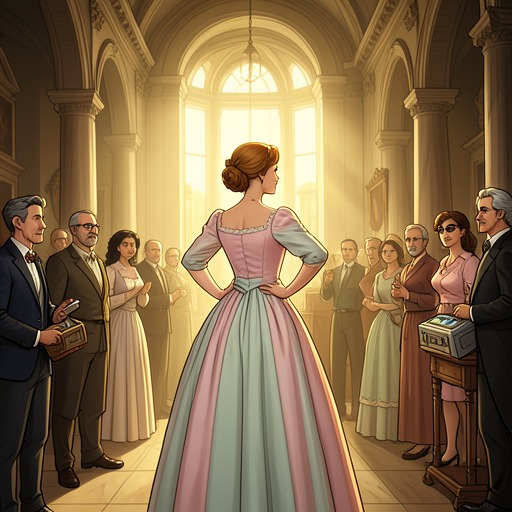
Ellie Henderson
Mrs DallowayEllie Henderson is Clarissa Dalloway’s cousin and a hesitant, observant guest at Clarissa’s evening party. Her late invitation and difficulty finding someone to talk to set her apart from the confident, well-dressed company; Richard Dalloway’s small act of attention briefly counters that isolation and reveals the uneven social warmth of the gathering.
Identity and Invitation
Ellie is among the people Clarissa considers inviting while managing the practical details of the party. Clarissa has not initially invited her, and the question of whether she belongs on the guest list becomes part of a day crowded with other obligations. The eventual invitation arrives at the last moment. Ellie suspects Clarissa may not have intended to ask her that year, though they are cousins and have known one another for a long time. Their relationship has drifted as Clarissa has become more sought after, leaving kinship intact but social closeness diminished.
For Ellie, attending is an event in itself, not one of the routine engagements undertaken by people who go out every night of the season. She buys half a dozen inexpensive pink flowers and wears a shawl over an old black dress. That preparation contrasts with the ease of guests who can simply tell their maids what they will wear. Ellie is unsure whether she is welcome, yet the party offers a rare opportunity to see its guests and their clothes at close range.
At Clarissa’s Party
Ellie watches the gathering with weak eyesight, craning forward to make out the people around her. She knows hardly anyone and has no ready conversational circle, but she is interested in observing the guests, whom she takes to be politicians and Richard’s friends. Her position is therefore not simply one of exclusion: being an onlooker gives her something to attend to, even as it leaves her visibly alone.
The party’s social scene is marked by a contrast between display and apprehension. Ellie notices Elizabeth Dalloway, who looks handsome in a pink dress, and considers how the fashions for young women have changed. She is also preoccupied with the young women’s bare shoulders and with the example of care for others instilled by her father, the late vicar of Bourton. In a room organized around dress and sociability, her attention turns toward their comfort and possible exposure to chills.
The open windows make a yellow curtain patterned with birds billow into the room and then fall back. Ellie wonders whether the room is draughty, but her concern is less for her own susceptibility than for the young women. The moment links her watchfulness with a practical, other-directed habit: she thinks of their well-being while remaining too socially uncertain to become part of the party’s central conversations.
Social Isolation and Recognition
Richard notices that Ellie has been standing alone and feels he should not leave her there for the whole evening. He approaches in a genial manner and asks how the world is treating her. Ellie flushes and becomes nervous, but receives his attention as extraordinarily kind. Their exchange is brief and ordinary; its importance lies in the fact that someone with standing in the room recognizes her solitary position and crosses the social distance separating them.
Ellie’s awkwardness is not presented as indifference to the company. She enjoys watching the guests, but has little familiarity with them and remains uncertain about her invitation and place among them. Her scene exposes a limit in Clarissa’s ideal of the party as a meeting point: gathering people under one roof does not ensure that each person is included. Ellie’s presence makes that gap concrete, while Richard’s conversation offers a modest, momentary form of connection.